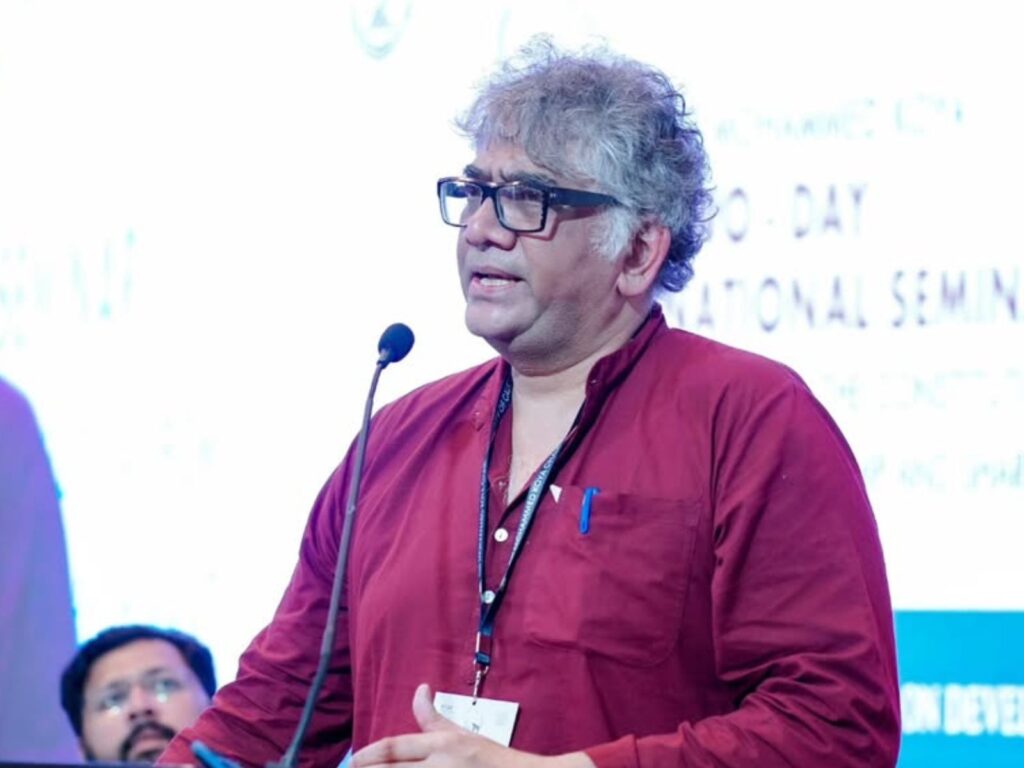
The C.H. Mohammad Koya Chair for Studies on Developing Societies at the University of Calicut organized 2 day National Seminar with the theme “ Reaffirming The Constitutional Promise : Equal Citizenship & Shared Humanity” on September 27 & 28,2025. The event had renowned Human Rights Activists, Scholars & Journalists as Speakers that included Professor G Mohan Gopal, Former Director of the National Judicial Academy of the Supreme Court of India, Professor Gopal Guru, Former JNU Professor and Editor EPW, Mr. Abdur Rahman, Former IPS, Mr. Aasif Mujtaba, Human Rights Activist, Ms. Bhasha Singh, Journalist and Associate Editor, NewsClick and few others.
Who was CH Mohammad Koya
Cheriyankandi Muhammad Koya (15 July 1927 – 28 September 1983), widely remembered as C. H. Muhammad Koya, was a prominent political leader from Kerala and a key figure in the Indian Union Muslim League. In 1979, he briefly held the office of the 10th Chief Minister of Kerala, serving from October to December, making history as the first Muslim League leader to head a state government in independent India.
Koya’s political journey, however, is more closely associated with his long tenure as Kerala’s Education Minister. He held the portfolio between 1967 and 1973, and again from 1977 to 1979, during which he initiated several reforms that shaped the state’s modern educational landscape. Following his brief stint as Chief Minister, he assumed the position of Deputy Chief Minister in 1981, continuing in that role until his passing in 1983. With his vision and administrative skill, Koya played a pivotal role in advancing Kerala’s education sector. His influence was not confined to politics alone—he was also a distinguished orator and a prolific writer, contributing widely across various subjects. The University of Calicut was established on July 23, 1968 with the idea put forward by Mr. CH Mohammad Koya himself. The sole motto of establishing the University was to cater to the educational need of the people of Malabar region.
The Inaugural
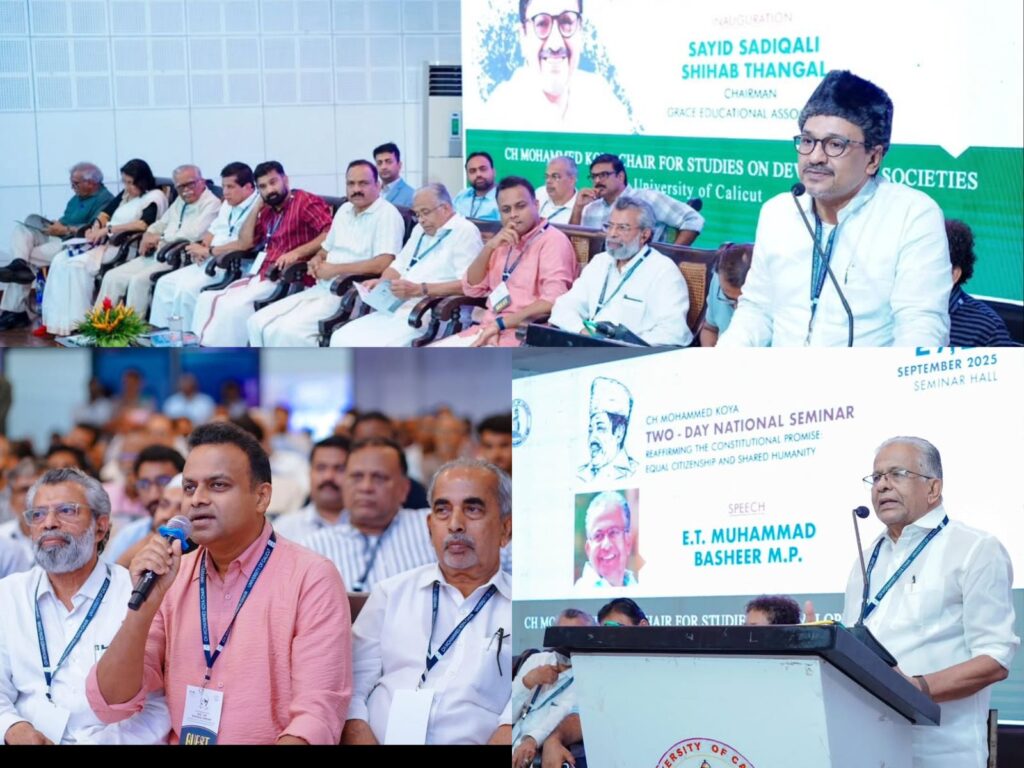
The Session was formally inaugurated by Mr. Syid Sadiqali Shihab Thangal who serves as the Kerala State President of Indian Union Muslim League & Chancellor Darul Huda University. The Inaugural was also attended by Mr. E.T. Muhammad Basheer, Member of Parliament, Mr. P.V. Abdul Wahab, Member of Parliament, Adv. Haris Beeran, Member of Parliament, Mr. Ahmad Saju, National President MSF India, Mr. CK Subair, Convenor, Organising Committee, Mr. Khader Palazhi, Director CH Mohammad Koya Chair & others.
The opening session
The session commenced with the inaugural address by Prof. G. Mohan Gopal, Visiting Professor of the C. H. Mohammad Koya Chair. In his remarks, he elaborated on how institutions of Indian democracy are being compelled to compromise in order to pave the way for the idea of a Hindu Rashtra. He highlighted the contrast between the Indian Constitution, which upholds equality for all citizens, and the Manusmriti, which propagates selective superiority. According to him, the principles of the Constitution are being systematically undermined to advance the framework of Manusmriti.
Speaking on the Waqf Amendment Act, 2025, Prof. Gopal observed that the Parliament has attempted to prescribe a new form of worship—something beyond the competence of the State. Such interference, he emphasized, constitutes a violation of Article 25 of the Constitution, which guarantees freedom of religion.
On the question of the recent statement by Mr. DY Chandrachud, former Chief Justice of Supreme Court, that the very act of construction of Babri masjid was an act of desecration, he said that someone should file a curative petition before the Supreme Court challenging the Babri verdict.
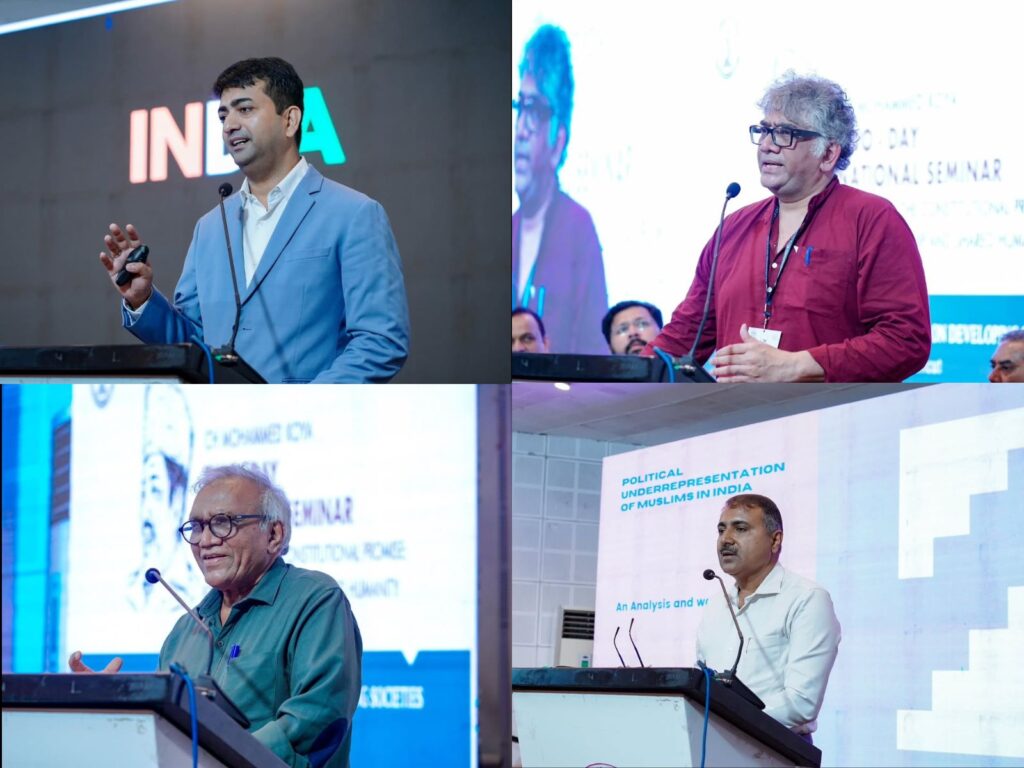
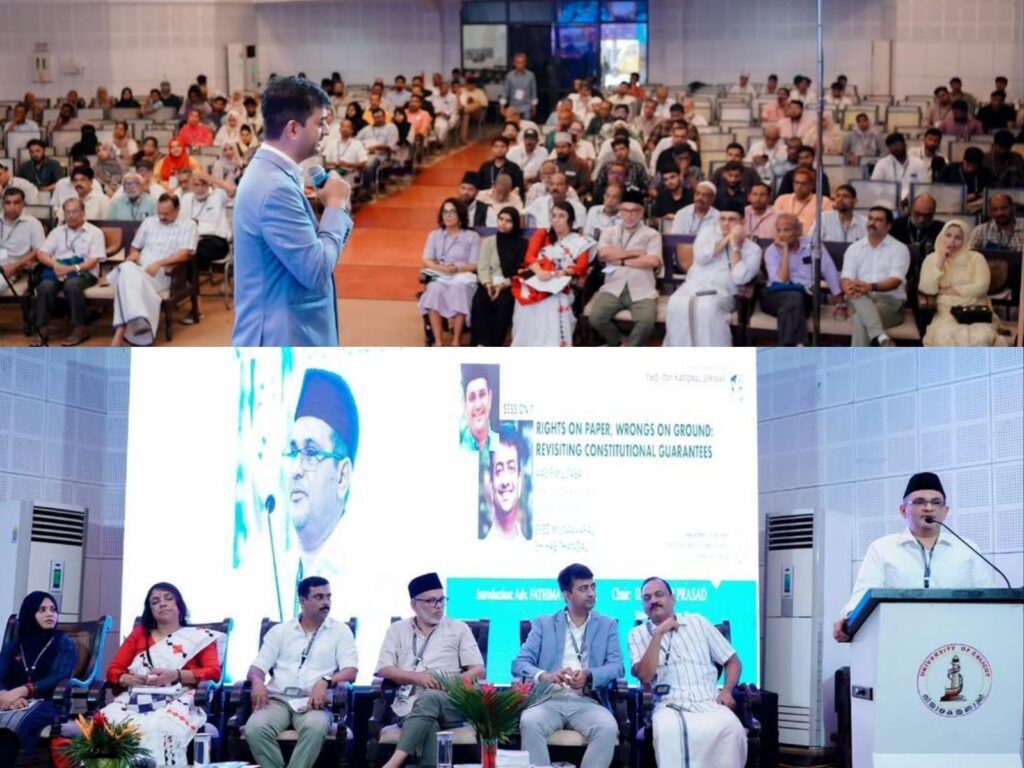
Rights on Paper, Wrongs on Ground : Revisiting Constitutional Guarentees , Aasif Mujtaba
In a comprehensive 90-minute presentation, Aasif Mujtaba addressed what he described as the State’s persistent apathy towards the Muslim minority, particularly in their ability to exercise Fundamental Rights guaranteed by the Indian Constitution. Through a carefully structured talk supported by visual evidence, Mujtaba sought to highlight patterns of neglect, discrimination, and systemic exclusion that, in his view, characterize the State’s treatment of Muslims in contemporary India.
He presented a series of videos documenting recent incidents of mob lynching, underscoring how such violent acts not only result in loss of life and dignity but also create a pervasive sense of fear and insecurity within the community. Mujtaba further pointed to communal demolitions carried out in several states, including Assam, Madhya Pradesh, and Gujarat, where, he argued, homes and livelihoods of Muslims were disproportionately targeted under the guise of administrative action. These acts, he noted, had devastating social and economic consequences, pushing already marginalized families into further distress.
Expanding on his analysis, Mujtaba drew attention to various instances of communal violence in recent years, where large-scale riots and targeted attacks have left Muslim neighborhoods vulnerable. He contended that in many such situations, the State not only failed to prevent violence but was often seen as a passive bystander, thereby eroding the faith of minorities in law enforcement and governance structures. To strengthen his case, Mujtaba referred to certain Supreme Court verdicts that, according to him, reflected a shrinking space for justice for Muslims, raising questions about the impartiality of the judiciary in matters concerning minority rights.
Perhaps most strikingly, Mujtaba argued that the idea of a “Hindu Rashtra” is being operationalized not primarily through legislative means, as might be commonly assumed, but through the Indian judiciary. By this, he suggested that court judgments, interpretations of constitutional provisions, and legal frameworks are increasingly being used as instruments to advance a majoritarian agenda. Such a development, he warned, has profound implications for the secular and democratic character of the Indian Republic, as it shifts the balance of power away from the legislature—which is at least subject to electoral accountability—and places it within judicial institutions, which are less directly answerable to the public.
By weaving together first-hand visual documentation, empirical cases, and constitutional critique, Mujtaba presented a sobering analysis of the precarious position of Muslims in India today. His presentation not only highlighted the immediate challenges faced by the community in terms of safety, dignity, and equal rights, but also raised broader questions about the future of democracy, justice, and pluralism in the country.
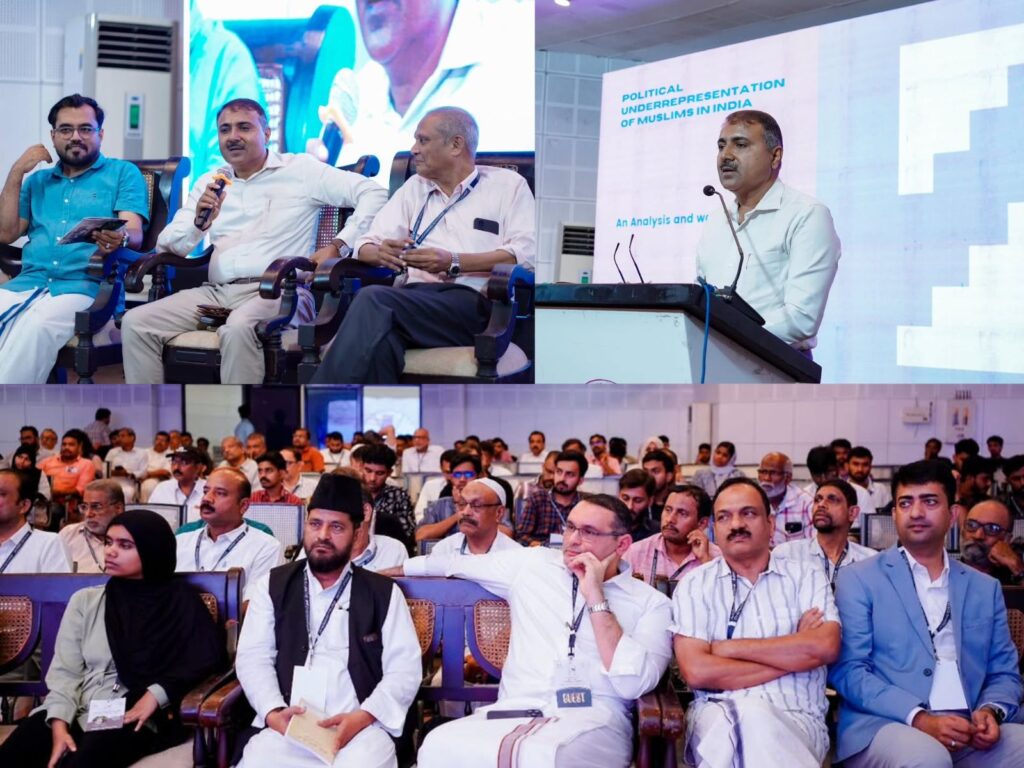
Absent in Politics & Power: The Extent of Exclusion & Ghettoization, Abdul Rahman, Former IPS
Former Maharashtra Police Inspector General, Abdur Rahman, delivered an in-depth hour-long presentation that critically examined the question of Muslim representation in India’s political and social landscape. Drawing upon a range of statistical data and research findings, Rahman argued that the State continues to reflect what he described as a communal and exclusionary approach towards Muslim participation in democratic institutions.
He emphasized that mainstream political parties, including those that identify themselves as secular, have consistently fallen short of ensuring proportional or meaningful representation for Muslims. According to him, this deliberate underrepresentation is not only reflective of prejudice but also undermines the principles of equality and inclusivity that are central to a functioning democracy.
Rahman further explained that the structure of India’s First-Past-the-Post (FPTP) electoral system compounds this issue, leaving minorities at a systematic disadvantage. The mechanism, he observed, often results in the dilution of minority votes, which in turn prevents communities like Muslims from securing seats in legislative bodies despite their significant presence in the population. This, he maintained, creates a cycle of political marginalization where minorities are left with little influence in decision-making processes that directly affect their lives.
In addition, Rahman drew attention to the growing dominance of the Hindutva political discourse, which, in his view, goes directly against the aspirations of minorities and weakens the pluralistic ethos of the Indian Constitution. He suggested that the rise of this ideological narrative not only excludes Muslims but also poses a broader threat to India’s democratic fabric by normalizing division and reducing the space for dissent.
By combining empirical data with a critical reading of political trends, Rahman’s presentation offered a sobering assessment of the challenges facing minority representation in India today.
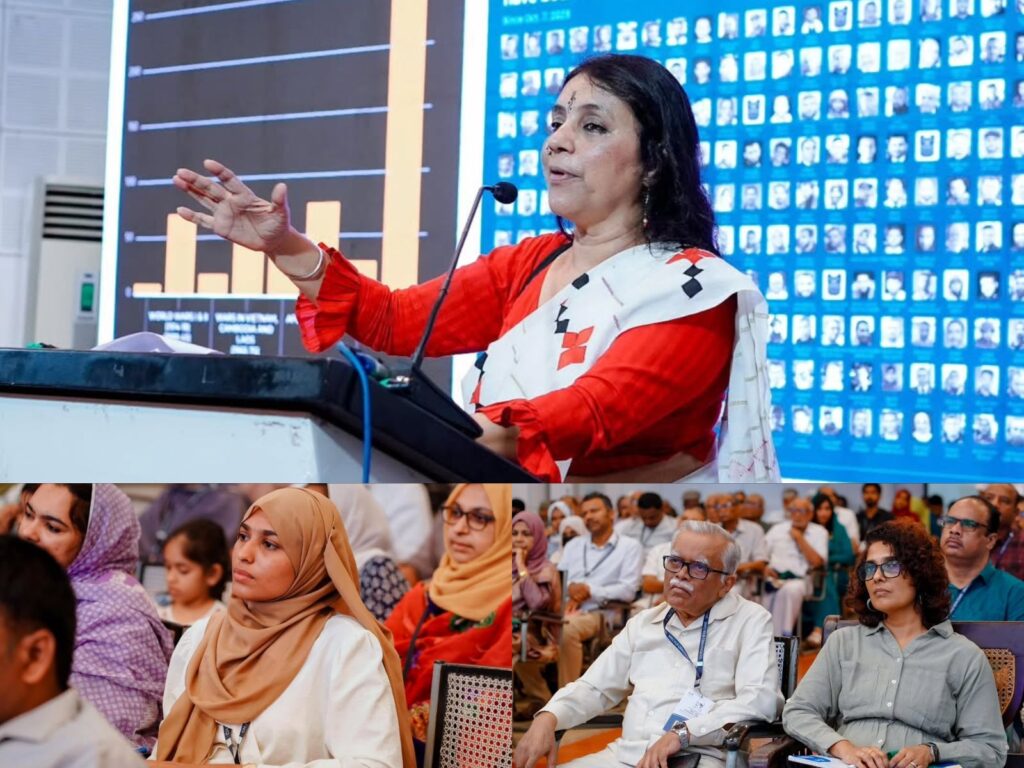
Reclaiming the Fourth Pillar of Democracy, Mainstream Media, Fake News, Bias & Polarization : Bhasha Singh
Bhasha Singh, Associate Editor at Newsclick, delivered a presentation examining the role of mainstream media in contemporary India. She argued that large sections of the media have increasingly deviated from the fundamental ethics of journalism, shifting from their responsibility of questioning power to becoming instruments that reinforce dominant narratives and contribute to the marginalization of vulnerable communities.
According to Singh, the impact of this transformation is being felt most acutely by minorities, particularly Muslims, who often find themselves stereotyped or silenced in public discourse. She further pointed out that the effects of this narrative are not limited to Muslims alone but also extend to other marginalized groups, including women, Christians, and Adivasis, whose struggles and aspirations are frequently overlooked or misrepresented in mainstream coverage.
In the course of her talk, Singh also drew parallels with the global media landscape, paying tribute to the courage of journalists who lost their lives while reporting from Gaza during the ongoing genocide. She described their sacrifice as a testament to the true spirit of journalism—speaking truth to power despite grave risks—and emphasized the need to celebrate and carry forward their legacy of fearless reporting.
Auditing the Human Rights Deficit in India : Aakar Patel
Former Amnesty India Associate, Aakar Patel, delivered a detailed address in which he highlighted what he described as a growing human rights deficit in India, with particular emphasis on the condition of Muslims. Drawing upon reports, case studies, and international indices, Patel pointed out how civil liberties and fundamental freedoms have been increasingly restricted in recent years. He noted that Muslims face systemic discrimination, ranging from targeted violence and arbitrary demolitions to diminished political representation and lack of equal access to justice. Patel argued that such patterns not only undermine the constitutional promise of equality but also place India at odds with its global commitments to human rights and democratic values.