


To call Mahmoud Darwish merely a poet is to diminish him. His words did not end with his passing; they hover still, like constellations trembling between earth and sky, lighting the darkness of an uprooted people. The house in which he was born was razed, his family driven into exile. Yet in memory, Darwish returns—again and again—to his mother’s kitchen, where coffee simmers gently on the stove, where the warm bread from the baker rests upon the table. That absent home becomes a universe of belonging, the hearth around which his verse gathers, the dream that refuses to be erased.
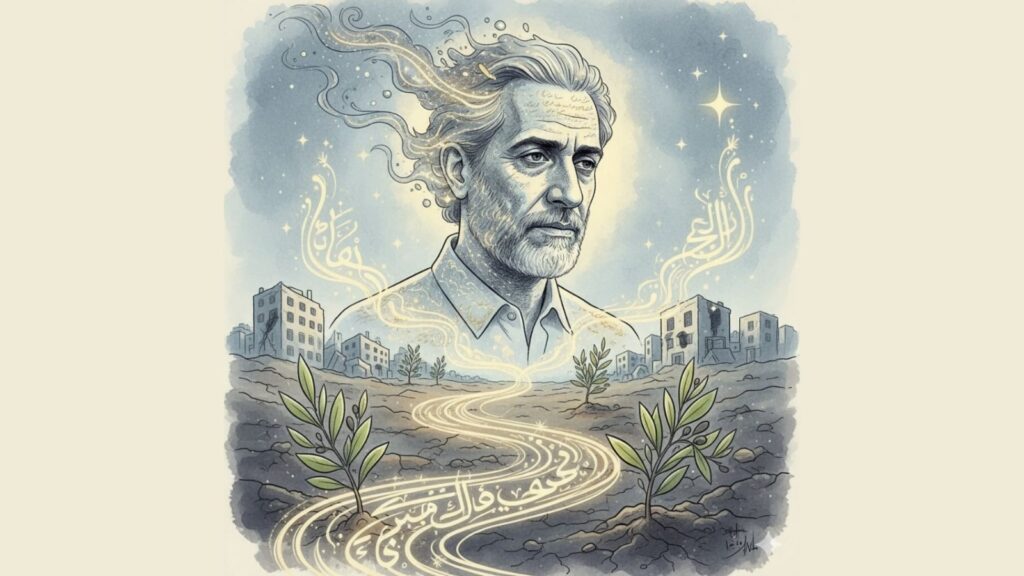
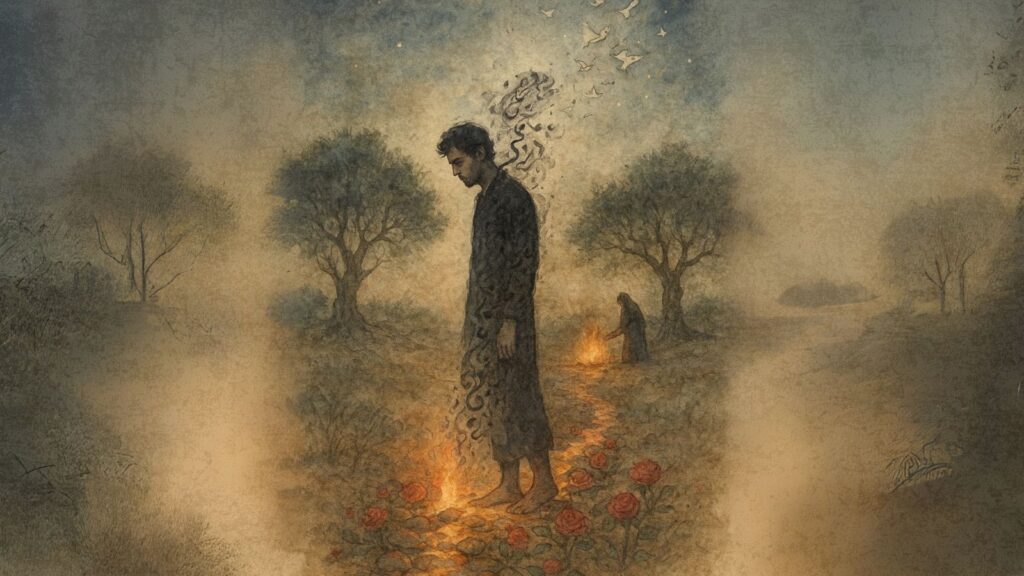
Through him, the wound of Palestine found its voice. His poems walk barefoot across the burning stones of foreign lands, yet each evening return to the olive groves of his homeland, to the dream of his mother’s fire. In Darwish’s poetry, even wounds bloom like roses. His loves, his muses, dissolve at last into the longing for a country. Love itself becomes rebellion, and rebellion becomes a tender act of patience, of waiting—of never abandoning the dream of return.
“Write down, I am an Arab,” he once declared,
“…I have learned the taste of exile,
and the salt of endless tears.
But I will stand, still, like a tree—
my roots deep in the earth,
my branches in the sky.”
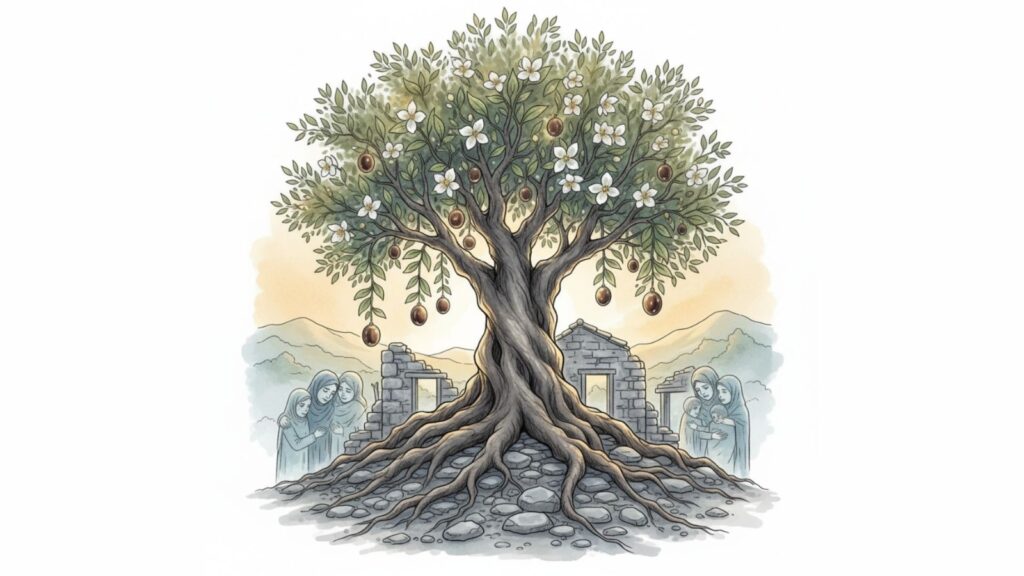
That cry was not his alone; it became the anthem of a people dispossessed. And today, as Gaza is bombarded, as entire families are buried beneath rubble, as children carry the memory of homes they will never see rebuilt—Darwish’s voice echoes with prophetic clarity. The genocide unfolding now is but the continuation of the catastrophe that expelled him from his own village decades ago. The names of towns erased, the olive trees uprooted, the homes stolen—these live again in his verse, which refuses to allow forgetting.
Darwish inherited the grandeur of the Arabic lyrical tradition, yet within his lines converse Lorca, Homer, Aeschylus, Neruda. He wove into poetry a homeland that could not be seized, constructing in verse what was denied in life. Though he lived in exile, his words remain rooted in Palestine, carrying the fragrance of jasmine, the bitterness of coffee, the silence of ruined houses, the cry of mothers in Gaza, the steadfastness of olive trees that will outlive empires.
To speak of twentieth-century poetry without his name is impossible. And to read him now, as bombs fall upon Gaza, is to feel that time itself has collapsed—that the exile of yesterday is the massacre of today, that the wound he sang of has not closed, but bleeds still into our present. Darwish is not gone. He is the eternal witness, the elegist of a people who refuse to vanish. His poetry does not console; it resists. His verse does not mourn alone; it dreams, and in dreaming it keeps alive the hope of Palestine.


