


Srinagar woke up to dark skies, relentless rain, and a knot in the stomach on Wednesday. As the Jhelum inched closer to danger levels, residents began tracking river gauges on their phones, frantically finding themselves reliving the horrors of the 2014 flood.
Srinagar was swallowed by water in September 2014. The Jhelum breached its banks after incessant rains, submerging entire neighborhoods, displacing thousands, and leaving behind a city scarred by mud, broken homes, and memories too heavy to forget. Boats replaced cars, schools became shelters, and families clung to rooftops, waiting for rescue.
More than a decade later, as September arrives again with rains and river levels rising, that collective trauma resurfaces. The city may have healed on the surface, but beneath lies a deep unease: What if it happens again? Many survivors see the sound of rain on the tin roof or the swelling of the Jhelum as a “painful point,” a “flood of trauma” as devastating as the waters themselves.
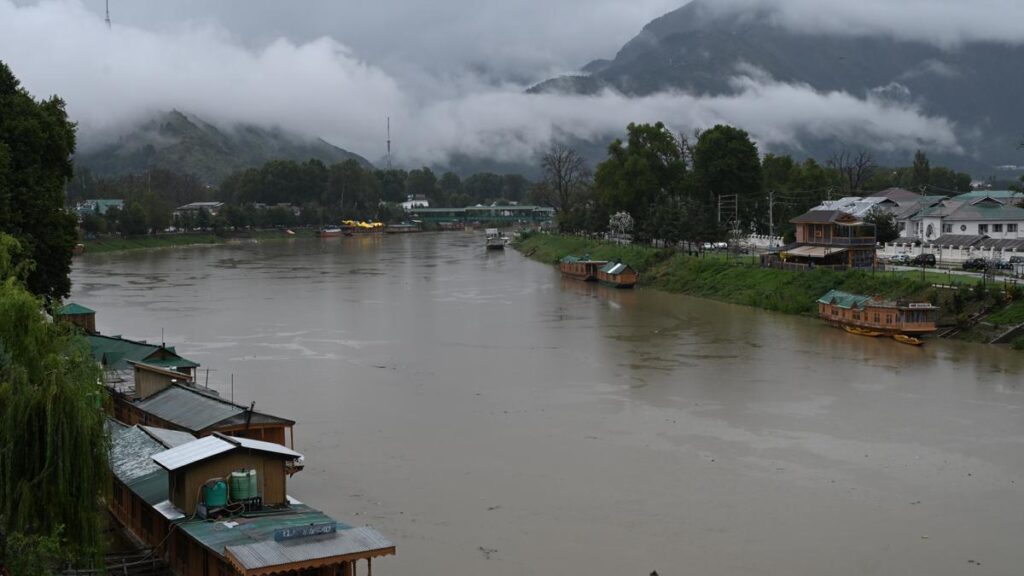
“The 2014 floods had a great impact on me; for the first time we saw a flood like that. It not only destroyed our house but also unforgettable memories. I was able to save my household largely, but we couldn’t save the memories of our house,” says Khalida.
Khalida, a resident of Kashmir who has spent her entire life near Jhelum, still finds herself lingering in the havoc of the flood. As rain “lashes for more than three days,” she recalls how people died saving each other, pregnant women gave birth to weak babies, and children screamed out of fear.
“I still remember the screams of children and how people lost their lives. As the water level rises again, it makes me anxious; it makes me relive the pain, the horror,” she adds.
Rising Waters Resurface the Pain of 2014
In south Kashmir, Qazigund in Kulgam district recorded 90.6 mm of rainfall, followed by Kokernag with 89 mm and Pahalgam in Anantnag with 64.4 mm on Wednesday. Srinagar itself received 46.1 mm of rainfall in the past 27 hours ending at 11.30 am on Wednesday.
Eleven years down, as families still shift valuables to upper floors, shopkeepers store goods on wooden planks, anxious parents tell children not to stray far from home, and on WhatsApp groups, hourly updates of water levels circulate, Khalida experiences pangs of anxiety. But this time she does not want to be just a survivor; she wants to “do the best to save everyone around her.”
“No Flood Plan Since 2014, Only Ecological Damage”
After the catastrophic deluge of 2014, residents claim that little has changed on the ground, with ecological mismanagement and administrative apathy leaving the Valley vulnerable to another disaster.
Dr. Raza Wahid, a Kashmiri columnist, says that since the devastating floods of 2014, “no comprehensive planning has been undertaken by the government or the administration,” leaving people to believe that conditions would somehow improve on their own. He attributed the rising threat of floods to “ecological imbalance caused by cloudbursts, erratic weather, and unchecked human activity.”
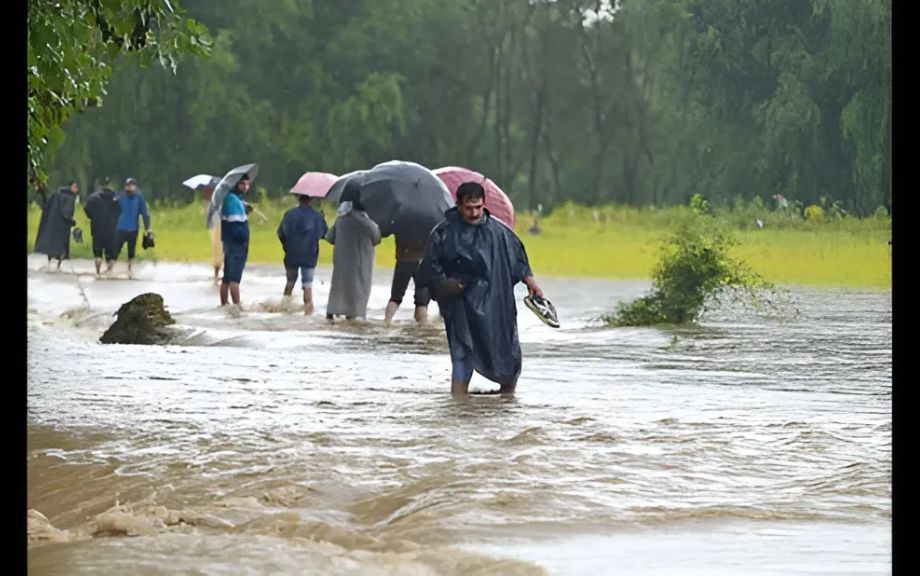
Factors such as rampant deforestation, soil lifting from hills, shrinking of rivers and canals, illegal constructions along riverbanks, and mushrooming of residential colonies in flood-prone areas have compounded the crisis.
Meanwhile, the debate around accountability for Kashmir’s flood vulnerability has turned inward too. Beyond administrative lapses, many argue that society itself bears responsibility for eroding the Valley’s natural defenses against rising waters.
Reflecting on the role of Kashmiris in the region’s recurring flood crises, Maher N. Nisa, a Kashmiri journalist, says that while people have long lived in close harmony with nature, relying on water bodies as lifelines and even as modes of transport before roads were built, they have increasingly taken this relationship “for granted.” Encroachment on riverbanks, narrowing of waterways, and the unchecked dumping of waste have eroded natural safeguards. “We stopped taking responsibility for our environment, and water, which always finds its own course, is now reclaiming the space we denied it,” Maher adds.


