


Donald Trump’s latest assault on the H-1B visa system—proposing a $100,000 annual fee per visa holder—is more than just a policy tweak. It is an attack on the livelihoods of Indians abroad, the remittances that sustain millions of families, and the fragile foundations of India’s foreign policy.
The Numbers That Matter
For decades, Indians dominated the H-1B program. The US fiscal data from October 2022 to September 2023 shows that 72.3% of all H-1B visas went to Indian nationals. Most were tech professionals earning an average of $120,000 annually.
These incomes didn’t just change individual lives—they powered India’s economy. Remittances from the diaspora form a cornerstone of India’s $125 billion annual inflow, sustaining families and enabling upward mobility.
Within India, states like Telangana and Andhra Pradesh became deeply tied to this migration economy. Hyderabad alone holds the world’s largest concentration of H-1B visa holders. These earnings flowed back as NRI deposits and transformed entire local economies.
Now, that ladder of mobility has been pulled away.
Washington Acts, New Delhi Watches
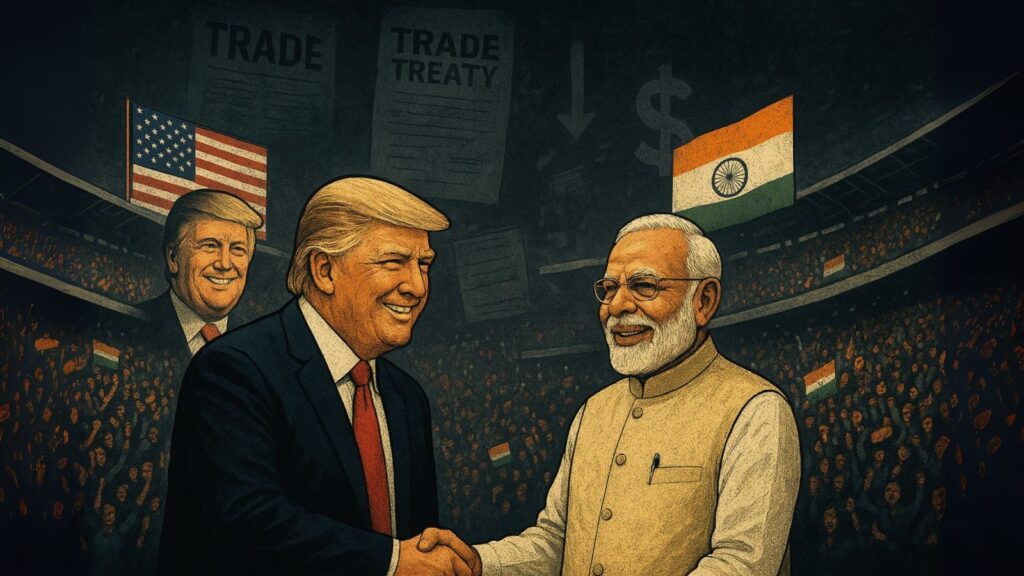
Let’s be clear: the blame does not lie in Washington. Trump has acted in what he believes to be America’s interest. The real question is: what did India gain from Howdy Modi in Houston or Namaste Trump in Ahmedabad?
What was achieved by stadium spectacles and birthday greetings? Certainly not leverage. When the US can casually strike at the livelihoods of Indians while still calling us “strategic partners,” it proves that New Delhi carries little weight in Washington’s calculations.
A Larger Pattern of Pressure
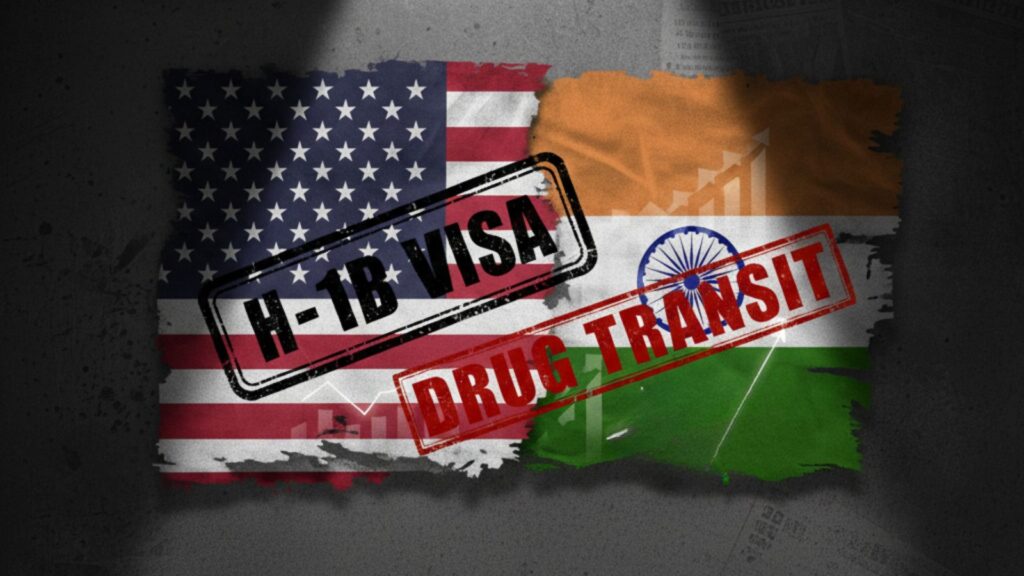
The H-1B crackdown is not a single event. It is part of a broader shift in geopolitical and economic dynamics. This includes imposing high tariffs on Indian exports, which signals a tougher trade position. At the same time, the United States has started to revive economic ties through a new trade deal with Pakistan. There is also a Pakistan-Saudi agreement that likely would not have happened without U.S. approval. To add to this trend, the U.S. has officially labeled India as one of the world’s major illicit drug producing or transit countries. This designation further strains bilateral relations and reflects changes in regional alliances and strategic interests.
Each move chips away at India’s image, bargaining power, and credibility.
Missed Opportunities & Limited Responses
India has made a major move toward economic independence by signing dedollarisation agreements with more than 18 countries, including Qatar and several ASEAN nations, to enable trade in rupees. While this is a step toward reducing reliance on the U.S. dollar, it is only part of the solution. Key questions still need answers: Where is the plan to protect Indian workers abroad, many of whom face risks from changing immigration policies? Where is the strategy to explore opportunities in more than just a few traditional markets? Most importantly, where is the diplomatic power needed to protect India’s long-term strategic and economic interests in a world that is becoming more multipolar and unpredictable? Without addressing these issues, dedollarisation will not be enough to strengthen India’s global standing.
The Real Cost
Tens of thousands of tech workers who spent years building their careers in the United States now face sudden and unsettling uncertainty. This isn’t just a bureaucratic shake-up; it’s a crisis with serious human and economic effects. Families back home, reliant on remittances, are facing severe income losses. States like Andhra Pradesh and Telangana, which depend heavily on funds from Non-Resident Indians to support their local economies, risk stagnation and decline. This isn’t an abstract policy debate; it directly impacts people’s lives, jobs, and futures.
The Lost Decade
India’s foreign policy in the past decade has focused more on spectacle than on strategy. This shift shows in stadium rallies in Houston, flashy events in New York, and staged photo opportunities in Ahmedabad. However, these displays have not stopped Washington from gradually undermining India’s strategic and economic interests. The truth is clear: Modi’s foreign policy has failed. It has exchanged substance for show, replaced serious diplomacy with self-promotion, and left India more isolated, vulnerable, and less respected around the world. By prioritizing image over real impact, it has weakened the foundations of India’s global standing.
2014–2024 will not be remembered as a decade of global rise. It will be remembered as India’s lost decade, authored by the arrogance and short-sightedness of Modi’s foreign policy.


