


Both countries are forging new ways to get ‘wealthier’ in a troubled world
Amidst a changing global landscape, the two rising economic giants – India and Indonesia have captured the attention of global observers. With a staggering combined population of 1.7 billion, these two Asian giants are poised to claim the title of the world’s fastest-growing economies among the top 20 in 2023 and beyond, according to the IMF’s projections.
This article delves into the development trajectory of these two emerging powers, exploring their similarities, challenges, and potential to re-shape Asia and beyond.
The Common Ground
India and Indonesia, both vibrant democracies, share deep-rooted cultural connections and historical legacies. With their membership in the largest global forums such as the G-20, E7, Non-aligned Movement, and the United Nations, they have amplified their voices on the world stage.
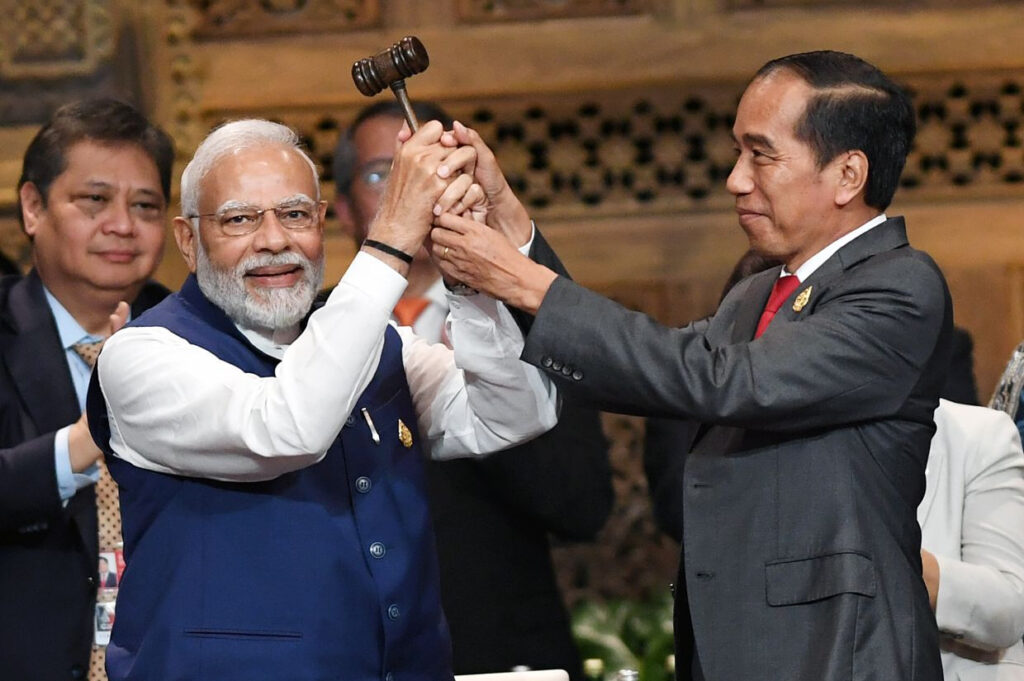
India and Indonesia also share a colonial past, and now have the same approach towards the future, well almost! Both the Nations, with their sizable youth populations (45% and 42% under the age of 25, respectively) are sharing common vision for revitalizing their education systems, and fostering self-reliance.
Human Resource Development
President Joko Widodo from Indonesia and the Indian Prime Minister Narendra Modi have recognized the pivotal role of human development in driving the nations’ progress.
By prioritizing qualitative measures over materialistic growth, both of them are aiming to channel the energies of the youths towards positive outcomes.
Furthermore, marked by notable milestones, India-Indonesia defense relations are also booming. In a significant development, Indonesia secured a deal in March 2023 to acquire the highly potent BrahMos cruise missile from India, valued at an impressive $200 million.
Navigating Geopolitical Challenges
While India and Indonesia strive for self-reliance and assert their prowess in global exports, they have a formidable challenge of competing the existing global powers such as China and the USA.
Also, India’s decision to refrain from participating in the Regional Comprehensive Economic Partnership (RCEP), driven by concerns regarding the domestic industries, underscores the critical need for strengthening the Association of Southeast Asian Nations (ASEAN).
Forging Stronger Bonds
India’s recent adjustment of import tariffs on palm oil and Indonesia’s potential increase in imports of sugar and yarn exemplify the tangible benefits, stemming from collaboration between the two nations.
Seizing Opportunities
By redesigning their energy, food, health, and education systems, India and Indonesia have the potential to take leadership roles and offset the instability caused by global superpowers.
Amidst the anticipated global downturn in 2020, these emerging powers made significant strides in areas such as manufacturing, infrastructure development, and digital services.
Their ever growing ambitions can also attract the cooperation of the European Union and partners in the Indo-Pacific, creating a ripple effect of ‘progression’ and ‘stability’.
By leveraging their strengths, embracing regional cooperation, and capitalizing on opportunities, India and Indonesia are well-positioned to unlock their full potential and shape the future of Asia and Beyond.
Written and Researched : MARHABA HILALI

