


The war with Iran has now extended beyond one month. On 28 February, the United States and Israel carried out coordinated air strikes targeting key figures within Iran, killing its Supreme Leader, Ayatollah Ali Khamenei.
The killing of the Supreme Leader, alongside the heavy strikes against the Islamic Republic, appeared to constitute an attempt at regime change—long considered one of the strategic objectives of the campaign. In a social media post, the President of the United States described the moment as “the single greatest chance for the Iranian people to take back their Country”, while warning the Islamic Revolutionary Guard Corps (IRGC) of severe consequences: “Now they can have immunity; later they will only get Death.” He also expressed hope that Iranian security forces would align with what he termed “Patriots” to restore national “Greatness”.
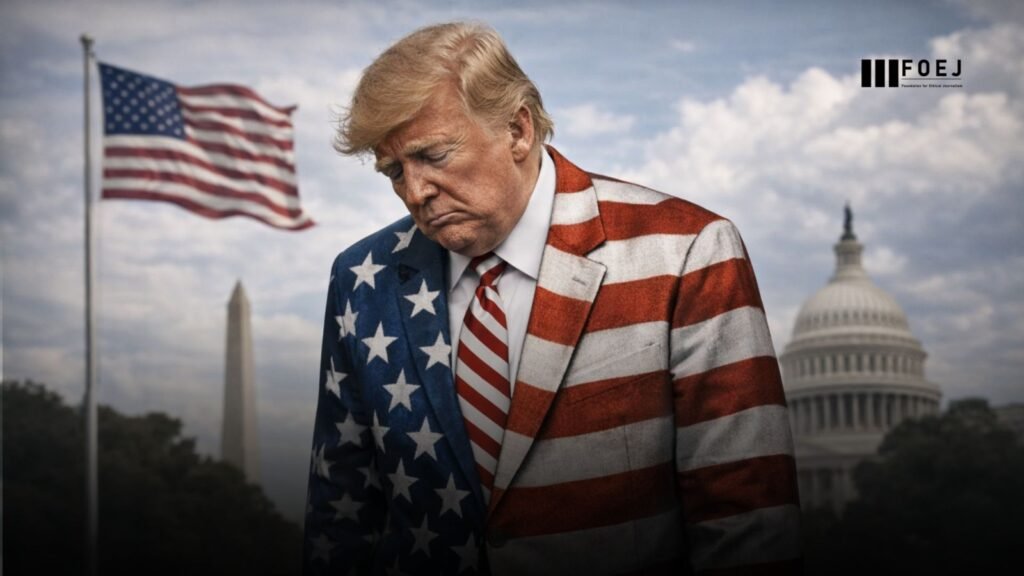
Contrary to these expectations, the IRGC launched an immediate and unprecedented retaliation against US assets in West Asia and Israel. Donald Trump, following the Iranian response, admitted that “Nobody expected that. We were shocked.”
Since then, the United States and Israel have continued to strike Iran and Iranian military targets in a tit-for-tat dynamic, responding rapidly to each escalation. Iran, for its part, has sustained a coordinated counteroffensive. Domestically, the Iranian population have rallied in support of the Islamic Republic, thereby strengthening internal resistance and emboldening Foreign Minister Abbas Araghchi amongst others.
In an effort to deter further US–Israeli aggression, Iran moved to close the Strait of Hormuz. The closure of this critical maritime corridor, through which 20 per cent of the world’s energy supply passes, triggered a global energy crisis, disrupted supply chains, and caused turbulence in international markets. Trump subsequently called upon affected countries to deploy naval forces to reopen the Strait, stating on social media: “Hopefully China, France, Japan, South Korea, the UK, and others, that are affected by this artificial constraint will send ships to the area so that the Hormuz Strait will no longer be a threat by a nation that has been totally decapitated.”
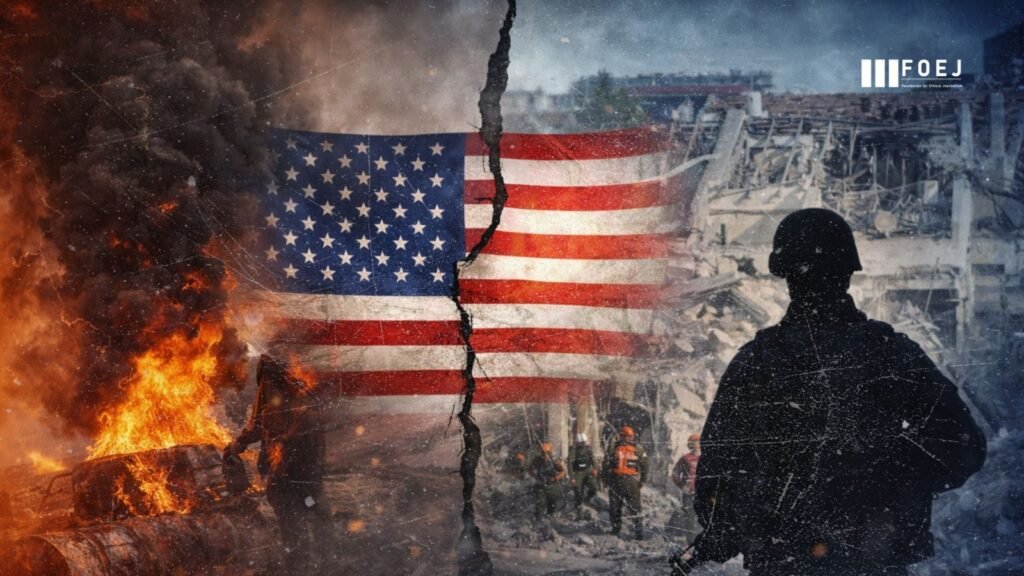
However, following a formal request from the United States, no country including NATO allies, despite their centrality to American security architecture, agreed to send warships to secure the Strait. Trump warned that failure to act would have “very bad” implications for NATO’s future.
Germany’s Chancellor, Friedrich Merz, while asserting that “the Iranian regime must come to an end”, ruled out military participation, including efforts to reopen the Strait. Defence Minister Boris Pistorius reinforced this position, stating: “This is not our war… What does Donald Trump expect from a handful of European frigates that the US Navy cannot manage alone?”
Similarly, UK Prime Minister Keir Starmer declined participation, stating that the United Kingdom would not be “drawn into the wider war”. Italy’s Foreign Minister, Antonio Tajani, emphasised that “diplomacy needs to prevail”, noting that Italy was not involved in any naval missions that could be extended to the region.
European Union ministers likewise expressed no support for Trump’s call. Greece also ruled out military engagement, while Australia, France, and Japan stated that they had no plans to deploy warships.
Following this collective refusal, Trump reiterated in an interview with the Financial Times that such inaction would be “very bad for the future of NATO”.
Meanwhile, Italian Prime Minister Giorgia Meloni condemned a deadly missile strike on a primary girls’ school, “Shajareh Tayyebeh” (“The Good Tree”), in the city of Minab in southern Iran, which killed at least 160 people on Saturday, 28 February 2026. She called for accountability, stating: “On behalf of the government, I express my firm condemnation of the massacre of girls at the school in Minab.” She also conveyed solidarity with the families of the “very young victims” and urged that responsibility for the tragedy be swiftly established.
Spain, one of Europe’s most vocal critics of US and Israeli military actions during the month-long war, closed its airspace to US aircraft involved in the war. The country had earlier refused access to jointly operated military bases, describing the campaign as illegal, reckless, and unjust. Defence Minister Margarita Robles clarified: “This was made perfectly clear to the American military from the very beginning.
Therefore, neither the bases nor, of course, Spanish airspace are authorised for any actions related to the war in Iran,” characterising the war as “profoundly illegal and profoundly unjust.”
Spanish Prime Minister Pedro Sánchez, invoking the slogan “No to war”, stated: “We are not going to be complicit in something that is bad for the world and contrary to our values and interests, merely out of fear of reprisals.”
These developments raise a critical question: is Donald Trump steering the United States towards diplomatic isolation?

(The views expressed in this article are those of the author and do not necessarily reflect the views of FoEJ Media.)


