


Journalist Siddique Kappan and ten others have been named in a police case following a public gathering held Saturday at Vanchi Square to protest the arrest of fellow journalist Rejaz M. Sheeba Sydeek. The event, organised by civil rights advocates, drew activists from groups including the Social Democratic Party of India (SDPI) and the Welfare Party of India.
Kochi police say the protest became an unlawful assembly and disrupted public movement in the busy junction near the Kerala High Court. Officials claimed that the use of loudspeakers without prior police sanction and obstruction of traffic led to legal action. Two participants were briefly detained after allegedly resisting orders to disperse, including an instance where a sub-inspector was reportedly pushed.
However, Siddique Kappan, while talking to FoEJ Media said, “There was no traffic disruption, and the event took place at a location under the control of the Cochin Corporation with their permission,” Kappan said. “I left immediately after my speech, around 5 pm. I don’t know what happened after that. I wasn’t the organizer of that event.”
Kappan, who was previously jailed while on his way to report on the Hathras case in Uttar Pradesh in 2020, was among those listed in the FIR. While the Kochi Corporation reportedly gave approval for the event, police argue that organisers failed to secure permission specifically for loudspeaker use, which they say is mandatory under local law.

The gathering was held in response to the arrest of Rejaz M. Sheeba Sydeek, a journalist from Kerala detained in Nagpur under the Unlawful Activities (Prevention) Act (UAPA) earlier this month. Authorities in Maharashtra claim that his social media posts criticising “Operation Sindoor” constituted unlawful and provocative content, a claim that rights groups have called excessive and politically motivated.
“I haven’t done anything illegal, so there’s no chance of legal problems,” he said. “I am a journalist and it is my duty to speak up for press freedom. If I do not speak out on such issues, history will blame me, and so will future generations,” Kappan said.
“There is still a good space for press freedom in Kerala. I think there is no shortage of freedom to criticize the government,” he said. “Kerala is a place where press freedom exists compared to other states.” kappan added.
Nonetheless, the booking of journalists and activists over what many describe as peaceful gatherings has prompted renewed concerns about the space for dissent in India’s democratic framework. Press freedom advocates argue that legal action against journalists for acts of solidarity further chills free expression and protest rights.
Police officials, meanwhile, insist the action was based solely on law and order considerations and not influenced by the professional background or affiliations of those involved.
The Arrest of Journalist Rejaz M. Sheeba Sydeek
Rejaz M. Sheeba Sydeek, a 26-year-old journalist and activist from Kerala, was arrested on May 7 in Nagpur over allegations related to social media posts critical of the Indian Army and the ongoing Operation Sindoor. Authorities have also accused him of maintaining links with banned outfits, including the CPI (Maoist) and Hizb-ul-Mujahideen.
According to police, Sydeek’s online activity—particularly his alleged use of the dark web and communication with foreign nationals reportedly linked to Pakistan—raised national security concerns. A raid on his premises allegedly uncovered literature promoting Naxalite ideology, which police say further supports the charges.
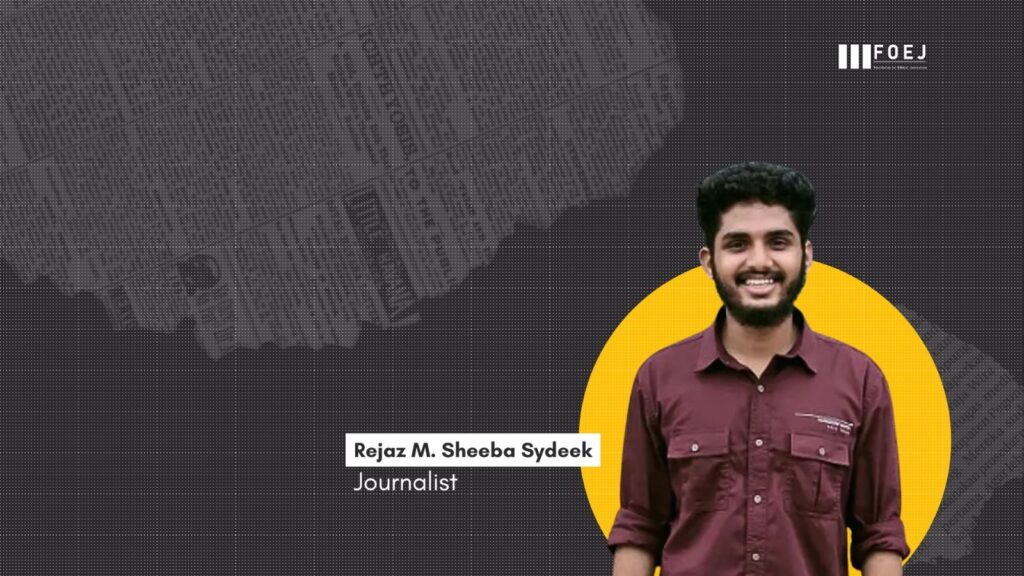
He has been booked under multiple sections of the Bharatiya Nyaya Sanhita, including those dealing with incitement, criminal intimidation, and creating public disorder. Additionally, he faces charges under the Unlawful Activities (Prevention) Act (UAPA) for purportedly supporting terrorist organisations.
The arrest has drawn strong condemnation from press freedom advocates and civil liberties groups, who argue that Sydeek is being targeted for his critical journalism and political commentary rather than any concrete involvement in unlawful activities. Protests have been held in Kerala and elsewhere, with rights groups calling the charges “excessive” and demanding an impartial review.
Sydeek is known for his reporting on human rights and social justice issues, particularly in regions affected by conflict and state surveillance.
Siddique Kappan’s Arrest and Detention: A Journalist’s Two-Year Legal Ordeal
Journalist Siddique Kappan on October 5, 2020 was arrested by Uttar Pradesh Police while on his way to Hathras to report on the widely publicised gang rape and murder of a Dalit woman. Traveling with three others, Kappan was stopped at a toll plaza in Mathura, where all four were taken into custody.
He was subsequently charged under several grave sections of the Indian Penal Code, including sedition (Section 124A), promoting enmity between groups (Section 153A), and insulting religious beliefs with intent to provoke (Section 295A). In addition to these charges, the Unlawful Activities (Prevention) Act (UAPA) and provisions of the Information Technology Act were also invoked.
In early 2021, Kappan was granted a five-day interim bail to visit his ailing mother, Khadeeja Kutty, with the court allowing visitation only by immediate family. She passed away a few months later in June.
During his time in custody, Kappan contracted COVID-19 in April 2021 and was initially treated inside the Mathura district jail hospital. As his condition deteriorated, he was transferred to K.M. Medical College in Mathura, where he was declared COVID-negative and sent back to jail. Following a Supreme Court order, he was later shifted to AIIMS, Delhi, for specialised treatment. In May, he reportedly tested positive again.
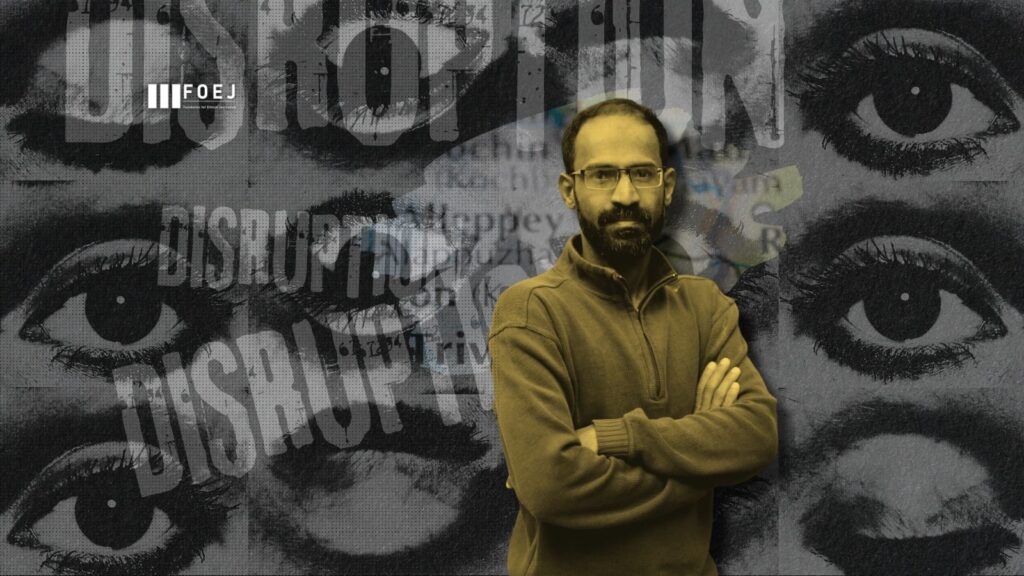
Though the Supreme Court granted him bail in the UAPA case on September 9, 2022, his release was stalled due to a separate money laundering case filed by the Enforcement Directorate (ED). It wasn’t until December 23, 2022, that the Allahabad High Court granted him bail under the Prevention of Money Laundering Act (PMLA), finally paving the way for his release.
After walking free, Kappan alleged he was subjected to custodial torture during his detention, claiming police attempted to extract forced confessions through coercive means.
Kappan’s prolonged incarceration and the nature of the charges against him have been widely criticised by press freedom watchdogs, who view his case as indicative of growing threats to independent journalism and dissent in India.


