


Prime Minister Narendra Modi’s latest Independence Day address from the Red Fort struck a noticeably ideological tone, one that many observers felt highlighted the convictions of a lifelong Rashtriya Swayamsevak Sangh (RSS) karyakarta rather than the inclusive voice of the Prime Minister of the world’s largest democracy. While Independence Day is a time for national reflection on the sacrifices, struggles, and pluralistic vision that shaped India’s freedom, Modi’s rhetoric appeared to depart from that spirit, projecting instead the posture and language of the Sangh Parivar’s worldview.
Behind his words of “development” and “national pride” lay an unmistakable ideological undertone, an ode to the RSS, an organisation whose historical baggage and ideological DNA stand in direct opposition to the inclusive spirit of India’s Constitution.
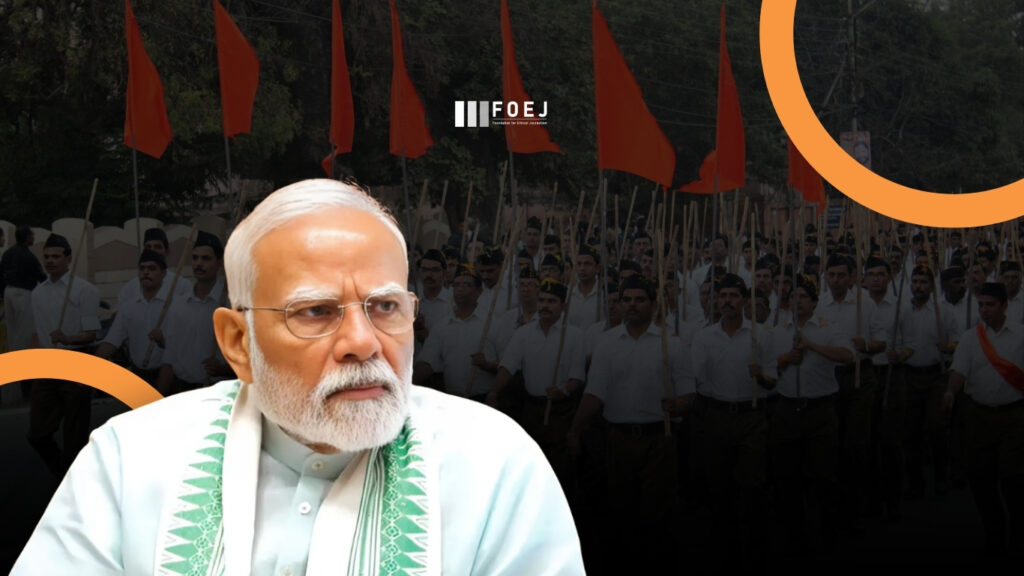
The RSS and Its Troubled History
The Rashtriya Swayamsevak Sangh (RSS), established in 1925 by K. B. Hedgewar, emerged as a reactionary force to the complexities of India’s pluralistic society. Both Hedgewar and his successor, M. S. Golwalkar, consistently promoted the idea of India as a Hindu Rashtra, a nation defined by Hindu identity, where religious minorities would be relegated to second-class status. Golwalkar’s controversial 1939 text, We, or Our Nationhood Defined, openly expressed admiration for Nazi Germany’s emphasis on racial purity, advocating that minorities in India must either fully assimilate into the dominant Hindu culture or be stripped of equal rights.
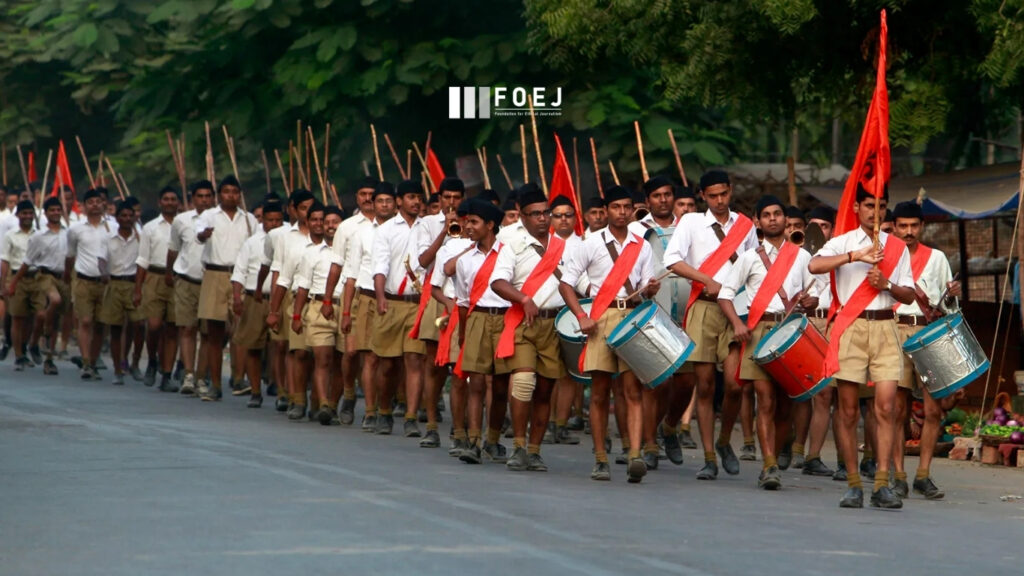
This ideology was not confined to theory, it shaped the RSS’s actions during critical moments in India’s history. The organisation notably opposed the Quit India Movement of 1942 and remained distant from the broader freedom struggle, choosing instead to concentrate on constructing a disciplined, cadre-driven Hindu nationalist network. Its conduct during the Partition was similarly contentious, with several affiliated groups accused of inflaming communal tensions, thereby exacerbating the violence and deepening the scars of mistrust between communities.
And perhaps the most indelible stain: the assassination of Mahatma Gandhi in 1948 by Nathuram Godse, RSS member and ideologue deeply shaped by the organisation’s worldview. Gandhi, was murdered by forces that rejected pluralism and secularism. In the aftermath, the RSS was briefly banned, only to re-emerge later with the same ideological rigidity.
Riots, Pogroms, and the Politics of Hate
From the communal riots during Partition, through the 1960s and 1980s, to the demolition of the Babri Masjid in 1992, and the Gujarat violence of 2002, the RSS and its sprawling family of organisations the Sangh Parivar have been repeatedly linked to mobilisations that fuel division and bloodshed. Independent commissions, journalists, and human rights groups have chronicled how this ecosystem thrives on creating fear of the “other” whether Muslim, Christian, or Dalit.
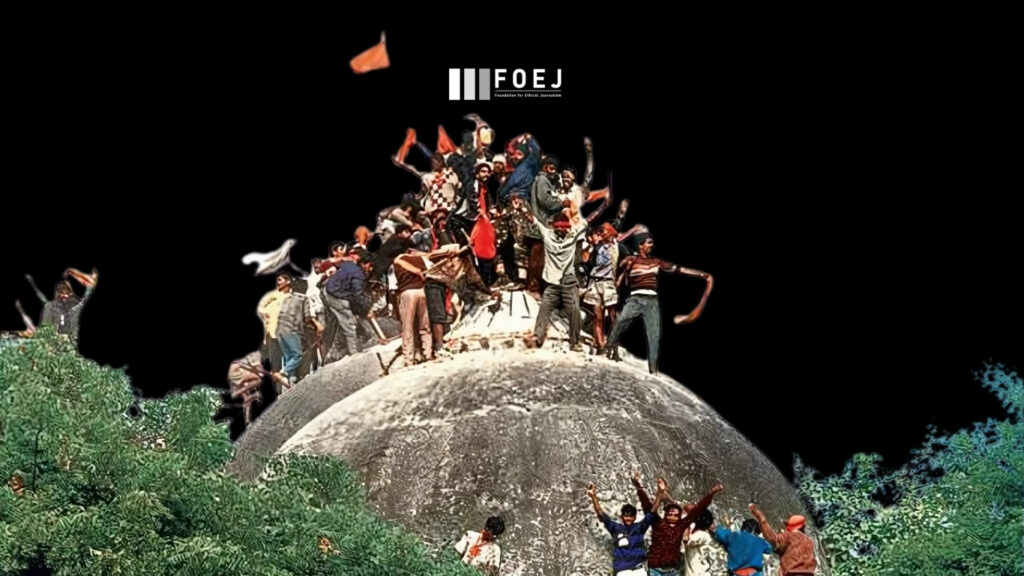
It is this ecosystem that Narendra Modi is deeply embedded in. His political grooming was not in the arena of democratic struggle, but in the shakhas of the RSS. His rise to national power has always been intertwined with this ideological machine, which blends cultural nationalism with majoritarian assertion.
Modi’s Independence Day Speech: Hollow Promises, Hidden Agendas
Modi’s address this year once again celebrated India’s “development journey” under his leadership. Yet, beneath the grand claims of economic growth, technological advancement, and global leadership, lies a harsher reality: increasing unemployment, crumbling public institutions, widening inequality, and a shrinking democratic space.
More troubling, however, was his subtle glorification of the RSS worldview couched in phrases about “cultural pride” and “national rejuvenation.” These are not innocent words. They are ideological markers of a project that seeks to redefine India from a secular democracy to a majoritarian state.
His rhetoric carefully sidesteps the failures of governance, the allegations of electoral malpractice, and the charges of authoritarianism. Instead, he continues to elevate a contraband organisation with a past steeped in riots, arson, and terror plots disguised as nationalism.
Why This Matters
India’s freedom struggle was not led by the RSS. It was led by Congress leaders, social reformers, and countless ordinary Indians who dreamed of a nation free not just from colonial rule but also from bigotry. By consistently tying India’s destiny to the RSS, Modi erases the pluralist legacies of Gandhi, Nehru, Ambedkar, Maulana Azad, and others.
The danger is not merely historical distortion. It is the active re-engineering of India’s future, where the state increasingly reflects the ideological impulses of one organisation. The RSS’s disdain for minorities, its revisionist reading of history, and its control over educational, cultural, and political institutions mark a direct threat to the constitutional idea of India.
A Prime Minister’s Responsibility
The Prime Minister of India must speak as the leader of 1.4 billion citizens, not as the preacher of a sectarian organisation. By aligning the symbols of national pride the Red Fort, the tricolor, the Independence Day address with RSS-style rhetoric, Modi reduces a day of unity into a platform for ideological consolidation.
India deserves more than hollow promises and divisive ideologies. Independence Day is a moment to recommit to the plural, secular, and democratic ethos that define our Republic. By invoking and glorifying the RSS, an organisation with a chequered legacy of exclusion and violence, Modi not only betrays the spirit of August 15, 1947, but also endangers the future of 21st-century India.
The Prime Minister’s rhetoric may inspire the Sangh cadre, but it alienates the soul of the nation. True leadership lies not in the language of exclusion, but in the courage to embrace every Indian irrespective of faith, caste, or creed. It is time to ask: is Modi still the head of a democratic republic, or merely the most successful pracharak of the Sangh?


