


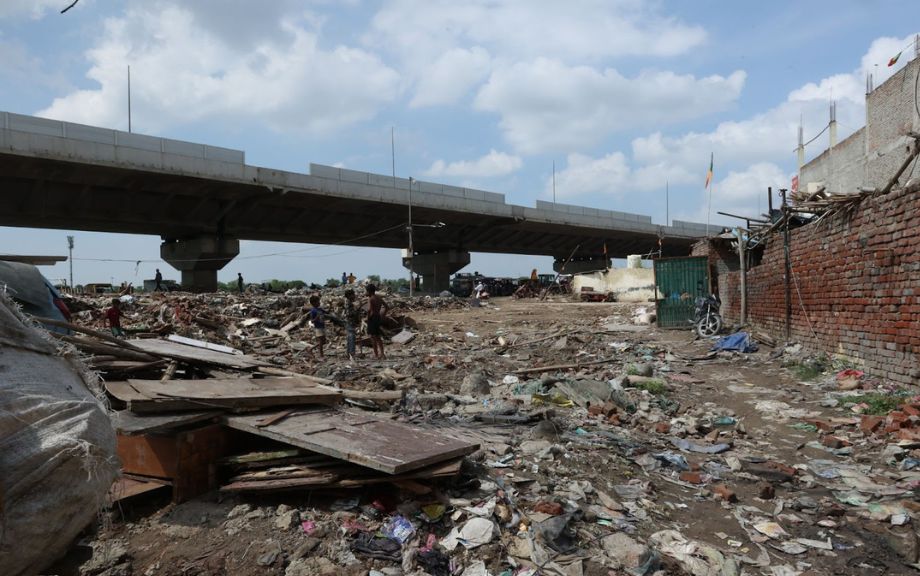
On July 18, 2025, the Delhi Development Authority (DDA) carried out a demolition drive in Jogabai Extension, South-East Delhi, targeting slum settlements as part of its ongoing anti-encroachment campaign. Bulldozers razed homes that had stood for years, leaving dozens of families homeless overnight. Most of those affected belong to the Muslim community. With the monsoon rains and rising rents, they now struggle to find shelter. Many are daily wage workers, e-rickshaw drivers, ragpickers, and women working as maids or domestic help. Their children have lost everything: books, uniforms, and the small comforts they once called home now lie buried under broken bricks and tin sheets.
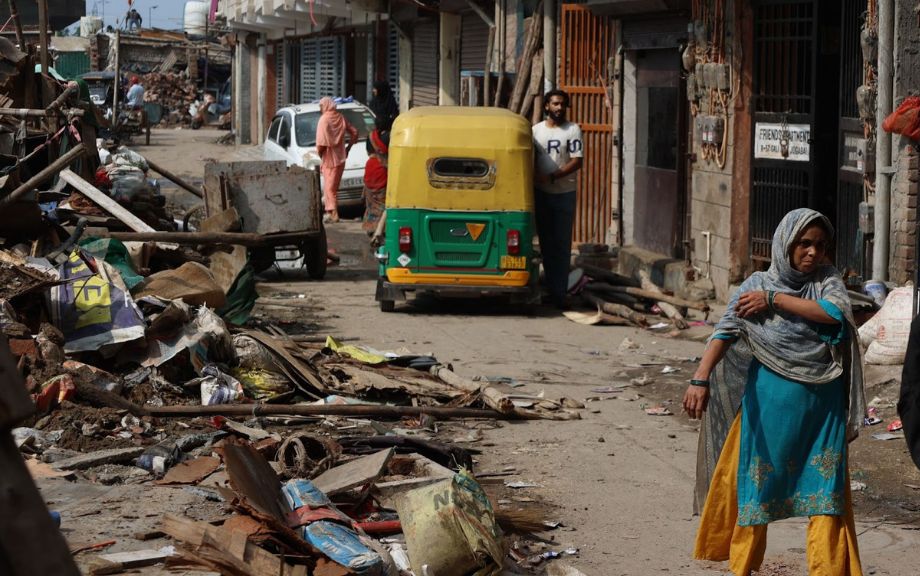
When I entered the narrow lanes of Batla House to reach the site of demolition, the air itself seemed to resist. Garbage lined the paths, and open sewage drains overflowed with filthy, stagnant water, making it nearly impossible to breathe in Delhi’s scorching heat. The recent rains had turned these already broken streets into a maze of clogged, dirty water.
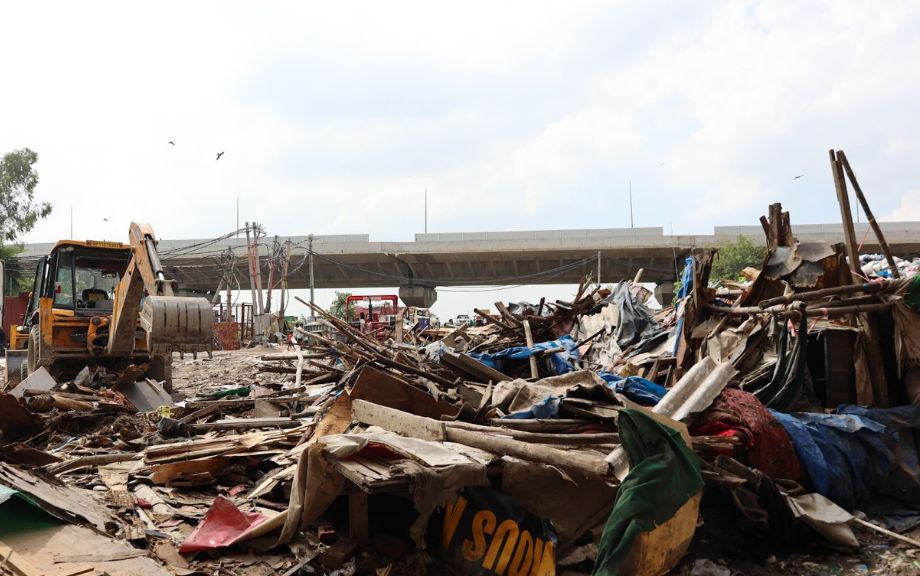
It was a clear sky, but Delhi’s heat was unforgiving. One could feel the sun burning over the skin and as i reached the location, I looked around and saw people collecting pieces of wood from the debris. One local man revealed they use these scraps to cook food, as most of them cannot afford gas connections.
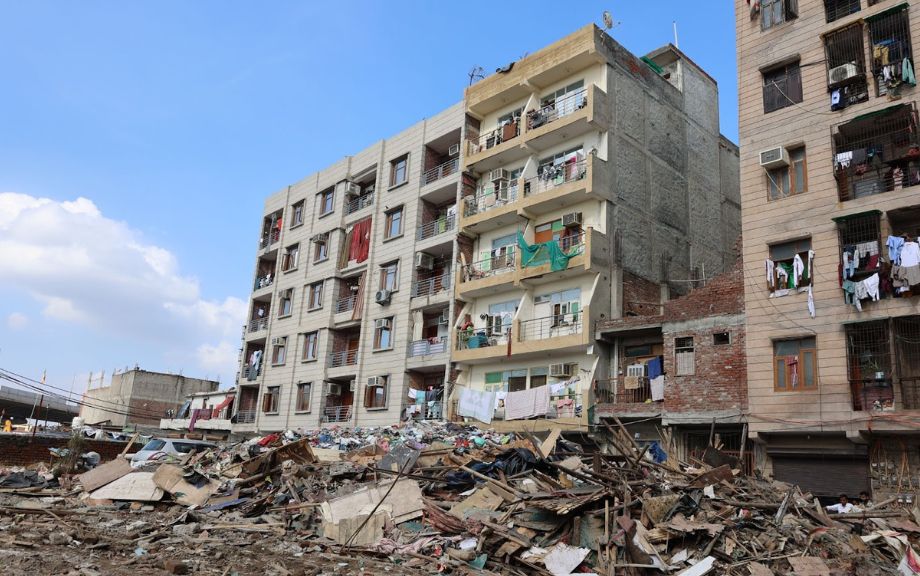
The more I walked into the alleys of the demolished site, the more the contrast became visible. On one side stood the tall, clean buildings of the privileged; on the other, the rubble of homes now erased by bulldozers. This was a stark reminder of how the poor and the privileged live side-by-side, yet only one has the security of a roof overhead.
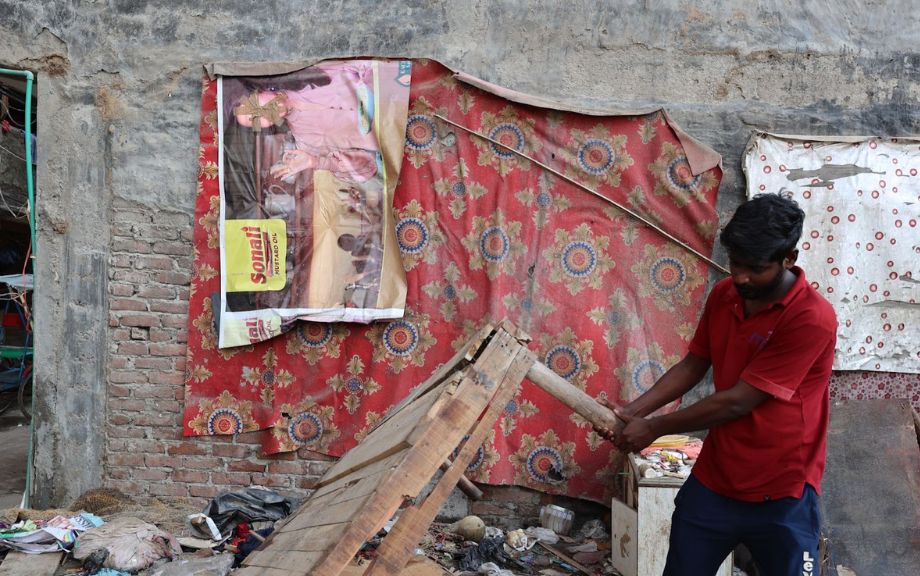
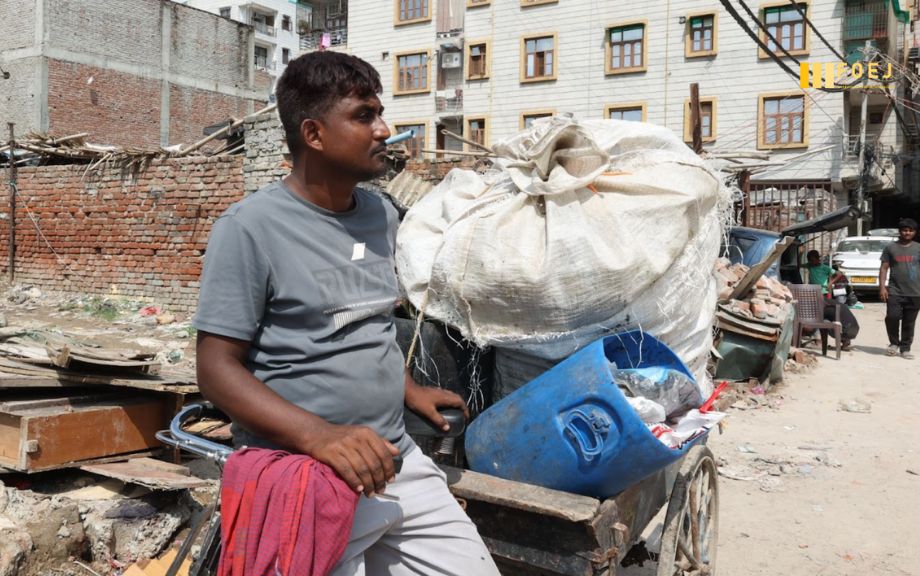
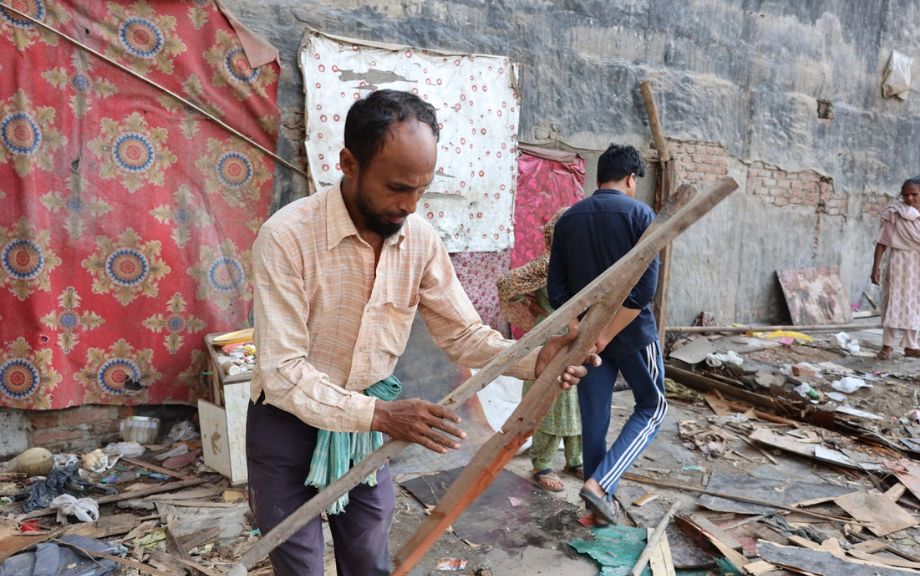
I approached people to hear their stories. One ragpicker spoke to me as he sat on his handcart. His name was Iqbal. He collects garbage and scrap to sell at meager rates. Iqbal told me he earns only 300 to 400 rupees a day and has been living here for the past 15 years. “They demolished our homes after giving us just one week’s notice. But where were they for the past 15 years? Why does this always happen to the poor?” he asked angrily. “I couldn’t even save my belongings, everything was trapped under the rubble. I’ve been roaming the streets since then. The rent is too high; I simply can’t afford a house. The government says, ‘Jahan jhuggi, wahan makaan’ (Where there is a slum, there will be housing). But after the demolition, we’ve been left homeless.”
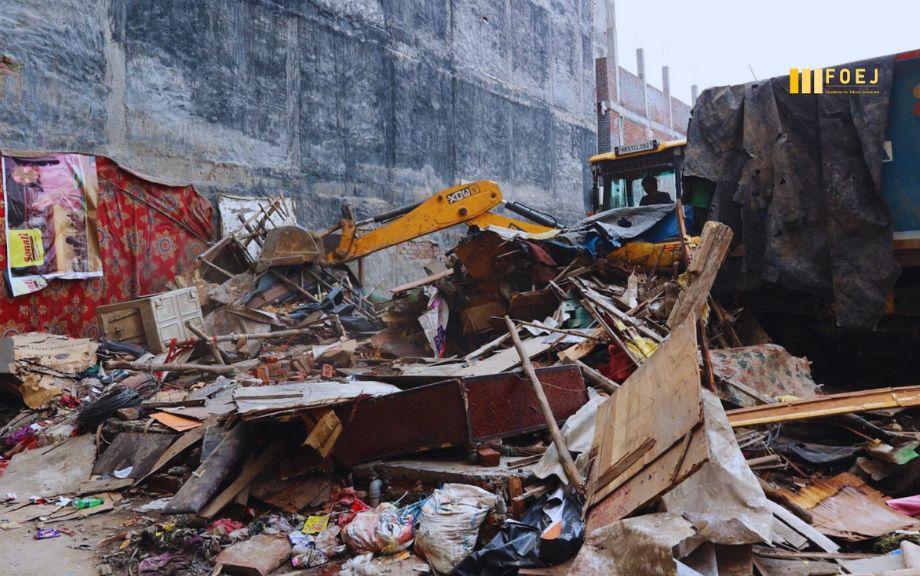
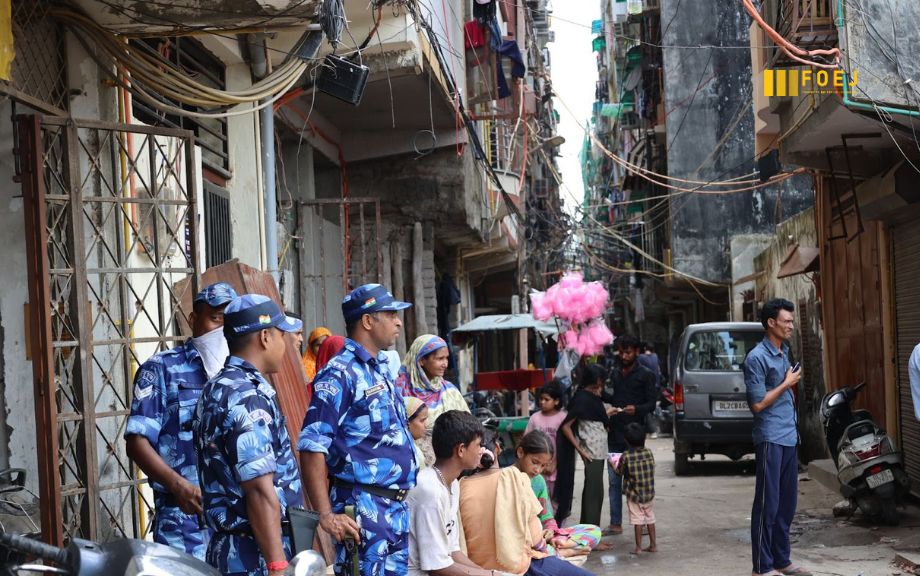
The Rapid Action Force stood at the demolition site, watching as the JCB machines tore down what remained. Families, sitting silently on wooden cots (takhts) placed on the roadside, watched their homes disappear before their eyes. They had gathered whatever little they could salvage. Their faces showed a deep sense of loss. Children sat quietly, under the silence of their screams, as if they already understood that this was probably the last time they would see the final pieces of what they once called ‘home.’
In the middle of the chaos, my attention was drawn to an elderly woman. There were families all around, but she sat alone by herself on a pile of broken wood and scattered stones, quietly trying to gather whatever belongings she could. She wore a hearing aid; I realized this only when she struggled to understand my question.
“What’s your name, Dadi (Grandmother)?” I asked.
She leaned forward towards me, trying to hear. I repeated my question again, “What’s your name, Dadi?”
With a faint smile, she answered, “My name is Aqila Begum. I am 79 years old… and I am a widow.”
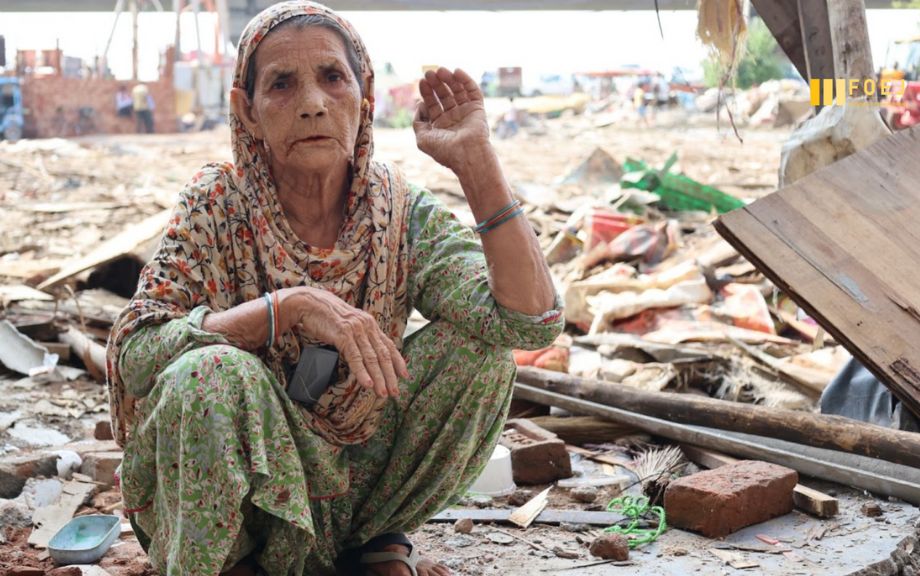
My heart wrenched the moment I heard this. The deep, wrinkled lines on her face told silent stories of a long life filled with hardship. The lines seemed etched so clearly into her skin that, despite her old age, they gave her a certain beauty shaped by survival.
I sat down beside her and asked about her family. She said, “I have no one. I am a widow. I have two daughters, but they are married and live far away. I am left alone now. I suffer from heart problems, and without this machine, I can’t even hear properly.”
Her voice trembled as she spoke, and tears welled up in her eyes. I couldn’t hold back mine either.
I asked her, “Where are you living now?”
With a broken smile, she replied, “I’m living in the parking area of these buildings.
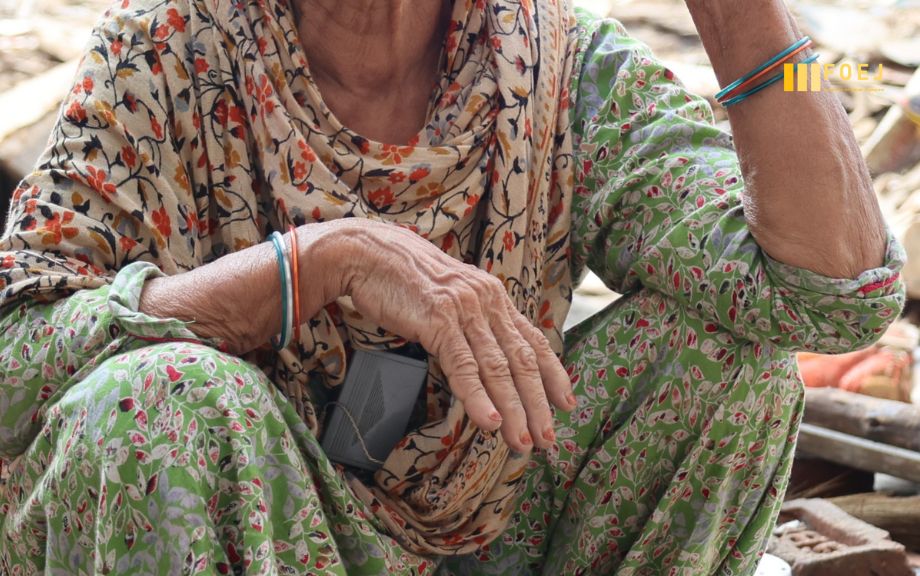
During our conversation, I noticed she was wearing tricolor bangles, the colors of the Indian flag, a quiet symbol of her love for this country. Yet the question haunted me: Will this country come forward to help her? What has this nation done for her? Or will they only come back to her lanes again when it’s time to take down her walls? These questions raced through my mind as she spoke.
“I just want a bed and food to survive these remaining days of my life. I don’t even have much life left… But even in my last days, I deserve dignity. I shouldn’t be left like this on the streets.”
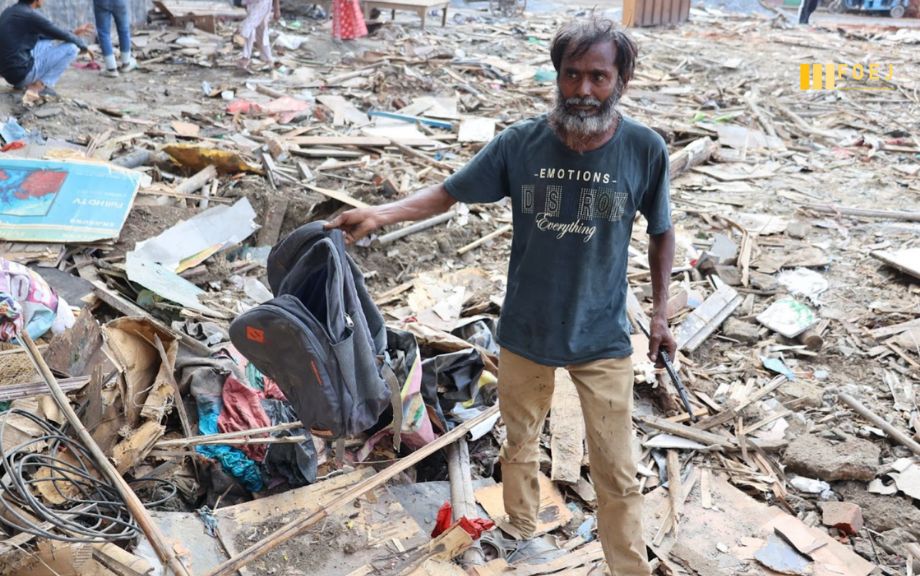
Our conversation ended, and I moved further towards the demolition ground. There, I noticed a man wearing a blue t-shirt. His hair was messy, and his hands were sunburnt and rough. He was looking for something in the rubble with a desperate focus, which caught my curiosity.
When I approached, he showed me a school bag covered in dirt. It belonged to one of his children. As he held it up, tears rolled down his face.
“They left us with nothing. My children have lost their education… I haven’t been to work for the past two days. How will I earn now? Where will I live?” He said, breaking down in front of me.
His name was Mohammad Sultan, 44 years old. “I’ve been living here for 30 years, and now what’s left beneath my feet is nothing but broken pieces of my home.”
“I am a Namazi. I pray five times a day… And now I don’t even have clothes clean enough to perform my namaz. I’ve been wearing these dirty clothes since the day of the demolition.” His voice cracked as he wiped his tears.
“I’m trying to find a home now, but how can I afford 10,000 to 15,000 rupees in rent? I don’t even earn that much in a whole month. We are poor… that’s why they break our homes.”
He added, “Bade makaan har jagah khade hain, chahe vo illegal ho… lekin gareebon ke makaan hamesha tod diye jaate hain.”
(“Big houses stand everywhere, even if they are illegal… but it’s always the poor whose homes are demolished.”)
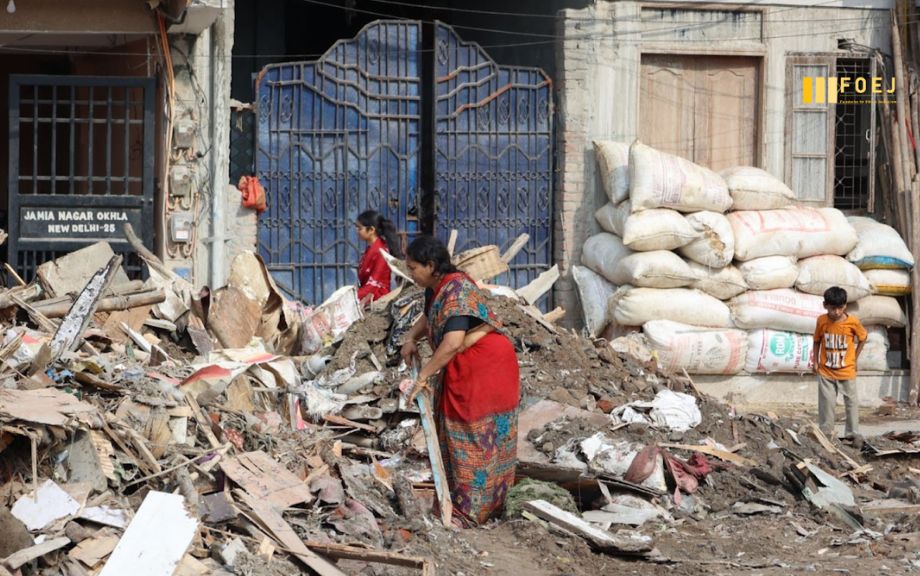
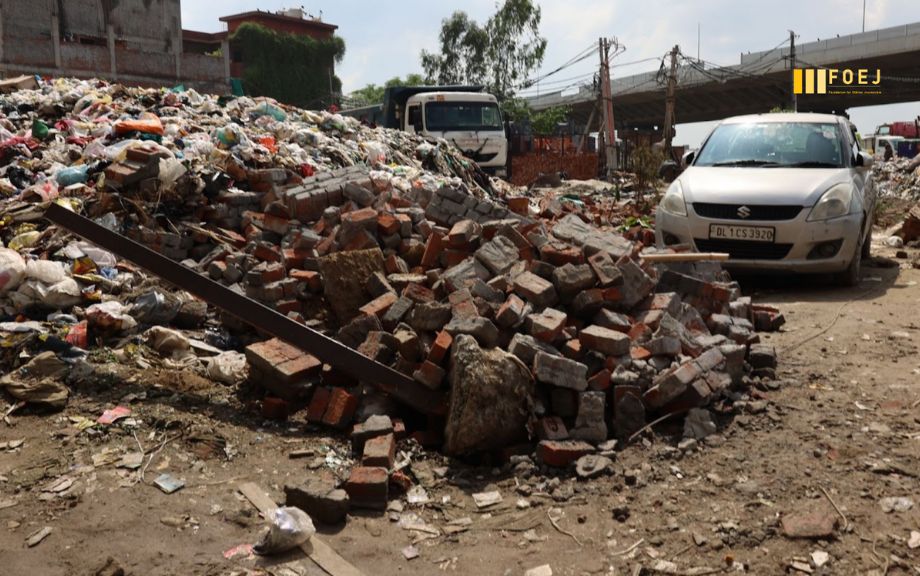
“They didn’t even give us enough time to save our belongings. I’m left homeless now. We come to cities like Delhi from other places just to earn a little money, to take care of our families… but wherever we go, we are pushed away. We are never treated as equals because we are poor. Yes, we are poor, but we are human too,” he said, his voice filled with exhaustion and disappointment.
The conversations with the locals were heavy, emotionally exhausting. Everyone here had a life, a routine, a small world built around these homes. As the bulldozers roared on, tearing through the remains of homes, the loud crashing of metal and debris filled the air, making the atmosphere tense and suffocating.
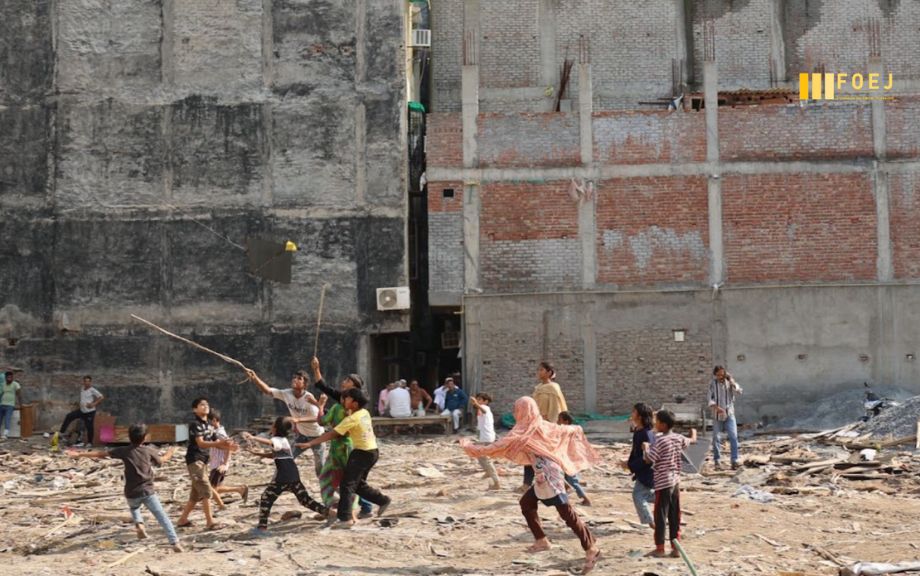
Yet, amid this demolition, I witnessed a fleeting moment of pure, innocent happiness. A small group of children was chasing a kite. One boy, who seemed mute, struggled to speak but managed to communicate with his friends in his own unclear words filled with excitement. He gestured towards the kite, urging them to run after it. Together, they chased a simple black kite across the open ground, laughing and running as if the world around them hadn’t collapsed just days ago.
In that moment, despite having no roof over their heads and the uncertainty of where they would sleep tonight, the children found a slice of happiness. Their innocence remained untouched by the cruelty of eviction and homelessness. Their laughter broke through the heavy silence of despair, a witness to the fact children create their own moments of joy.
As they flew the kite higher, they shouted joyfully, “Hamara photo kheecho!” (“Take our photo!”) Their laughter was contagious. I immediately ran to them, camera in hand, capturing their pure, unfiltered happiness as they chased the kite under the open sky.
This time, I walked back home with a heart much heavier but also with a new perspective on life. I thought of the people we often overlook: the ones who fix our broken doors, who sell us vegetables, who drive our rickshaws through traffic. These people are part of our everyday lives. They help keep the city running, yet when a crisis strikes, they are the vanguard to a series of problems that could one day reach every household in a mask of tyranny.
Their strength, their dignity in suffering, and even their fleeting moments of joy would leave anybody humbled. I realized that poverty isn’t just about lacking a home or money. It’s about being unseen. And yet, despite that, they carry on with resilience, hope, and sometimes, chasing a black kite flying against a sky that doesn’t promise them much.


