


The months of August and September brought a wave of devastation to two major regions of the country, the Punjab and Jammu and Kashmir. Punjab experienced its worst floods in nearly four decades, leading to the impact of over 1,400 villages across more than 13 districts. The flood, which was caused by heavy rain, swollen rivers, and excess water released from dams, resulted in major infrastructure damage and the displacement of hundreds.
On the other hand, the predominantly mountainous and hilly Union Territory of India, Jammu and Kashmir, too, grappled with disastrous floods and landslides in late August, earlier this year, due to record-breaking torrential rains across the region. Both urban and rural areas, especially Srinagar in the Valley and Jammu City, suffered devastation mainly due to river embankments, falling flats of bridges, the shutting of critical highways, and a spate of landslides. As per the reports, over 100 people lost their lives across the Union territory, and the evacuation of over 5,000 people was reported.
Humanity knows no Bounds: A Mosque reopened After 80 years
The floods of Punjab and Jammu and Kashmir, not only made history in devastation but in love and compassion too. A small town Ramdas, becoming the epitome of unity, nestled between big cities in Punjab, the area small yet powerful, reopened the mosque that had been locked since 1947 was reopened after 80 years.
The centuries old mosque is one among the 37 mosques left abandoned in Punjab. Its gates had been closed for decades, the courtyard empty and lifeless, as if, it bore witness to the scars of partition. It has become only the second and third such mosque to be restored as it stood in the past.
On October 1, 2025, its gates finally opened. The gesture came from the Sikh and Punjabi community members who, deeply moved by the unconditional aid of Muslims during the floods, decided to release the mosque back to its caretakers “If they can help us without asking who we are, how can we keep their place of worship locked any longer?.” said a villager of Ramdas.
On the same day Maulana Sadir Qasmi Sahab led the first congregational namaz in the mosque after eight decades, marking a moment of return that was both spiritual and historic.
“We got its key 10 days ago. It had been locked for so many years. The first Azaan (call to prayer) happened here after so many years, and Namaaz (prayer) was offered after years as well.” said another villager who is newly reverted to Islam.
The preservation of this mosque has become another example of unity to be emulated. Sarpanch, Sher Singh, personally contributed 300 bags of cement for the reconstruction. Members of the Punjabi community, such as Amandeep, joined hands in ongoing construction, while locals like Happy Kaliya opened his heart to the visiting Muslim cleric, Sabir Qasmi Sahab and his team members, extending hospitality, companionship and home made meals their way.
Two families form the Majority community that had been living in the mosque campus for years voluntarily expressed readiness to relocate, ensuring that the mosque could be restored without any dispute or discomfort — A rare yet profound example of how faith intertwines when love, not bitterness guides the hands of people.
Beyond Communal Politics, There Is Brotherhood
The story of Punjabi/Sikh and Muslim brotherhood is centuries old. When the floods came, it was hands, not identities that reached out. And when the mosque reopened, it was compassion, not power that unlocked the gates.This is metaphorical to something greater i.e, unbroken threads of this brethren will always continue to defy the politics of division. This simply goes to show that despite political narratives that thrive on creating hate, real India exists in its people, in their ability to come together, to give and to forgive. In this lies a lesson: where hate divides, humanity persists. And now, a 200-year-old mosque once again resumes with prayer; a reminder that the spirit of communal unity and love has always been larger than any attempt to break it.
Kindness meets kindness
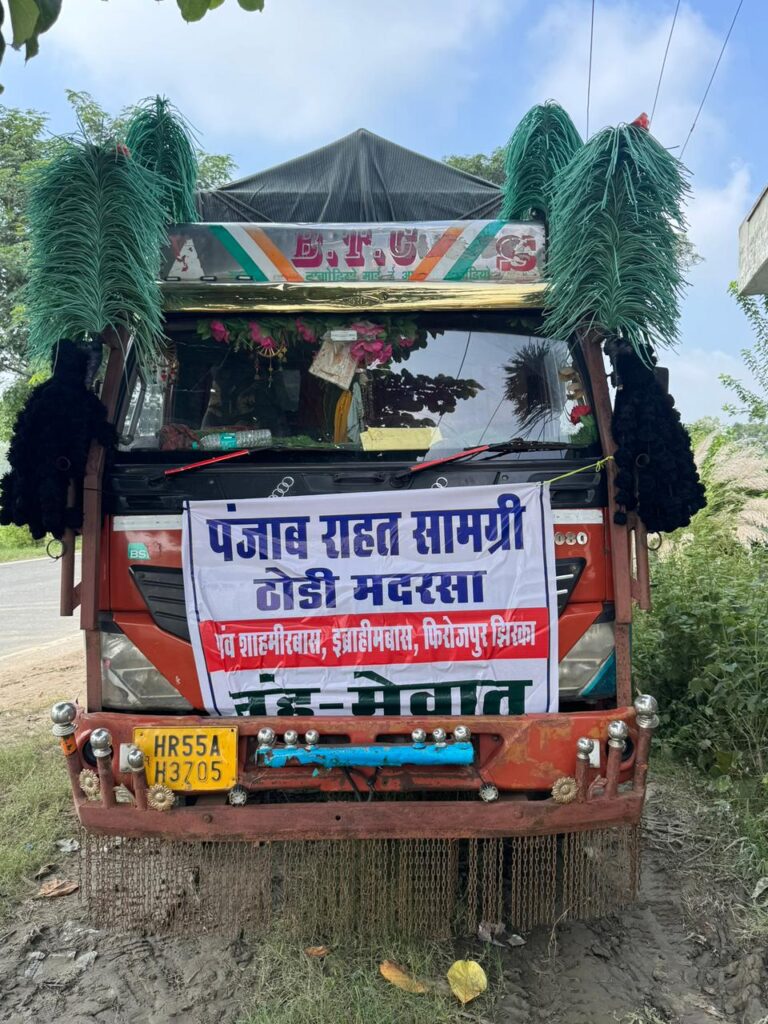
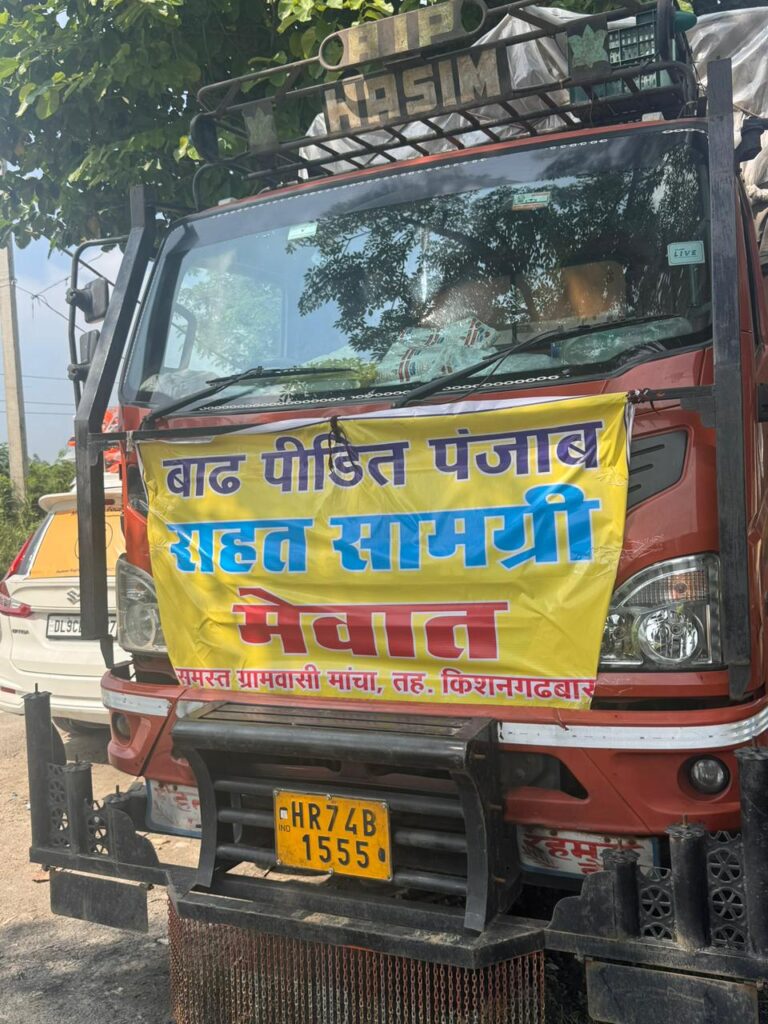
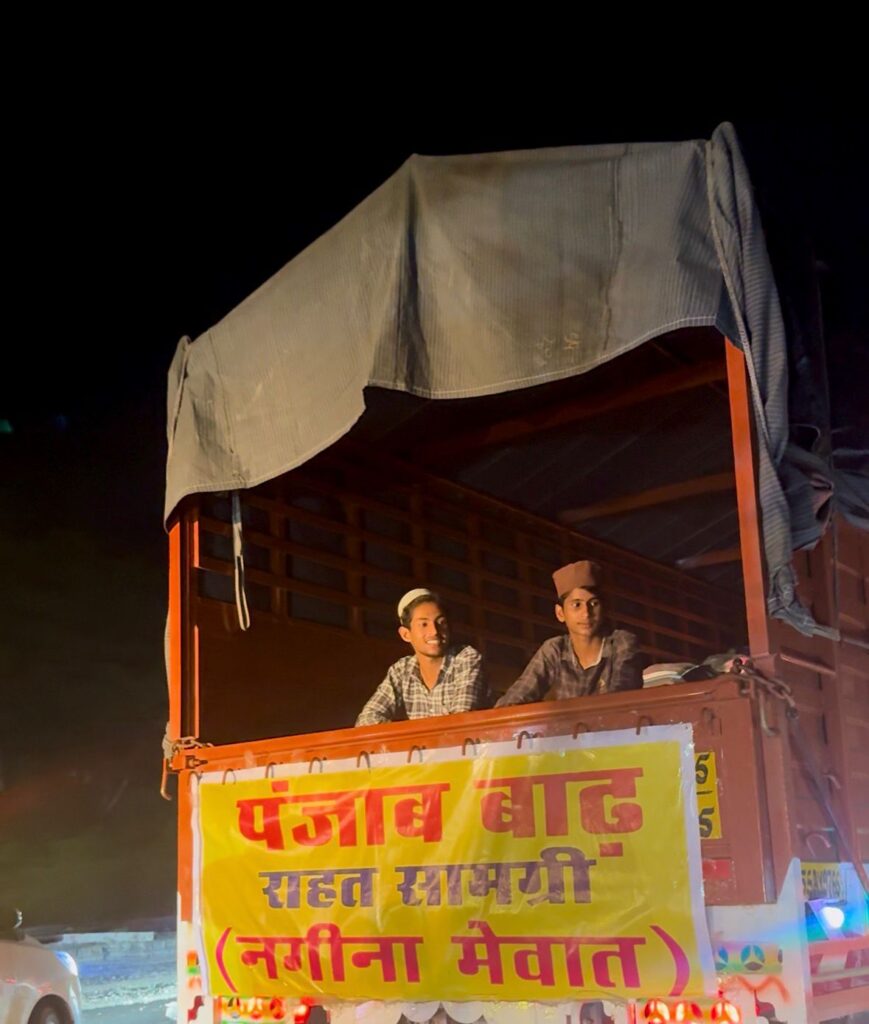
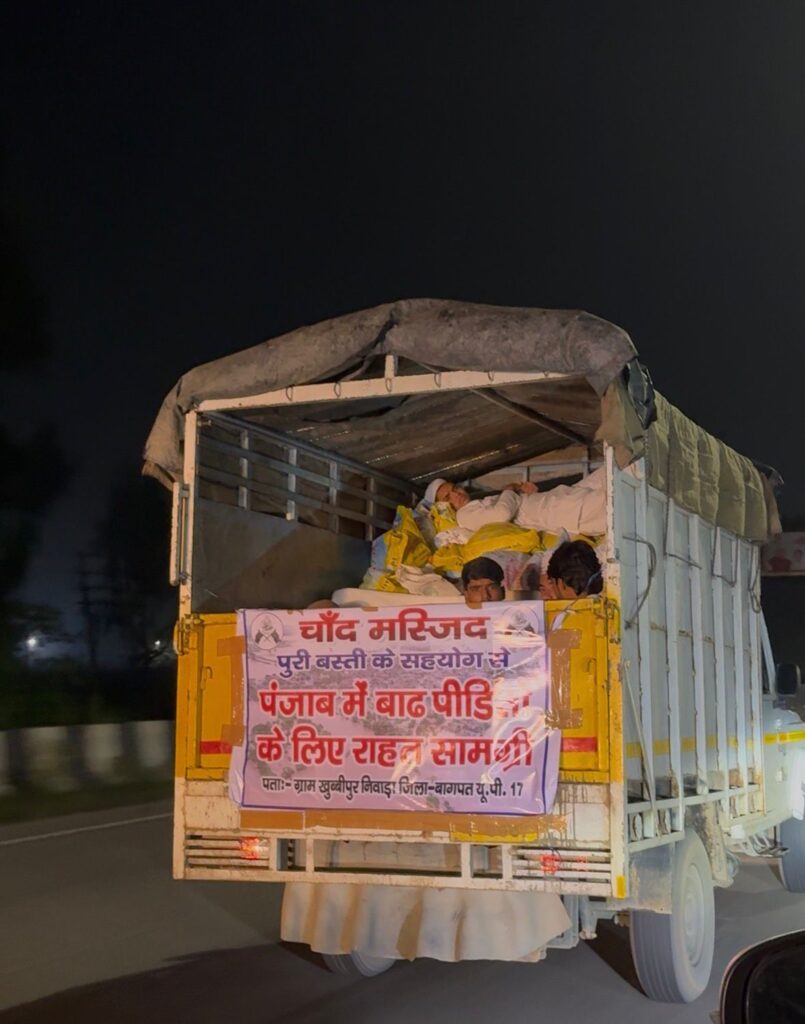
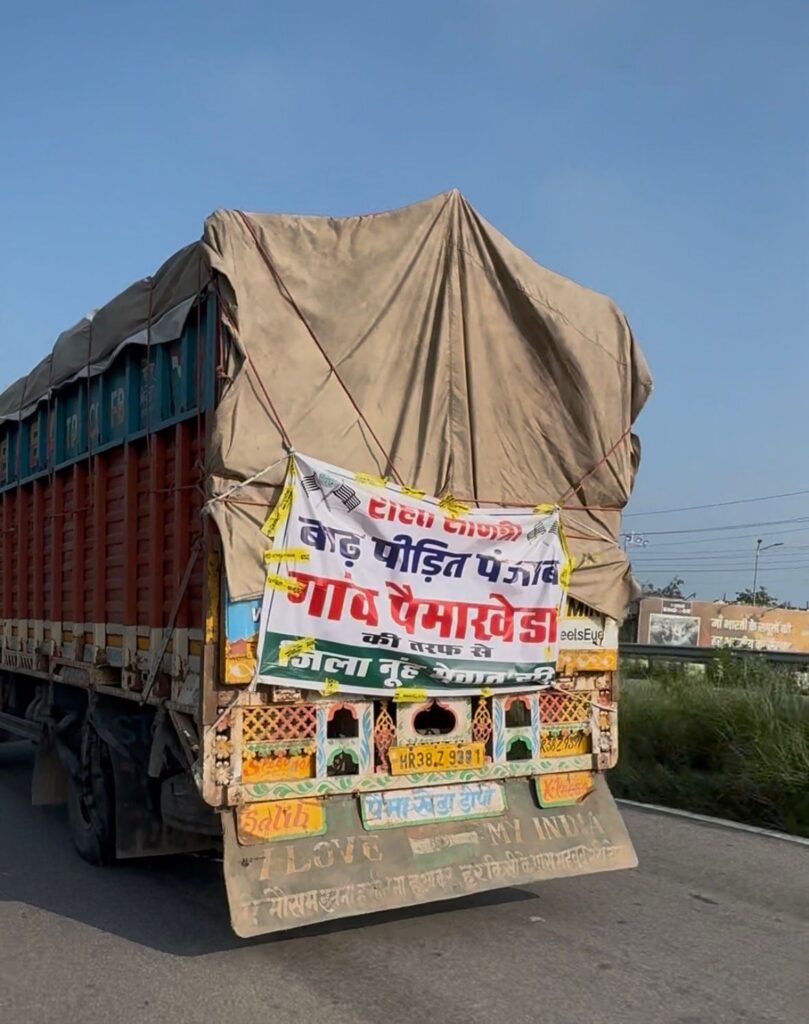
An extraordinary tale of human unity surfaced too. Among those who rushed first with food, clothes, medicines and daily necessities were members of the minority community, particularly from the Mewat region. They travelled long distances with trucks laden with humanitarian aid standing shoulder to shoulder with the survivors.
Their efforts are neither symbolic nor tokenistic but deeply in tune with unconditional positive regard, love and empathy for the survivors. Many NGOs too, paved the way and reached the flood hit areas to provide respite to the survivors, one such NGO was Miles2Smile.
“Our aim was to help the survivors, to show them they are not alone, we are their to listen to their pains and provide them selfless help,” Said Aasif Mujtaba, Founder and Director, Miles2Smile, while talking to FoEJ Media.
Mujtaba further recalls how this relief work taught him true compassion and love, which lies even in devastation. On the way, his car suffered a puncture. Seeing the “Punjab Flood Relief” sign, a local mechanic stepped in to help, asking for nothing in return, offering tea and prayers instead. “It was a small act Mujtaba recalls, “but it captured the spirit of solidarity that transcends all the barriers of religion, region, and circumstances,” Mujtaba said.

