


Written by: Sidra Fatima
Ground Report by: Shariq Adeel Yusuf , Tabish Khan
Special Mention: Aasif Mujtaba
Over the summer of 2025 Assam has seen an aggressive, widely reported wave of eviction operations that has cleared tens of thousands of bighas of land, demolished thousands of homes and shops, and left scores of families, many from erosion-prone and Muslim minority communities, suddenly homeless or displaced.The eviction operation, aimed at clearing alleged encroachments on Paikan Reserve Forest land, reportedly went ahead in violation of an interim order issued by the Gauhati High Court on July 11, 2025.
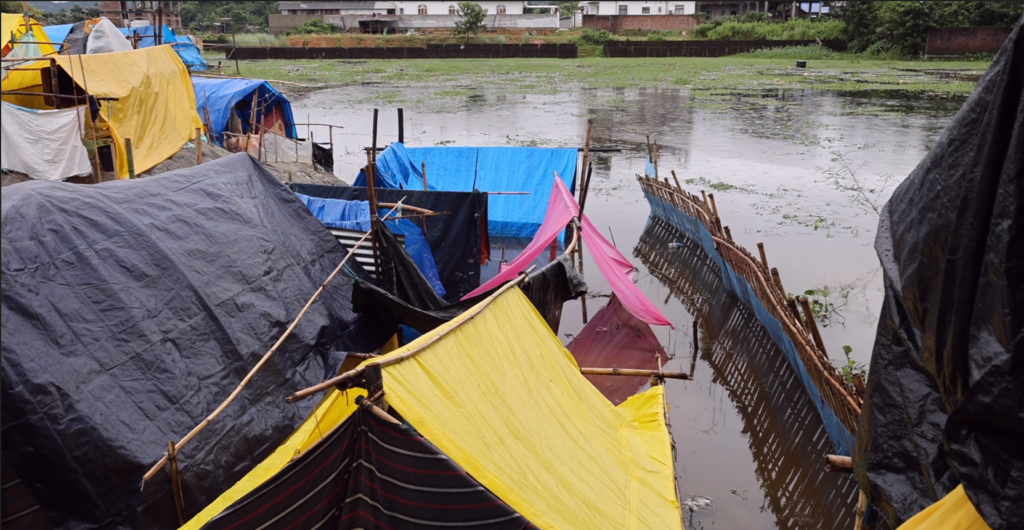
Critics call it a politically timed, rights-insensitive campaign that targets vulnerable, often Bengali-origin Muslim families and risks humanitarian harm. The debate is now a national story about identity, land, law and the politics of enforcement.
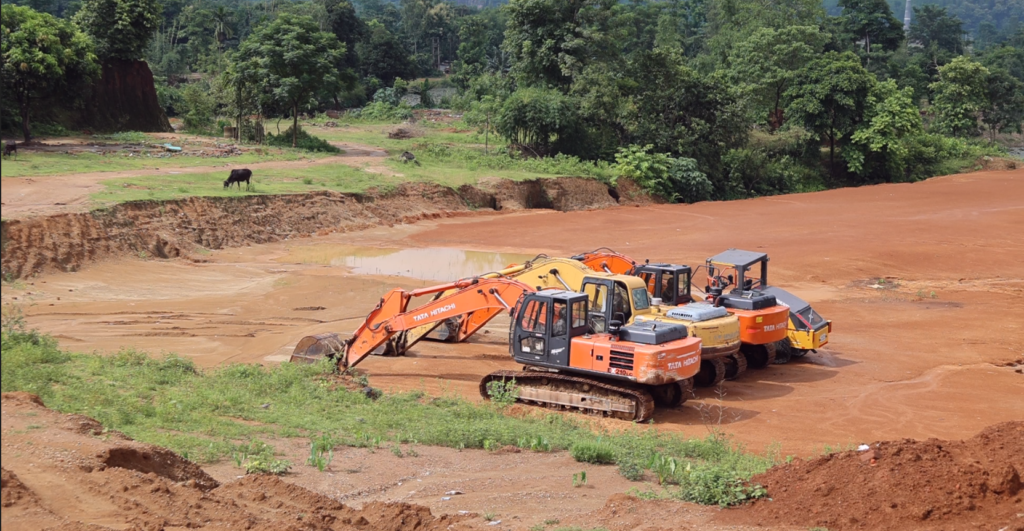
In an unusual twist, media reports claim that hundreds of residents brought in their own bulldozers and demolished their homes and shops the night before a scheduled operation, effectively “self-demolishing” to comply pre-emptively with notices and avoid confrontation. FoEJ Media went on ground to fact check and see the reality. As per FoEJ’s investigation, the claim of “self demolition” does not stand true
“70-80 JCBs came crashing into the house”
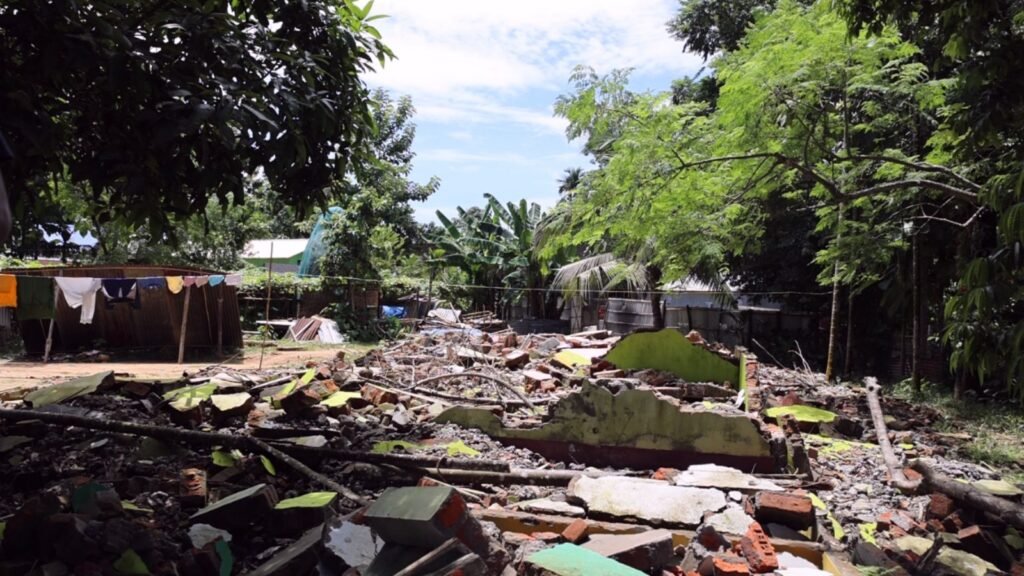
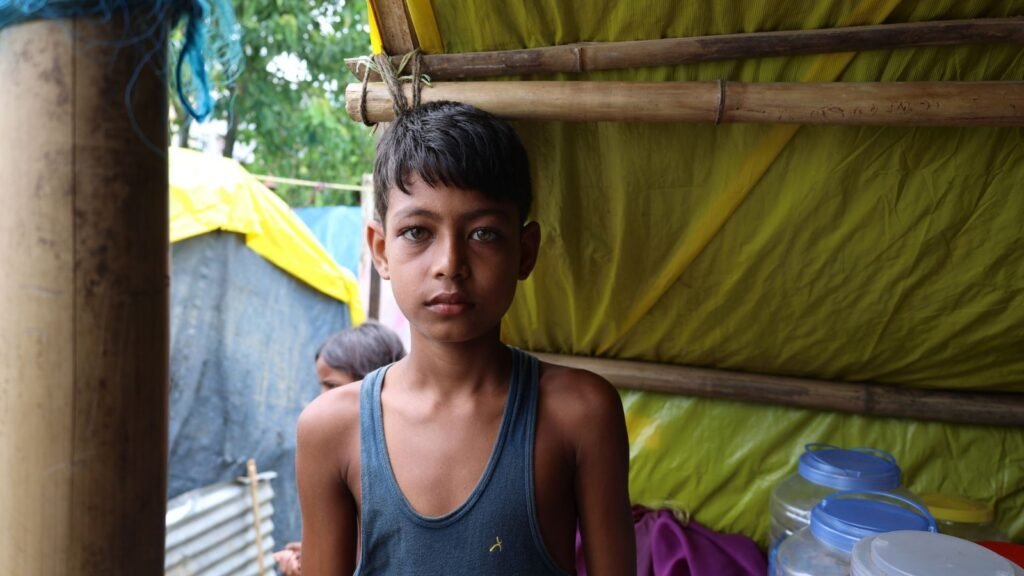
The massive demolition drive has left hundreds of families displaced, their homes reduced to rubble within hours and their lives thrown into uncertainty. Victims recount the sudden arrival of dozens of JCBs, the absence of prior notice, and the loss of not just their houses, but cherished belongings, documents, and the basic means to live with dignity. Amid scorching heat and makeshift shelters, residents—men, women, and children alike—are struggling to survive while asserting their identity and questioning the legality and fairness of the government’s actions. The victims of the demolition claim that “around 70-80 JCBs came crashing into their houses without them giving proper time to vacate.”
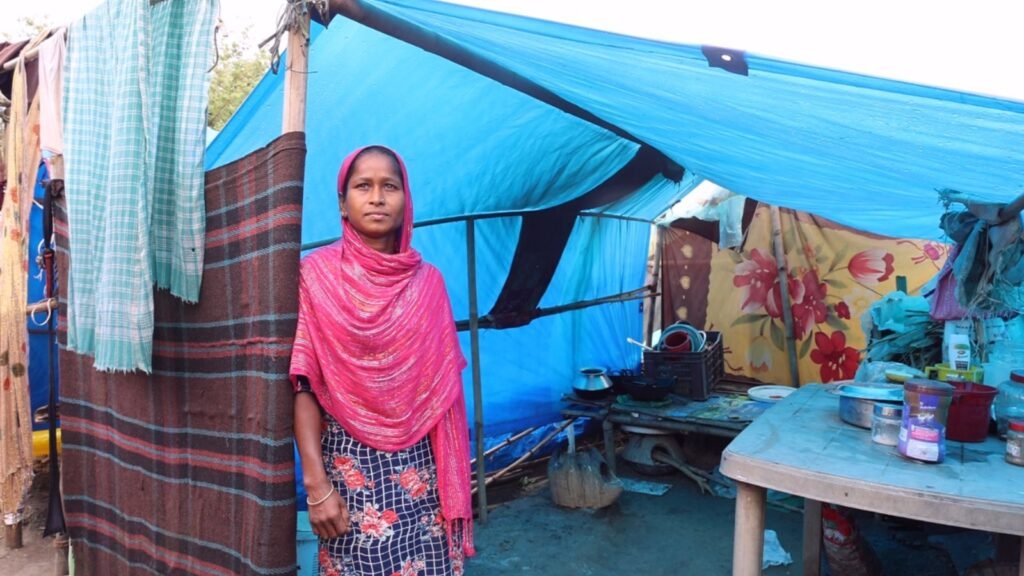
Anjum, who once lived in a house built through years of hard work, now finds herself standing outside a temporary shelter made of heavy tarpaulin. The sheet traps heat, but it is nothing compared to the scorching impact the demolition drive has left on her life. “The government was there earlier too, so why didn’t they consider it illegal then? They never checked our papers, never looked at anything—just came and demolished it.” Anjum says
The house Anjum once called her own—a place that was synonymous with laughter, held moments of happiness and sorrow, and carried memories dating back to her grandfather—was torn down within hours under the label of “illegal encroachment.”
Anjum further claims that, “Our grandfathers, our fathers—we all have documents. They should have checked those… We are Indians, not Bengali Muslims.”
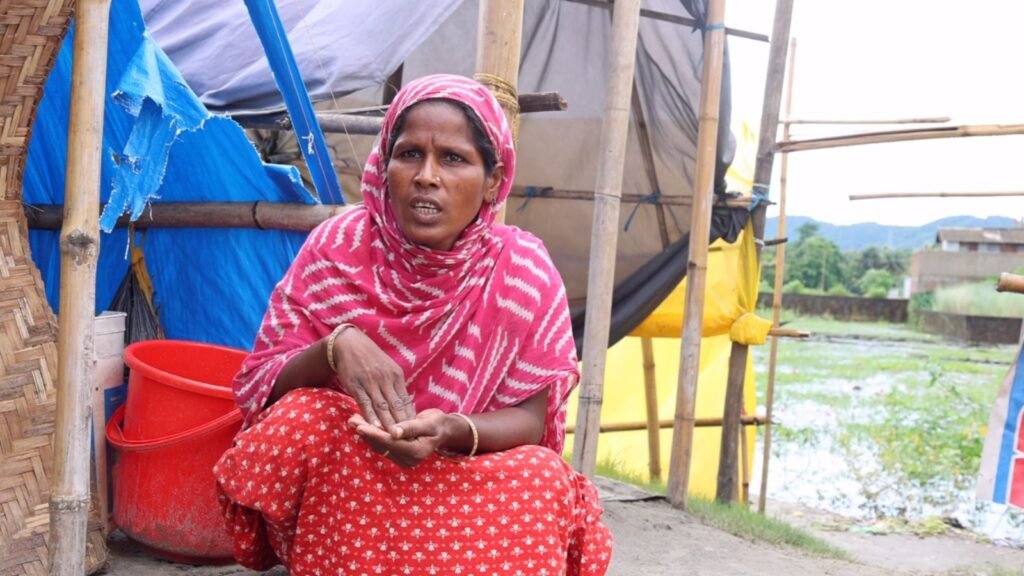
For Bahatun, the demolition drive has been nothing short of a series of devastating blows. The home she had built over the years was reduced to rubble in a matter of hours, leaving her and her family with nothing but fragments of a life once lived. “We couldn’t do anything, couldn’t take out anything—not even the children’s books,” she says, her voice heavy with despair. What was once a place of shelter and stability has now turned into uncertainty, where even the most basic belongings and her children’s education stand buried under the debris.
She now lives under a trampoline provided to her by “public” and eats whatever “public” gives to her and “When people don’t give me anything, I don’t eat—nothing happens.” she says . Bahatun also highlights the dire struggle for basic sanitation. The demolition has stripped families of everything, forcing them to pitch tarpaulins across barren land, scattered like dots with no access to washrooms, bathrooms, or drinking water. Women, in particular, bear the harshest burden of this absence, enduring the indignity and suffering that comes with having “no washroom.”
Bahatun describes the experience as deeply humiliating for her and other women, forced to live without proper washrooms. She says the situation becomes most unbearable during their menstrual cycles, turning an already dire reality into one of immense hardship and indignity.
Like Anjum, she too has endured the devastating impact of the demolition, “Our grandfathers and ancestors are all from India. We had all the documents, everything was there, but no one looked at them. Before calling us Bangladeshis, they should have checked our papers to see whether we are from India or not.”
Shaharana Parveen, whose tent stands beside Anjum’s, has set up a small shop to provide relief to the displaced families. “I opened it so that people here don’t have to travel far for their basic necessities,” she explains.
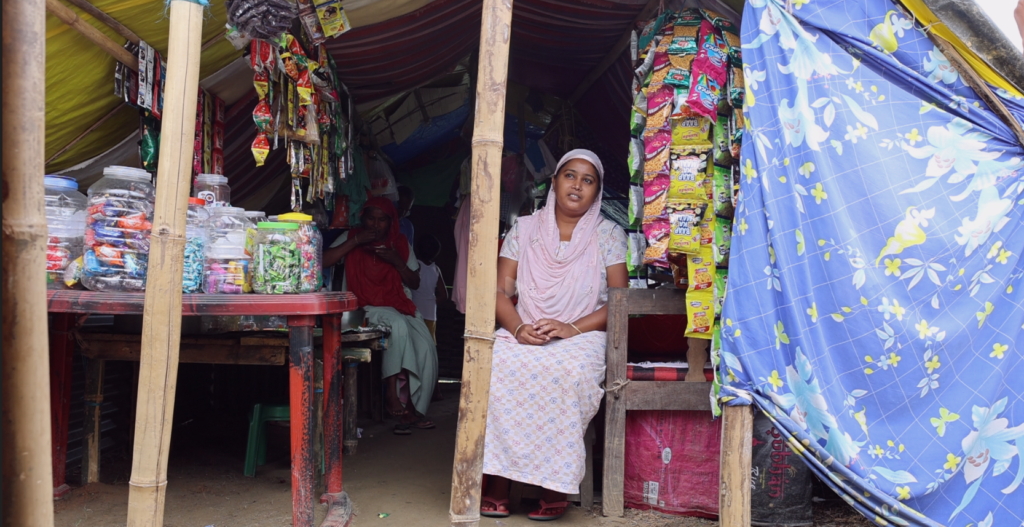
A single mother, Shaharana had been running her shop with unwavering dedication to make ends meet. Each night she went to bed with the hope of earning the next morning, determined to secure a better future for her son. But that hope was shattered when she was jolted awake by the roar of a JCB. Within hours, her shop—and with it, her only source of income—was reduced to rubble.
“I managed to take out whatever I could from the shop, but most of the goods were destroyed in the demolition.”
“Why have we been called Bangladeshis? We are Indians.”she further asserts
According to the government, anyone who speaks Bengali is considered Bangladeshi.” Shaharana continues.
Meanwhile, for days Ibrahim Ali saw the demolition process, he took the assurance from the authorities that his house would not be demolished as his house does not come under the category of “illegal encroachment.” However, his house was not spared either. His three big roomed and two small roomed houses along with washroom and bathroom were bulldozed too.
“We were neither given any notice nor informed that our home would be demolished, and yet it was torn down. I had asked if we should remove our belongings in case it was going to be demolished, but they told us it was outside the encroachment area and wouldn’t be touched. Still, on the last day, it was demolished.” Ibrahim Ali says
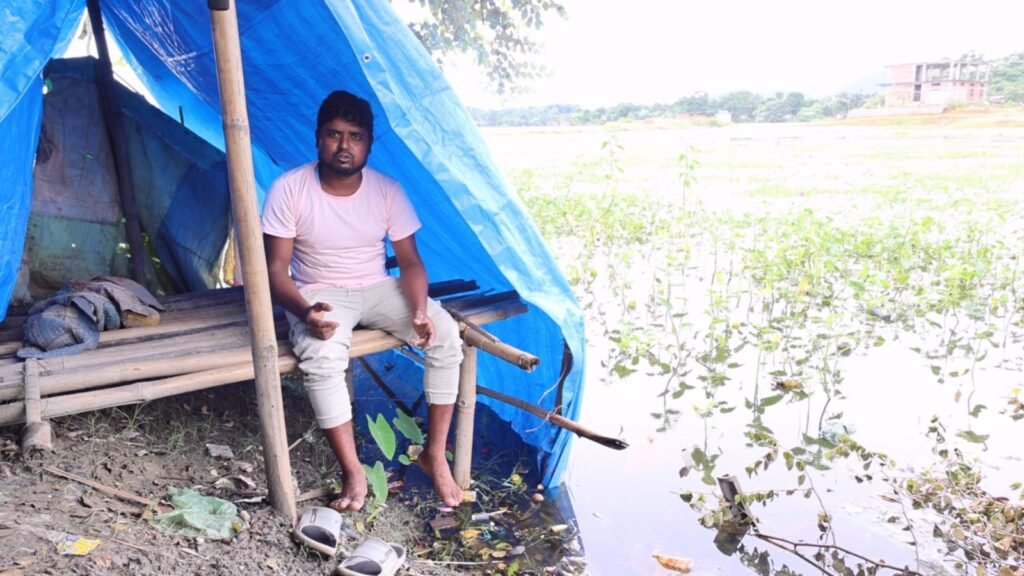
The demolition drive spared no one, not even children. Abdul Halim now sits quietly by a lake near his makeshift hut, mourning the loss of his education. His house was torn down in the middle of his exam period, leaving him without books or space to study. The anguish of interrupted learning is etched across his face, a silent testimony to dreams put on hold.

“The children can’t study inside because of the heat under the tarpaulin, nor outside because of the sun. It rains anytime—yesterday it rained, the tarpaulin tore, everyone’s work stopped, the children’s education stopped. Tell me, what should we do?”
Dire Condition in Camp
According to a ground report of FoEJ Media, the condition of the detention camp and the people living inside it falls far below the minimum standards of human dignity and survival. The camp, which was set up as a temporary shelter, has turned into a place of suffering for those confined within its boundaries.
One of the most pressing issues is the extreme weather. During the day, unbearable heat traps people inside tents made of thin tarpaulin, offering little to no ventilation. At night or during sudden spells of rain, the camps become waterlogged, with rainwater seeping into sleeping areas and leaving families drenched for hours. This not only creates discomfort but also exposes them to the risk of waterborne diseases.
The problem of sanitation is equally alarming. With inadequate washroom facilities, hundreds of people are forced to wait in long queues for basic needs. Many are left with no choice but to use open spaces, further adding to the unhygienic conditions. The water supply is contaminated and unfit for drinking, making safe hydration another daily struggle.
Across the state, government figures and media tallies show 1.19 lakh bighas of land have been reclaimed since Sarma came to power in 2021 and over 50,000 people have been evicted. The Assam government, led by Chief Minister Himanta Biswa Sarma, frames the eviction drives as routine enforcement of land laws: reclaiming government property (forest land, grazing land, embankments, and other public tracts), preventing illegal occupation.
Fatality During Eviction
During the Paikan village eviction on July 12, 2025, tragedy struck when 60-year-old Anaruddin suffered a fatal heart attack as officials bulldozed his home. In a separate incident, another resident, overwhelmed by the eviction, allegedly attempted suicide but was saved by a family member and taken to hospital.
Evictions in Paikan Village
On July 12, 2025, the Goalpara district administration carried out a large-scale eviction in Bidyapara and Betbari under Paikan village, Krishnai Forest Range, displacing nearly 1,100 Muslim families who had lived in the area for generations. The drive, aimed at removing alleged encroachments on Paikan Reserve Forest land, went ahead despite an interim order from the Gauhati High Court a day earlier, which had instructed the authorities to ensure temporary shelter, food, and accommodation until proper rehabilitation was arranged.
As a result, between 5,500 and 6,600 people were left homeless, based on average family size estimates. Those affected belong entirely to the ‘Deshi’ Muslim community, recognized as an indigenous group in Assam. Officials stated that around 1,038 bighas of land were cleared to make way for a bamboo plantation.
Evictions in Lakhimpur
On July 3, 2025, authorities in Lakhimpur district carried out an eviction drive to clear alleged encroachments on Village Grazing Reserve (VGR) land across four sites—Debera Doloni, Siringsuk, Dhakuakhonia, and Raang Chali. The operation reclaimed roughly 235 bighas (around 78 acres) of land and displaced about 220 families. Among those affected were 21 indigenous households, while the majority were Muslim families, both Bengali- and Assamese-speaking.
Evictions in Dhubri District
On July 8, 2025, the Assam government carried out one of its largest single-day eviction operations, removing an estimated 2,000–3,000 Bengali-origin Muslim families from the villages of Sontoshpur, Chirakuti, and Charua Bakhra under the Chapar revenue circle of Dhubri district. Nearly 4,000 bighas of land were cleared in the drive, which officials said was meant to make way for a solar power project by the Adani Group. The move rendered about 20,000 people homeless—families who had been living there for four to five decades, many of them originally displaced by Brahmaputra floods and erosion.
Evictions in Nalbari
On June 30, 2025, the Nalbari district administration removed 93 Bengali-origin Muslim families from Bakrikuchi village under the Barkhetry Revenue Circle, leaving them homeless. Officials alleged the families were encroaching on government land. Deputy Commissioner Nibedan Das Patowary said the drive was conducted to clear around 453 bighas of village grazing reserve (VGR) land in the area.
Voluntary demolition?
Authorities in central Assam’s Nagaon district halted a scheduled eviction on Wednesday (August 27, 2025), after residents in Jengoni, under Dhing, voluntarily pulled down their own homes ahead of the drive.
District Commissioner Debasish Sarma had visited the area on August 22, urging families to surrender their land peacefully rather than resist. By Tuesday night (August 26), settlers had begun demolishing their houses, prompting officials to call off the operation, Dhing Circle Officer Sourabh Kumar Das told reporters.
Reacting on social media, Chief Minister Himanta Biswa Sarma claimed, “The tide is turning. Encroachers who once resisted eviction are now cooperating. Compliance is the best way forward.”
Meanwhile, Opposition leader Debabrata Saikia has approached the Assam Human Rights Commission, accusing the BJP-led government of repeated human rights violations through eviction drives targeting minorities, indigenous groups, and erosion-affected families.

