


A Manufactured “Liberation”
The Bharatiya Janata Party (BJP) and Prime Minister Narendra Modi have repeatedly demanded that September 17, the day Hyderabad was integrated into India in 1948, be celebrated as “Hyderabad Liberation Day.” The Rashtriya Swayamsevak Sangh (RSS) now projects itself as the custodian of this “liberation.”
The irony is bitter. The RSS had no role in Hyderabad’s democratic struggles, no role in the Quit India Movement, and no presence in Hyderabad’s politics before 1948. What it claims today is not history but appropriation. And what it calls “liberation” was, for the Muslims of Hyderabad, a profound tragedy.
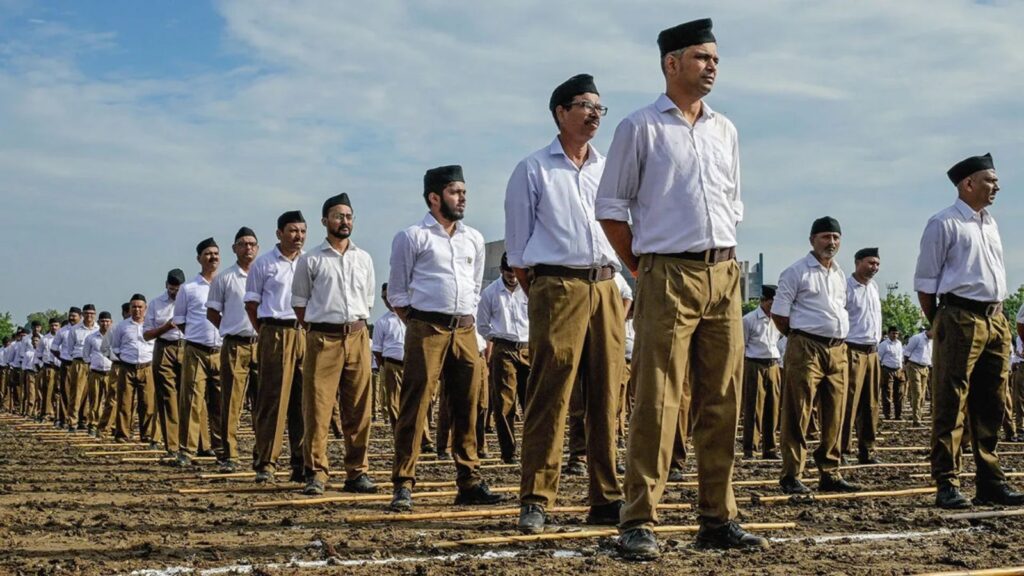
The RSS and Its Legacy of Abstention
The RSS stood aloof from India’s national struggle.
* During Quit India (1942), it ordered its cadres to avoid confrontation with the British. Later attempts to insert Atal Bihari Vajpayee into the story collapsed when his own confessional statement surfaced, admitting he was a bystander.
* On the Tricolour, RSS leaders and its mouthpiece Organizer derided the flag, calling the very idea of three colours “evil.” Hegdewar Bhavan, the RSS headquarters, did not fly the National Flag until 2001—when it was forcibly hoisted by outsiders.
Given this record, its claim over Hyderabad’s 1948 events is historically baseless.
Hyderabad Before Accession: A Muslim-led Polity
Hyderabad, the largest princely state, was unlike any other.
* Territory: 82,698 sq. miles – larger than England and Scotland combined
* Population (1941 Census): 16.34 million
* Demographics: 85% Hindu, 12% Muslim
* Languages: Telugu (48.2%), Marathi (26.4%), Kannada (12.3%), Urdu (10.3%)
Despite its Hindu majority, Hyderabad’s political and bureaucratic power rested with its Muslim elite:
* Civil Service (1941): Out of 1,765 officers, 1,268 were Muslims, 421 Hindus, 121 others.
* Police: 70% Muslim
* Army: 55% Muslim
* Land Ownership: The Nizam and his nobility controlled around 40% of land.
For Muslims, Hyderabad was not merely a princely state. It was one of the last surviving Muslim-led states in the subcontinent after the trauma of Partition. Its fall symbolised the end of centuries of Muslim rule in the Deccan.
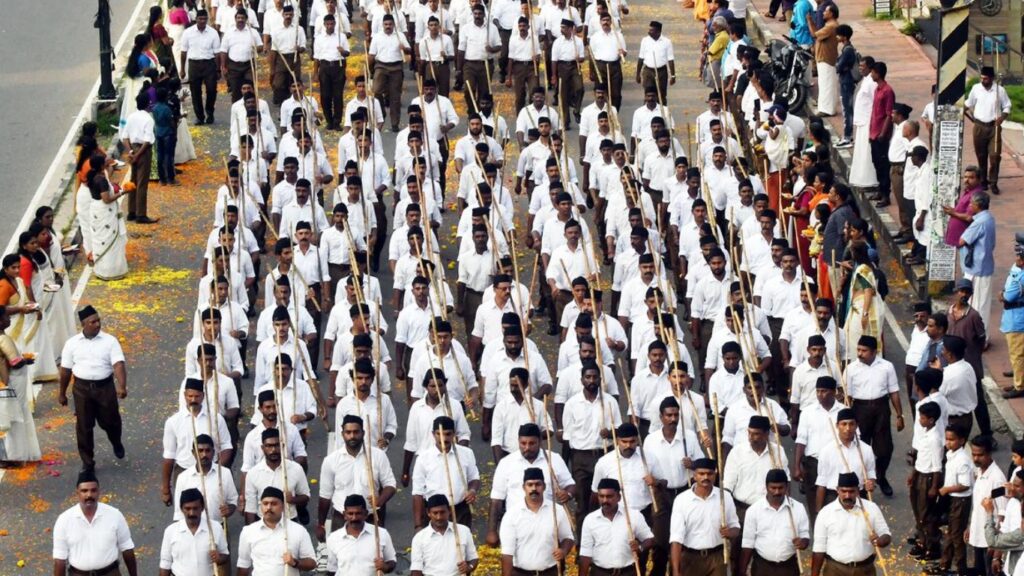
The Political Movements: Congress, Communists, Majlis
Political ferment had been building since the 1920s:
* Majlis-e-Ittehad-ul-Muslimeen (1927): Initially for Muslim unity, under Bahadur Yar Jung it defended the Nizam’s sovereignty and openly resisted Hindu political dominance.
* Mulki League (1933): Demanded jobs for locals (Hindu and Muslim) against outsiders.
* Hyderabad State Congress (1938): Sought responsible government, later led by Swami Ramanand Tirtha, with figures like PV Narasimha Rao emerging.
* Communists (Andhra Mahasabha): Gained strength among Telugu speakers, but in 1942 aligned tactically with the Nizam and the Majlis, much like the RSS, in opposing Quit India.
In all this ferment, the RSS had no presence.
Operation Polo: The Military Campaign
When the Nizam refused to accede to India, and the Razakars (the MIM’s paramilitary under Qasim Razvi) escalated violence, the Indian government acted.
* September 13, 1948: The Indian Army launched Operation Polo.
* September 17, 1948: Within five days, Hyderabad’s forces surrendered. The Nizam broadcast his decision to accede.
For the Indian state, this was a swift and bloodless “police action.” For Hyderabad’s Muslims, what followed was catastrophic.
The Forgotten Massacres: Sunderlal Committee Report
In the aftermath of Hyderabad’s surrender, communal violence broke out. Independent sources, suppressed for decades, reveal the scale:
* Prime Minister Nehru appointed the Sunderlal Committee to investigate. Its report, kept secret for over 50 years, documented large-scale killings of Muslims.
* Estimates of Muslim deaths range from 27,000 to over 200,000. Entire villages were wiped out, properties looted, women assaulted, mosques desecrated.
* Eyewitness accounts describe mass graves, forced conversions, and displacement.
The report concluded that the violence was “one of the gravest tragedies in the history of modern India.” Yet it remained buried, too politically inconvenient for the new state.
Migration, Marginalisation, and Memory
The Muslim elite was swiftly displaced. Many migrated to Pakistan, some voluntarily, others under duress. Those who stayed behind saw centuries of privilege evaporate.
Figures like Ali Yavar Jung managed to transition into the new order, but most ordinary Muslims were left marginalised, socially, politically, and economically. The once-Muslim-dominated civil services, police, and army became overwhelmingly Hindu.
For Hyderabad’s Muslims, September 1948 is remembered less as “liberation” than as loss, fear, and forced silence.
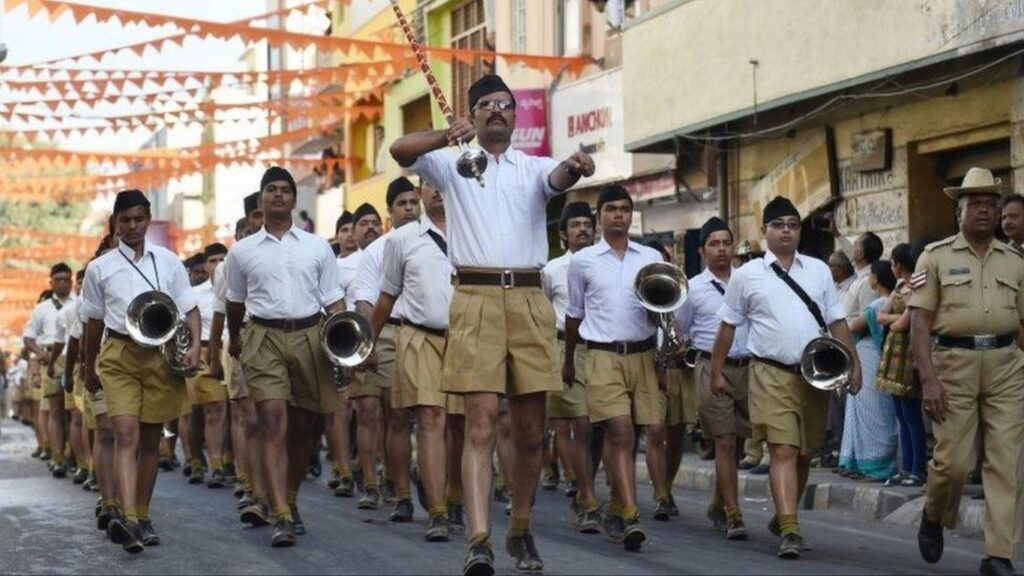
RSS’s Appropriation: A Political Weapon
Why then does the RSS insist on celebrating “Liberation Day”?
Because it is selective memory. It ignores:
* September 15, 1947 – when Junagadh acceded to India.
* October 26, 1947 – when Kashmir joined India.
Both moments of accession are forgotten. Only Hyderabad is commemorated—because it allows the BJP and RSS to weaponise history against Hyderabad’s substantial Muslim community and its political voice, the AIMIM.
History Must Be Protected from Appropriation
The truth is plain:
* The RSS had no role in Hyderabad’s democratic struggles, in its accession, or in the Indian Army’s operation.
* The so-called “liberation” was, for Muslims, a devastating loss – of life, property, and political identity.
* To celebrate it uncritically is to erase the trauma of thousands who perished and the silence of those who survived.
Hyderabad’s story should not be flattened into a nationalist slogan. It is a story of democratic aspirations, feudal collapse, communal tension, and above all, Muslim disempowerment.
To commemorate September 17 honestly is not to chant “liberation” but to remember – with accuracy, dignity, and humility – the cost that was paid, and by whom.


