


I am 24, and so far I have observed that a woman’s worth is calculated using two metrics: employment and marriage. One buys you time, the other absolves those responsible for you. Between them, there is very little space to exist without explanation. If you have a job, you earn legitimacy. Work functions as a temporary shield, maybe three or four years where your autonomy is accepted because it is productive. You are busy, employable, occupied. Your life has direction, or at least the appearance of it and of course there’s meaning to it. Questions about marriage turn into whispers, get delayed and hover instead of attacking you on a daily basis.
If you do not have a job, the solution arrives quickly and decisively: marriage. Marriage is presented not as desire but as logistics. A transfer of responsibility. A way to ensure a woman is no longer floating unaccounted for. The language used is always sugarcoated: security, stability, settling down or some not so subtle statements such as: beta your biological clock…as if a woman outside these structures is inherently unsafe, incomplete, or wasting time.
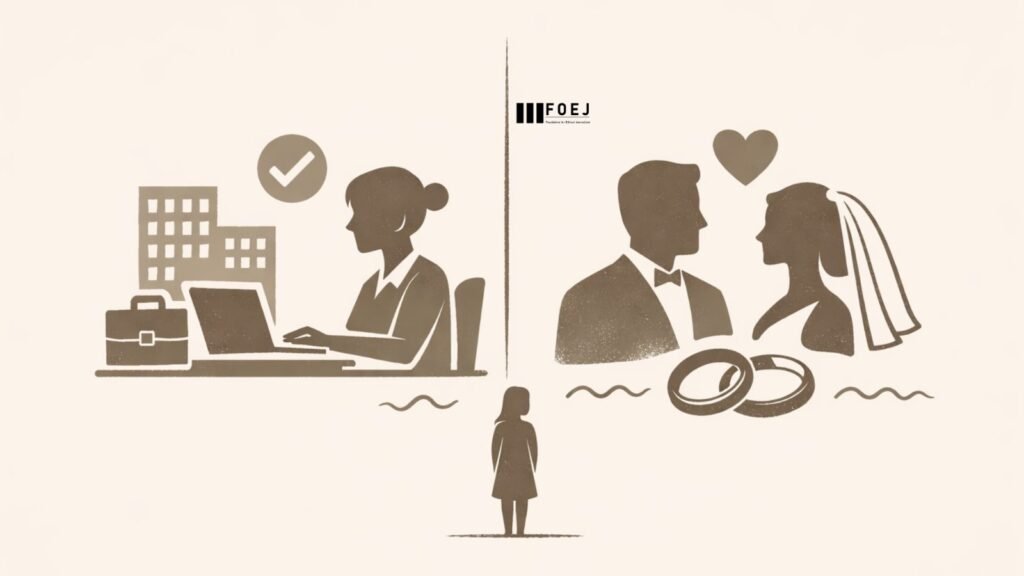
What unsettles me is not work or marriage themselves, but the moral panic around the absence of both. The refusal to allow people a period of reflection. A pause. A life where I am not being dragged into any institution. Why must my worth be attached to output? Why is my existence acceptable only when it can be quantified through salary slips, marital status, or future reproductive potential? Why does choosing an ordinary, quiet and mediocre life feel like an act of defiance rather than preference? I sit at home and discomfort rises. The reason does not lie in the fact that I am idle, but because what I do does not count.
I read theology. I think about faith and ethics. I try to improve my health and I write at times. I observe, reflect, and sit with questions instead of rushing toward answers. None of this fits into a career trajectory and it produces no visible proof of ambition or productivity.
So it is dismissed as insufficiency. We live in a political economy that demands constant justification for existence. Social media intensifies surveillance where visibility has become a currency. Our world as a whole does not merely want labour; it wants visible labour. It wants LinkedIn updates, résumés and milestones where a handful of people come across a million cattle and decide which one is the best for slaughtering purposes. You need to present yourself as the best meat that stands out. You must perform and progress even when you are unsure of where you are treading. Even if it is temporary, the risk of taking a step back invites tags such as lazy, ungrateful, or worse, unserious.
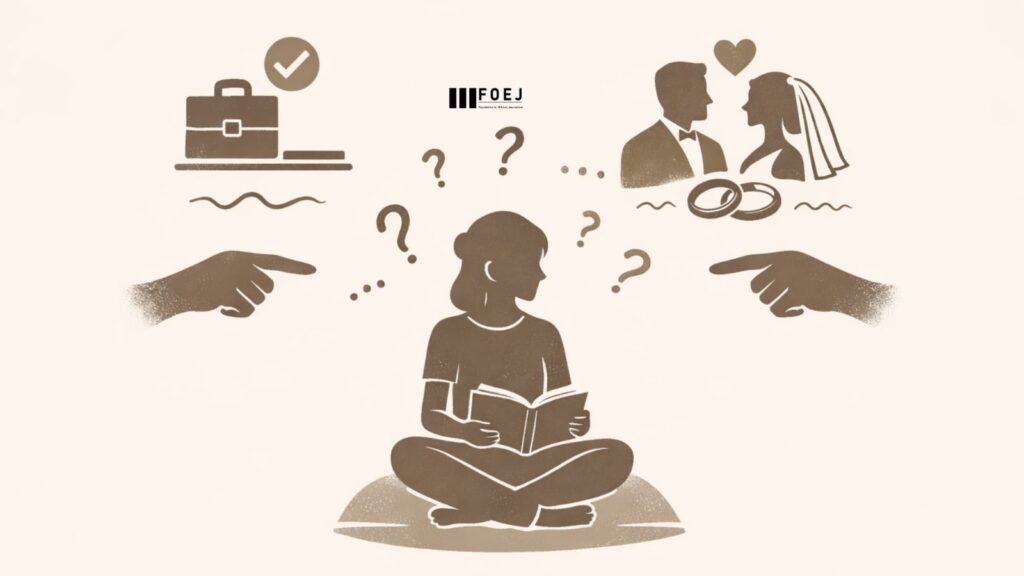
Women and men are denied the right of stagnation. Mediocrity is portrayed as failure, a waste of education, a betrayal of opportunity and an insult to those who “don’t have a choice.” This moral pressure disguises itself as empowerment. We are told that we are freer and liberated more than ever, yet the acceptable forms of freedom are glaringly narrow. The empowered woman is visible, talented and exhausted. She must be ambitious and desirable. She must succeed enough for society to feel justified in letting her exist.
Those who choose quieter lives are treated differently. When I see people my age building careers, gaining recognition, becoming “somebody,” I do not feel jealousy. I do not want their lives. What takes place is a quiet interrogation of my own choices. A guilt for stepping out of the race and taking the time out to breathe. A sense that rest without productivity, your life is useless and peace must be earned through suffering.
I am aware of my privilege. I have time, shelter, money and the ability to pause. Many do not. And yet, that privilege itself becomes an accusation. If you have the means to slow down and still choose not to perform, you are told you are wasting your life. Perhaps this is the paradox of our life: we speak endlessly of mental health, burnout, and balance, yet we punish those who rebel against the structures that cause them. We romanticise simplicity but call out those who practise it. We advocate choice, but only when the choices align with economic utility.
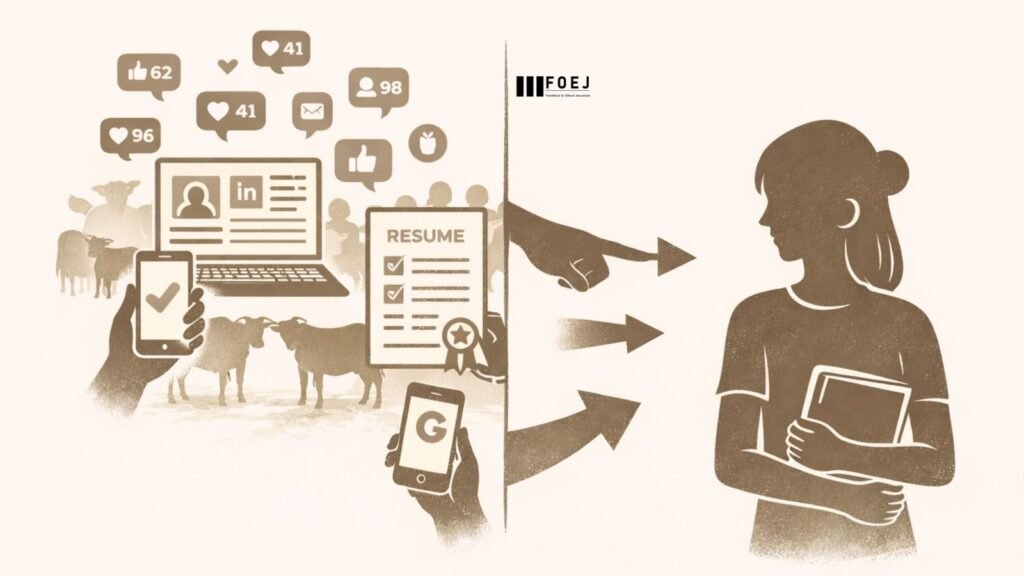
As I approach 25, I am told, directly or indirectly, that this is the age to decide. To lock something in. Maybe a career or perhaps a marriage. A future that can be explained quickly to relatives, society, and to every tom, dick or harry. Indecision is treated as irresponsibility. Slowness as stagnation. Reflection as avoidance. Perhaps this is what a quarter-life crisis really is, not confusion about what one wants, but the realisation that what one wants may not be socially permissible.
I do not know where my life is headed. I only know that I am deeply uncomfortable with my awareness about how quickly our societal structures want to put a tag, give us a name, place, or extract something. I am uneasy with the idea that a life must be impressive to be valid, that existence without productivity is a moral lapse. Who even gets to decide what’s productive and impressive? There is no proper conclusion here.
The Terms and Conditions of Existing at 24No lesson learned and definitely no moral of the story, only a growing suspicion of the point of my existence. The discomfort I feel is not because I am failing. It comes as a response to being measured too early, too aggressively, by systems that have no interest in who I am beyond what I can provide. And the most unsettling thought of all is this: that awareness will not change the outcomes. I may recognise the trap perfectly and still walk into it, not because I was defeated, but because I grew tired of resisting. The questions will not disappear. They will simply stop being addressed.


