


What the FIR over an unpublished memoir reveals about policing priorities in India
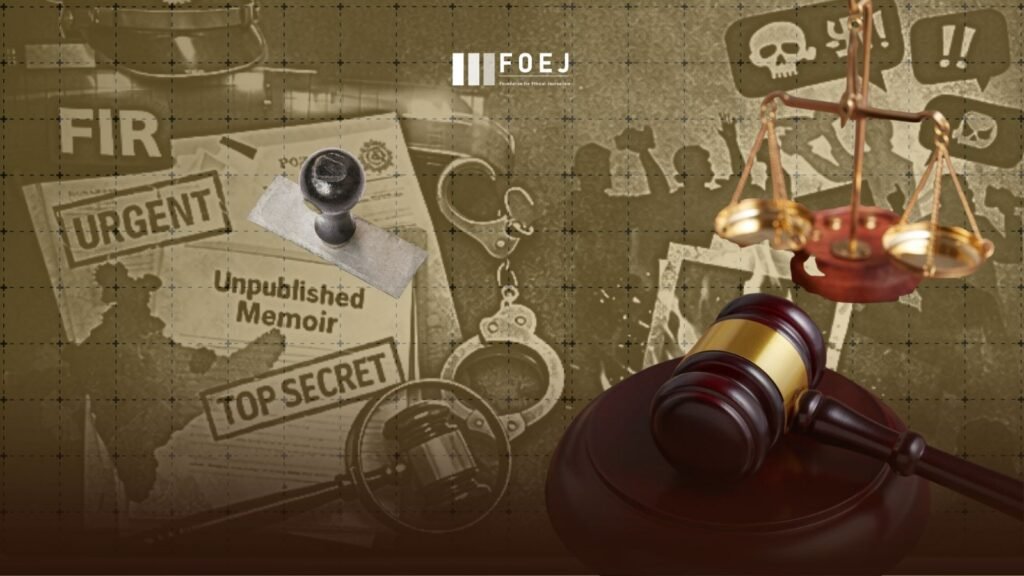
The recent registration of an FIR by the Delhi Police in connection with the alleged circulation of an unpublished memoir of former Army Chief General M.M. Naravane has drawn public attention. According to media reports, the police acted on the ground that the manuscript was circulated without required official clearance, prompting concerns that warranted investigation by law-enforcement authorities.
At one level, the episode appears uncontroversial. Where information suggests a cognizable offence, the registration of an FIR is a recognised procedural step under criminal law. The police are empowered—and in certain circumstances required—to act when statutory thresholds are met.
Yet, beyond the facts of this particular case, the episode also invites a broader constitutional reflection: how does the State determine which public harms demand immediate police attention, and which invite hesitation or delay?
This is not a question about the legality of one FIR. It is a question about institutional priorities and consistency in a constitutional democracy.
Police discretion and constitutional structure
In India, the police function within the executive branch. This is a constitutional arrangement, not a defect in itself. However, the Supreme Court has long acknowledged that excessive executive influence over policing can affect public confidence and neutrality.
In Prakash Singh v Union of India, the Court recognised the risks of politicised policing and issued a series of structural directions, including fixed tenures and institutional mechanisms for accountability, to ensure that police functioning remains professional and insulated from undue pressure. Nearly two decades later, that concern remains relevant—not because the police lack legal powers, but because discretion plays a decisive role in how those powers are exercised in practice.
Supreme Court guidance on proactive policing and hate speech
This issue has become particularly visible in the context of hate speech.
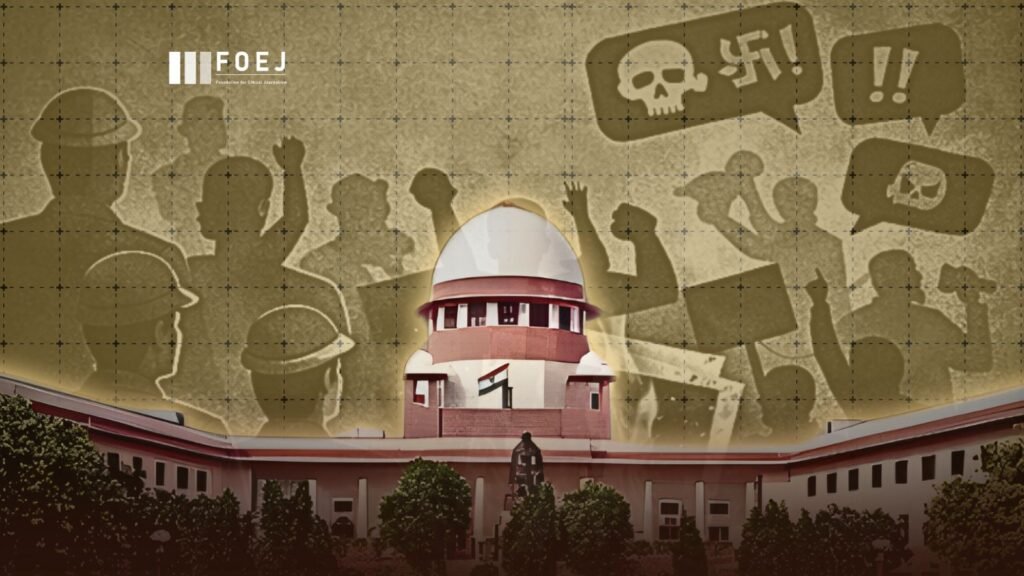
In Shaheen Abdulla v Union of India, the Supreme Court addressed repeated instances of police inaction in cases of public hate speech and clarified that where speech prima facie discloses offences such as Sections 153A, 153B, 295A or 505 of the Indian Penal Code (or corresponding offences under the criminal law as in force), the police need not wait for a formal complaint and are expected to take suo motu action in accordance with the Court’s directions.
This position was reaffirmed in connected proceedings, including Ashwini Kumar Upadhyay v Union of India. In an order dated 28 April 2023 , the Court directed all States and Union Territories to ensure proactive enforcement in such cases and indicated that continued non-compliance could invite serious consequences, including contempt.
The reasoning behind these directions was constitutional rather than punitive. Hate speech, the Court noted, produces public harm, threatens equality and dignity, and corrodes social order. Requiring private individuals—often from vulnerable communities—to initiate complaints may itself operate as a barrier to justice.
Importantly, these directions do not create new offences or expand police powers. They clarify how existing powers are to be exercised in light of constitutional values.
The question of consistency
Against this legal backdrop, the Naravane FIR invites a careful comparison—not of legality, but of institutional responsiveness. Independent research organisations have documented the scale and persistence of hate speech in India. The India Hate Lab’s 2025 report recorded more than 1,300 documented in-person hate speech events across the country in a single year. This data does not, by itself, establish police failure in individual cases. It does, however, underline why the Supreme Court considered proactive enforcement necessary in the first place.
At the same time, public reporting and litigation records suggest uncertainty about how routinely suo motu action is being taken in such cases, despite clear judicial guidance. In several instances, complainants have explicitly relied on Supreme Court orders while seeking police intervention, highlighting a perceived gap between constitutional doctrine and ground-level enforcement.
It is important to be precise here. The issue is not that the police lack legal authority to act, nor that every controversial statement must result in prosecution. Rather, the concern lies in predictability and transparency: when the law permits proactive action, and the Court has expressly encouraged it, how are decisions to act—or not to act—being made?
This question has also reached the Supreme Court itself. In recent hearings, the Court has sought compliance reports from States on the implementation of its hate-speech directions, implicitly recognising that judicial orders alone may not ensure uniform enforcement.
Why public perception matters
Policing operates not only through law, but also through public trust. When police action appears swift in matters involving institutional sensitivity—such as unauthorised disclosures or protocol breaches—while appearing cautious or delayed in matters involving social harm, a perception of imbalance can arise.
Such a perception does not depend on attributing improper motives. It flows from observable contrasts between the system’s demonstrated capacity to act and the contexts in which that capacity is most visibly deployed. In a constitutional democracy, these perceptions matter. They shape whether citizens view the police primarily as neutral enforcers of law or as institutions whose responsiveness varies by context.
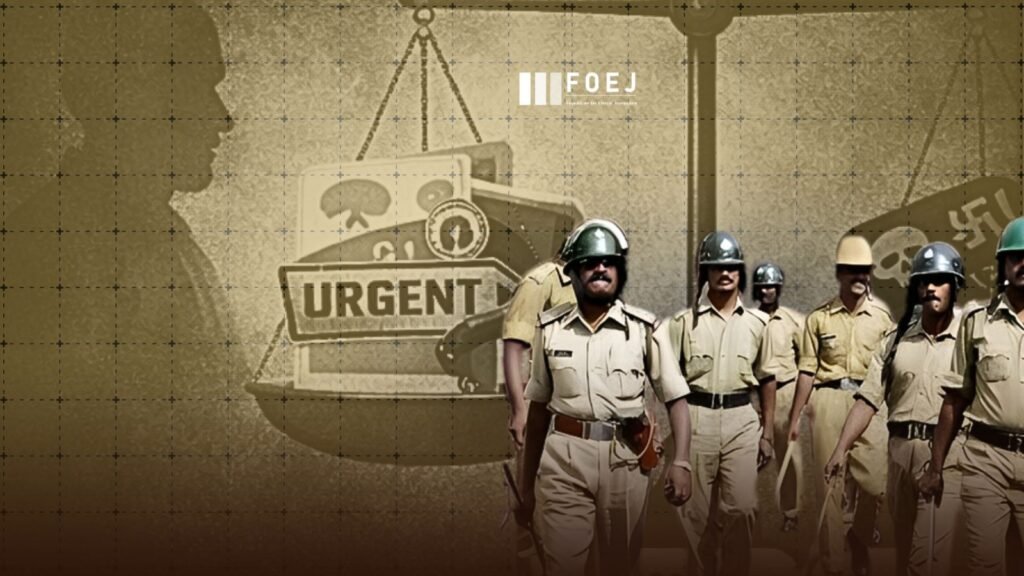
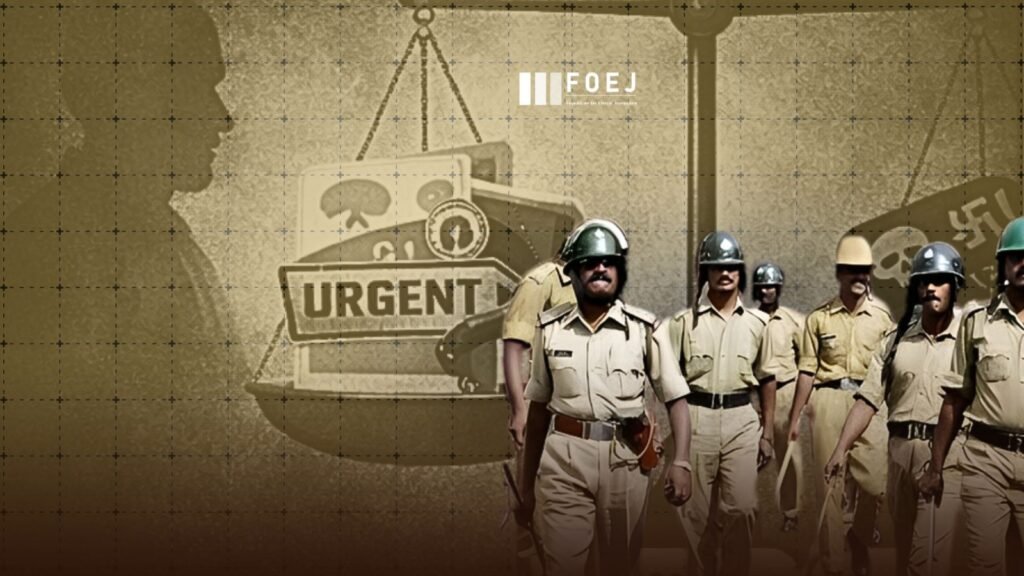
The FIR in the Naravane matter may well be legally justified on its facts. Its broader significance lies in what it reveals about how swiftly the State can act when a matter is treated as urgent.
The constitutional challenge is to ensure that this urgency is applied consistently—particularly when the harm in question affects the rights, dignity, and equality of citizens.
That consistency is not a matter of accusation. It is a matter of public trust. And asking these questions—calmly, carefully, and grounded in law—is not an act of confrontation, but a necessary part of sustaining the rule of law in a democratic society.


