


Important Clarifications Before You Read
First and foremost:
We are NOT here to undermine the sincerity, ikhlas, or tremendous contributions of famous scholars.
We have no doubt about their dedication to the deen.
We have no doubt about their knowledge and their service to the Ummah.
We have no doubt about the countless lives they have touched and transformed.
We acknowledge and honor their sacrifices and their work.
We are only trying to raise a particular issue that is grossly ignored.
Whether this issue is ignored by chance or by choice—we are not here to judge.
We do not know what is in anyone’s heart. Only Allah knows intentions.
We are simply presenting what the struggling Ummah sees, feels, and silently asks.
Second clarification:
This article is NOT about all scholars.
This is specifically about those scholars who are:- Famous and influential
- Have thousands or millions of followers—physical or digital
- Have prominent social media presence
- Are visible in images of conferences, airports, and luxury
But alongside this—and this is very important—we are also speaking on behalf of those scholars who: - Are quietly doing their work
- Survive on meager salaries—sometimes living in poverty themselves
- Serve in small mosques and madrasas
- Many of them are Ahlullah—close servants of Allah
- But because they are not famous, nobody visits them
- Nobody honors them, nobody mentions their names
These quiet servants of the deen—they too are wronged.
The Ummah abandons them to chase after the famous.
They have knowledge, they have taqwa, they have sincerity—but no followers.
And our Ummah has made followers the measure of worth.
So this article is a two-sided voice:
On one side, the voice of the poor Ummah—who feel ignored by famous scholars.
On the other side, the voice of the quiet scholars—who are victims of the Ummah’s neglect.
Both are forgotten. We speak on behalf of both. We judge no one. - Before You Read Further, Understand This Clearly:
What you are about to read is not my opinion. I am not sitting in a comfortable room imagining problems. I am not a critic looking for faults. I am not speaking from theory or social media observation. This comes from decades of sitting with the struggling Ummah. Decades of entering homes where poverty lives. Decades of listening to people who will never be heard otherwise.
Decades of seeing what cameras don’t show and conferences don’t discuss. These are their words. Their feelings. Their questions. Some have said it clearly, directly, with pain in their voice. Some have said it through their eyes—that look of abandonment. Some have said it through their body language—the silence that speaks louder than words. Some have said it through tears they tried to hide.
I am simply their advocate. Their translator. Their voice. I am putting into words what they feel but cannot express. I am writing what they whisper among themselves but will never be asked in any conference.
If you don’t believe what you read here, I have one request: Go to the slums yourself.
Sit with the poor. Not for a photo. Not for a charity visit. Sit with them as equals. Ask them how they feel when they see religious leaders on social media. Ask them if they feel seen, represented, cared for.
Feel the unspoken words. See the question marks in their eyes. Then come back and tell me if this is unfair.
What They See Every Day
Open any social media platform today. Facebook, Instagram, YouTube, Twitter—it doesn’t matter which.
What does a struggling Muslim see of his famous religious leaders? He sees scholars boarding flights—business class, first class. He sees grand airport receptions—crowds with flowers, cameras, security.
He sees luxury cars—Land Cruisers, Mercedes, BMWs—ferrying them to events.
He sees five-star hotels during Islamic conferences. He sees exclusive iftars where one plate costs more than his family’s weekly food. He sees international tours—America, UK, Dubai, Malaysia—one after another. He sees speaking fees in the hundreds of thousands for a single appearance.
He sees premium “spiritual retreats” in scenic resorts—entry fees he cannot earn in three months.
He sees fundraising dinners in five-star hotels—raising money for the poor, among only the rich.
And Then Comes Ramadan
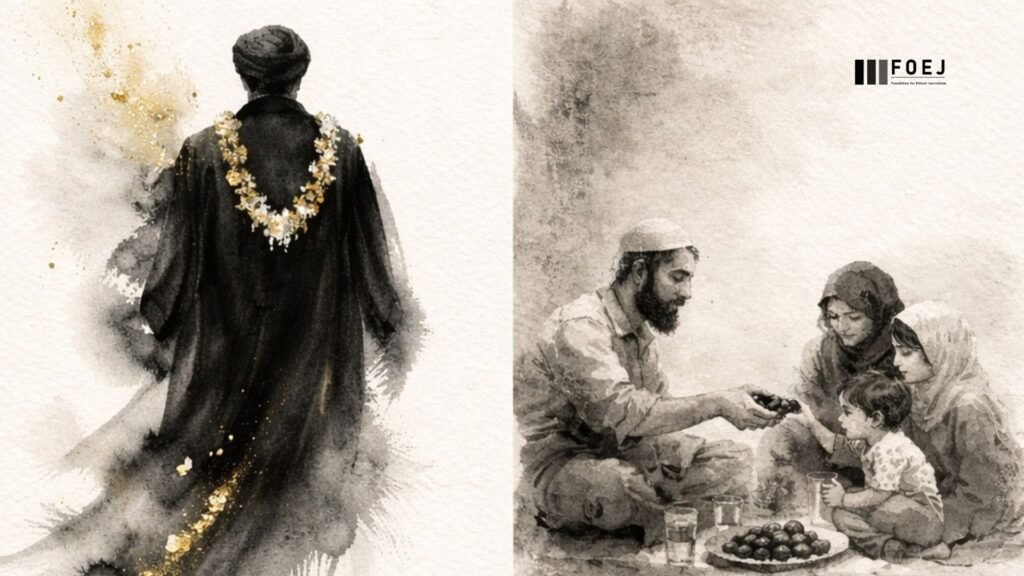
Every Ramadan, the same flood of images: Famous scholars in Masjid al-Haram, Masjid al-Nabawi—surrounded by flowers, garlands, admirers. Professional photography of their “spiritual moments” in the Haramain. Posts about their Umrah, their i’tikaf, their exclusive Makkah gatherings.
Lectures in premium hotels near the Haram—for those who can afford to be there.
Stories of their “blessed Ramadan” in the holiest places on earth.
Every. Single. Ramadan. The same famous scholars. The same flowers. The same five-star spirituality
While Back Home…
While the famous scholar posts from Makkah surrounded by roses, what is happening in his own city?
A widow is breaking her fast alone with stale bread and salt. A family is making iftaar with only water and dates—not by choice, but because that is all they have. An unemployed father sits silently, ashamed he cannot provide even in this blessed month. A sick old man fasts despite illness because he cannot afford the fidyah.
Children go to Taraweeh in torn clothes while others arrive in new ones.
A mother cries after everyone sleeps, asking Allah why life is so hard.
These people live in the same city as the famous scholar. Sometimes in the same neighborhood.
But the famous scholar is in Makkah. Surrounded by flowers. On Instagram.
What I Have Heard Directly Over the Years
These are actual words spoken to me by struggling Muslims:
“Where does Maulana sahab have time for us? He stays with the big people.”
“We have never seen them come to this street.”
“In Ramadan they are in Makkah. We have to stay hungry right here.”
“If we die, they probably won’t even know.”
“Their world is different. We don’t exist for them.”
“They give lectures about the poor, but they don’t live WITH the poor.”
“So many people go to receive them at airports. No one comes to our neighborhood.”
These are direct quotes. From real people. Said to me over many years.
What I Have Seen in Their Eyes
The widow watching religious programs on a small phone—she sees famous scholars in luxury, and her eyes ask: “Is there anyone for people like me?”
The unemployed young man who once respected religious leaders—his eyes now carry doubt, distance. His eyes ask: “Do they even know we exist?”
The mother who cannot afford school fees—she sees fundraising dinners in five-star hotels and her eyes carry a question: “The money they spend on one dinner could educate my child for a year. Does anyone see this?”
The sick old man who cannot afford treatment—he watches scholars flying business class and his tired eyes say: “Even the people of Allah are not for us.”
These eyes haunt me.
I write because they cannot write. I speak because they have no microphone.
The Forgotten Scholars—Whom Nobody Honors
And here is another tragedy that must be addressed:
In our Ummah, there are countless scholars who:
Lead prayers quietly in small mosques
- Survive on meager salaries—sometimes living in poverty themselves
- Teach deen in remote areas
- Serve the public without any fame
- Many of them are Ahlullah—close servants of Allah
- They have taqwa, they have knowledge, they have sincerity—everything
- But no followers. No fame. No social media presence.
And what do we—the Ummah—do with them?
We abandon them to chase after the famous.
We travel hundreds of miles to meet a famous scholar—but don’t visit the scholar in our own neighborhood.
We pray in their mosques but don’t honor them.
We ask them religious questions but don’t respect them like we respect the famous.
We don’t bring them gifts, don’t visit their homes, don’t ask about their well-being.
We have tied the value of knowledge to the number of followers.
We have started measuring taqwa by fame.
We have abandoned the people of Allah for the “people of social media.”
These quiet scholars—they too are wronged.
No one sees their hard work.
No one honors their taqwa.
No one appreciates their service.
They work for Allah—and that is enough for them.
But are we—as an Ummah—fulfilling our duty?
Who Is This Ummah?
Let me be clear—this is not a small minority. This is the MAJORITY:
Families struggling for two meals a day. Fathers unemployed, humiliated, hopeless.
Mothers skipping meals so children can eat. Children dropping out because fees cannot be paid.
Young people falling into depression, addiction, despair—seeing no future.
Serious illness untreated—no money. Businesses collapsed. Jobs gone.
This is the majority. The invisible majority. The forgotten majority.
They are watching. Feeling. Questioning—even if silently.- What The Poor Instinctively Know
They know their history.
They know the Prophet ﷺ tied stones to his stomach from hunger.
They know he ﷺ mended his own shoes, patched his own clothes.
They know he ﷺ spent time with Ashab al-Suffah—the homeless, the forgotten.
They know he ﷺ visited the sick, attended funerals of the poor, entered homes of the needy.
They know Umar رضي الله عنه carried flour to widows at night.
They know Abu Bakr رضي الله عنه served the blind woman secretly.
They know what Islamic leadership should look like. They see the difference. Even if they don’t say it.- The Questions Burning in Their Hearts
Questions I am asking on their behalf:
When will a famous scholar come to our street? Not for a photo. Just to be here.
When will someone important eat in our home? Sit on our floor. Share our simple food.
When will the famous people of Allah know our names? Our children. Our struggles.
When will Ramadan mean a famous scholar stays with us instead of going to Makkah?
When will we matter? When will we be seen?
Are we even part of this Ummah? Or just statistics in fundraising speeches?
These questions are real. Burning in hearts across the Ummah. I am just writing them down.
What I Am NOT Doing / What I AM Doing
I am not issuing fatwas. I am not declaring anyone sinful.
I am not claiming to know intentions—that is with Allah alone.
I am not saying comfort is haram or travel is wrong.
I am not painting all scholars with one brush—rather, I am also speaking on behalf of the quiet servants of deen.
I am being the voice of the voiceless—both the poor Ummah AND the forgotten scholars.
Translating the unspoken words of the forgotten.
Putting on paper what exists in countless hearts.
A Direct Request to Famous Scholars
We love you. We respect you. We make du’a for you.
But please—see the WHOLE Ummah. The majority, not just the visible minority.
Go to the slums. Not for a visit. Go regularly. Know people by name.
Eat in poor homes. Sit on their floors. Share their food. Feel their reality.
Spend Ramadan locally. Let Makkah wait. The widow in your city cannot wait.
Visit government hospitals. Sit with patients. Hold their hands.
Refuse flowers and garlands. Say publicly: “This is not the Sunnah.”
Change what you show on social media. Show the slums. The wards. The poor homes.
If you do these things privately—make them visible.
What is visible shapes hearts. Change what is visible.
A Request to All of Us
We are also part of this problem.
We like and share the glamorous posts. We measure scholars by followers.
We are impressed by Makkah selfies instead of asking about service to the poor.
We chase the famous and ignore the scholar in our own neighborhood.
Honour the quiet scholars. See their service.
Visit your local imam. Respect them. Bring them gifts.
Don’t measure knowledge by followers. Don’t measure taqwa by fame.
If we want different leadership, we must become different followers.
A Final Invitation
If you doubt what I have written—go and see for yourself.
Go to the slums. The poor neighborhoods. The struggling families.
Sit with them. As a human being who wants to understand.
Ask them how they feel. Listen to their silences.
Watch their eyes when you mention religious leadership. Feel what they cannot say.
Then tell me if this is unfair.
I am not the author of these feelings. I am only the scribe.
The poor have spoken. For decades. To anyone willing to listen.
I am just writing it down. Finally.

A Closing Du’a
O Allah, You are the Lord of the weak and the forgotten.
You see every tear that falls in dark rooms. You hear every unspoken question.
You know the hearts that have lost hope.
Guide the famous scholars to Your way—the way of Your Prophet ﷺ who lived among the poor.
Grant us the ability to honor the quiet scholars—who serve Your deen without fame.
Guide us all to see each other, serve each other, be present for each other.
Let the poor feel seen. Let the forgotten feel remembered.
Let the weak feel that the people of religion are their people.
Forgive us all—scholars and followers—for where we have failed.
Ameen Ya Rabbal Aalameen
This is their voice. I am only the pen.
If this reaches even one heart that can make a difference—the decades of listening were worth it.
The conversation must begin. The silence must end.


