


Recently, a sharp contrast between the nation-building legacy of post-independence India and the communal disputes afflicting institutions today has emerged in the history of Indian medical education.
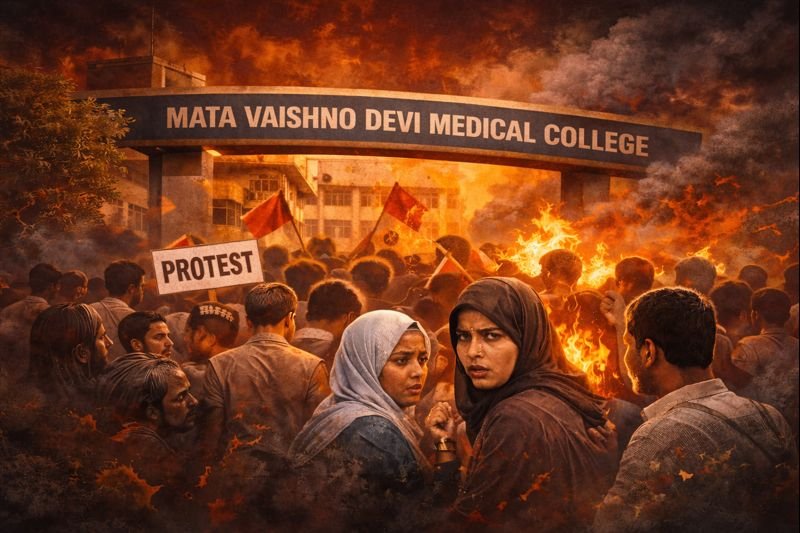
The recent unrest at the Mata Vaishno Devi Medical College in Jammu and the historic Dr. R. Ahmed Dental College in Kolkata are the main subjects of the comparison.Dr. R. Ahmed’s Legacy One of the top dental schools in the nation is the Dr. R. Ahmed Dental College and Hospital in Kolkata. It is unique in that it is the oldest dental college in South Asia, not just in India. Dr. Rafiuddin Ahmed founded what was once called the Calcutta Dental College.
In addition to founding the college, Dr. Ahmed also started the Indian Dental Journal. The government of India was establishing the groundwork for science and education after independence, but it was severely lacking in funding. Dr. Ahmed took the initiative in a deeply patriotic gesture. He donated the Indian Dental Journal and the college, which he had founded with his life’s work, diligence, and personal wealth, to the Indian government. a visionary who is regarded by many as the “Father of Dentistry in India.”
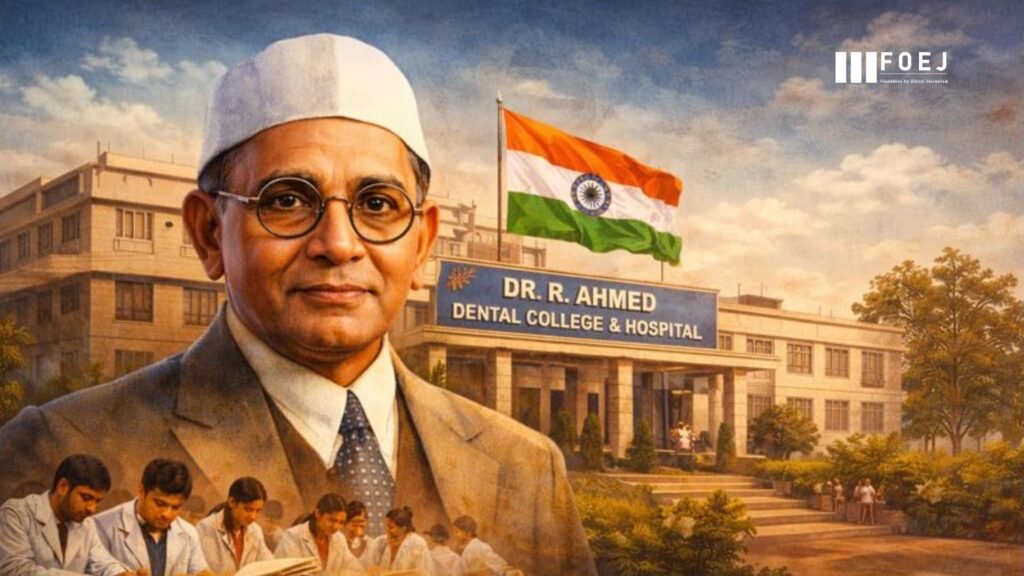
He committed his personal resources to serving the country. The government renamed the establishment “Dr. R. Ahmed Dental College and Hospital” in honor of his enormous sacrifice and contribution. This historical narrative demonstrates the Muslim community’s commitment to building India’s infrastructure and shows that the institutions they constructed were never meant to be used exclusively by one group. The Jammu Controversy The Mata Vaishno Devi Medical College is the subject of a contemporary controversy in Jammu that stands in stark contrast to this tradition of inclusivity.
Concerns have been voiced by social media users regarding the response to the institution’s 42 Muslim students. Critics point out that although Hindu students attend the college in equal numbers, the minority students continue to receive all of the attention. Similar to Dr. Ahmed, observers pointed out that Muslim founders of institutions did not limit admission to Muslim children or assert that their colleges were the private property of Muslim doctors. In the Jammu case, however, the controversy reportedly reached the point where the college’s recognition was revoked.


