


Students of Maulana Azad National Urdu University (MANU) continued their protest for the third consecutive day on Thursday ahead of their demands for the immediate restoration of the Students’ Union election, which had not been conducted for nearly one and a half years.
The protest first unfolded on January 27, earlier this month, and follows the representations and memorandums submitted to the university administration without any concrete response. The agitation was formally announced on January 26.
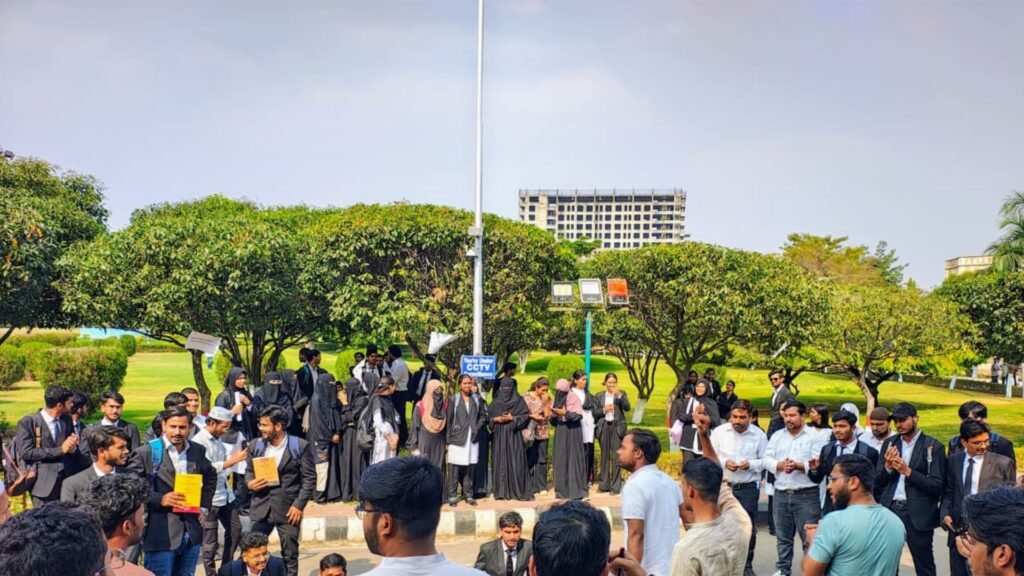
Shortly after the announcement, the MANUU administration issued a notice, which warned students against participating in any form of strike or protest. However, students proceeded with a peaceful protest in front of the university’s administrative building, which continues to date.
Student leader and PhD scholar Swaleh Ansari said that students were approached by the proctor and the Dean of Students’ Welfare (DSW), to whom they once again reiterated their demand for the immediate notification of Students’ Union elections.
“Instead of issuing a written notification, the administration verbally assured us that elections may be conducted in the next academic session, subject to a so-called “peaceful environment”. Our fundamental question remains unanswered: when elections for teachers’ and employees’ associations are being conducted regularly, why are Students’ Union elections being denied?” Ansari said.
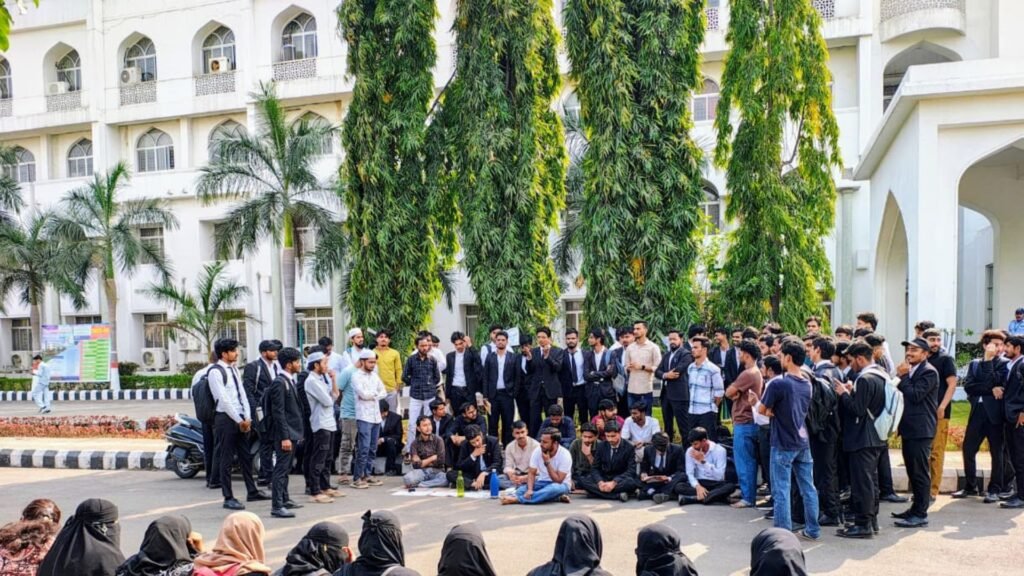
“We will continue our peaceful protest and will not move until Students’ Union elections are restored,” he added.
Abdullah Ansari, a law student, said, “The Black Coat March is a lawful, peaceful, and constitutional form of student expression. Participation in such a non-violent democratic protest cannot be treated as misconduct, and law students will assert their rights with discipline and dignity.”
Another law student, Bilal Pasha, said, “MANUU Law School stands with the university, not against it. This march reflects our commitment to democratic values, student representation, and accountable governance within the constitutional framework.”


