


A wave of emotion swept through the Marathi Patrakar Sangh auditorium, Mumbai, on Tuesday as a gathering unfolded for the 9th Shahid Azmi Memorial Lecture, an evening marked by remembrance, reflection, and a reckoning with how the denial of bail to Umar Khalid and Sharjeel Imam has shattered the hearts of many others. Organized by the Innocence Network, an all India collective of individuals and organizations working for the rights of those who have been wrongfully prosecuted or convicted, especially under charges of terrorism, the event brought together dialogues bound by personal loss and legal battles.
Among the speakers were Dr. Syed Qasmi Rasool Ilyas, father of Umar Khalid; Senior Advocate Sudeep Pasbola of the Bombay High Court; Parvez Riyazoddin Khan, a former prisoner; Aasif Mujtaba, friend of Sharjeel Imam and co-founder of the Shaheen Bagh protest; and human rights activist Sanober Keshwar.
The event began with the speech of Parvez Riyazoddin khan, a former prisoner, who spoke about how the state puts false charges on innocent people and when the accused is proven guilty “who will answer all those years, which accused has lost in fake charges?” “who will be accountable for the times he spent in jail?” and “who will come to help him bring him back to his life?” he asked.
Khan described prison life as “deeply discouraging”, but said the period could still be “used constructively despite harsh conditions”.
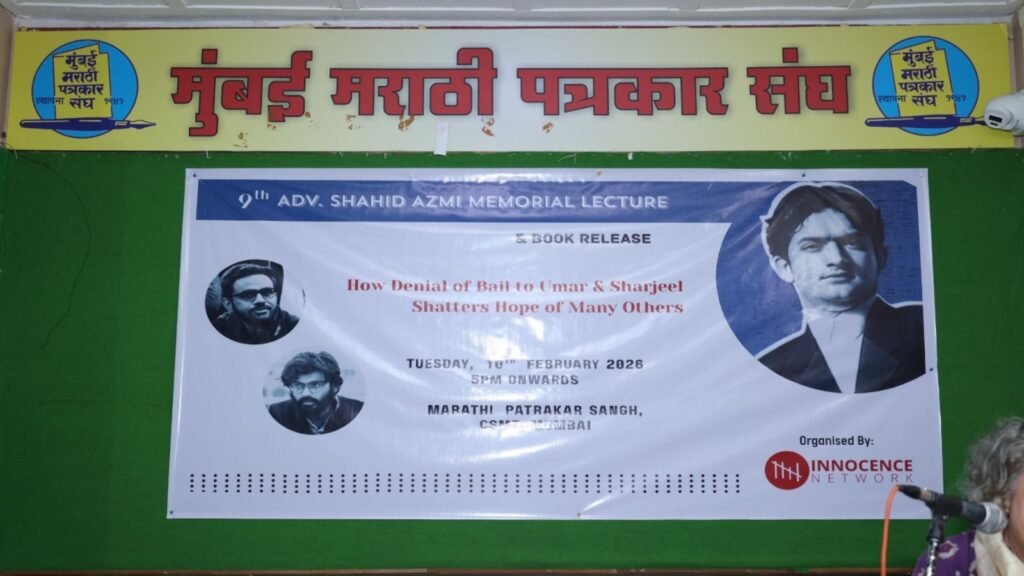
Human rights activist Sanober Keshawar, who recalled the atrocities faced by Shahid Azmi, who not only saw the violence of 1992 but “made sure no one suffers the way he suffered.” Recalling her conversations with Azmi, she shared the “most dreadful moments of Azmi’s life.”
Azmi, then a teenager, was arrested under the now-repealed TADA (Terrorist and Disruptive Activities Act) in the 1990s and was lodged in jail for several years before being acquitted. His experiences in jail later led him to the decision to study law and practice as a defense lawyer. During his career span, Azmi took up cases of people accused in major blasts and secured acquittals for several who had spent years behind bars. On February 11, 2010, Shahid Azmi was shot dead in his Mumbai office.
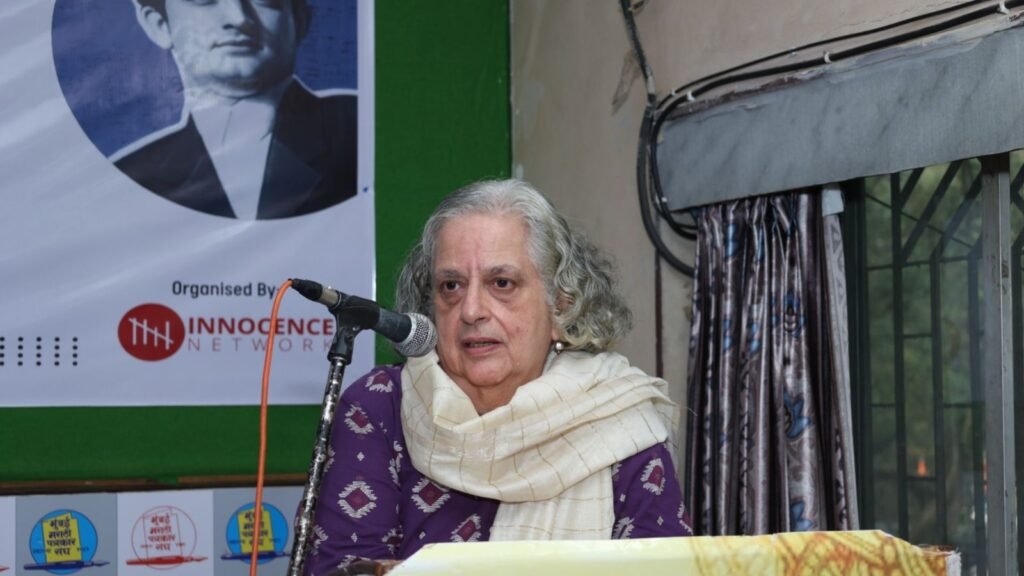
“Shahid may be physically not present with us, but his idea of resistance against the oppressors continues till today,” said human rights activist Sanober Keshwar in her speech.
Aasif Mujtaba, friend of jailed Sharjeel Imam and co-founder of the Shaheen Bagh protest, emphasized the incarceration of Sharjeel Imam, who is currently lodged in Jail under UAPA. The Supreme Court rejected the bail pleas of Umar Khalid and Sharjeel Imam in January, earlier this year, while granting relief to five other co-accused in a batch of petitions arising from the alleged “larger conspiracy” behind the 2020 Delhi riots. A Bench of Justices Aravind Kumar and N.V. Anjaria had reserved its judgment on December 10, 2025, after hearing arguments over 11 days.
Pronouncing the verdict, Justice Kumar observed that Khalid and Imam “stand on a qualitatively different footing.”
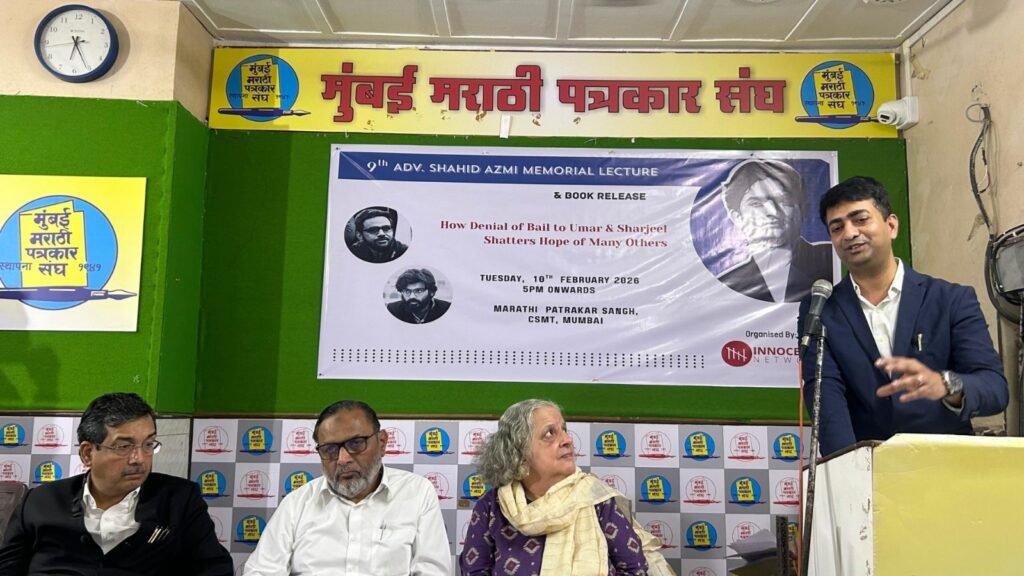
Mujtaba in his speech, sought to dismantle what is often described as a widespread misconception, that Sharjeel Imam remains in jail because of his speech on Assam. Continuing his speech, Mujtaba said, It was the ruling party BJP, including the Home Minister, who created an ‘atmosphere of hate’ which in turn resulted in the ‘Anti Muslim pogrom’ (Delhi riots 2020) that happened in the capital, which claimed the lives of at least 53 people, mostly from the Muslim community.
He said speeches made during the anti-CAA protests were later compiled to build a case of a larger conspiracy, while the broader context of the protests and the chronology of the violence were, according to him, sidelined.
“The government could not digest that the Shaheen Bagh protests had grown into a mass movement and therefore turned its attention to discrediting them. What began in December 2019 was, by January, being openly targeted by BJP leaders. Even Amit Shah, at an election rally, urged people to ‘press the button with such force that currents are felt in Shaheen Bagh,’” Mujtaba said.
Commenting on the denial of Sharjeel Imaam and Umar Khalid, Senior Advocate Sudeep Pasbola said if the right to a speedy trial is being violated, any accused has the right to apply for bail. While denying bail to Sharjeel Imaam and Umar Khalid, the court “overlooked the basic fundamental rights.”
Dr. Syed Qasmi Rasool Ilyas, father of Umar Khalid, who struggled to gather words and emotions to speak about Umar’s incarceration, who is under trial in the 2020 Delhi riots case, having been charged under the controversial Unlawful Activities (Prevention) Act (UAPA). According to the NCRB’s Prison Statistics India 2022, undertrials constitute 75.8% (4,34,302) of India’s total prison population of 5,73,220, reflecting persistent judicial delays. Although the proportion has slightly declined from 77% in previous reports, it remains high.
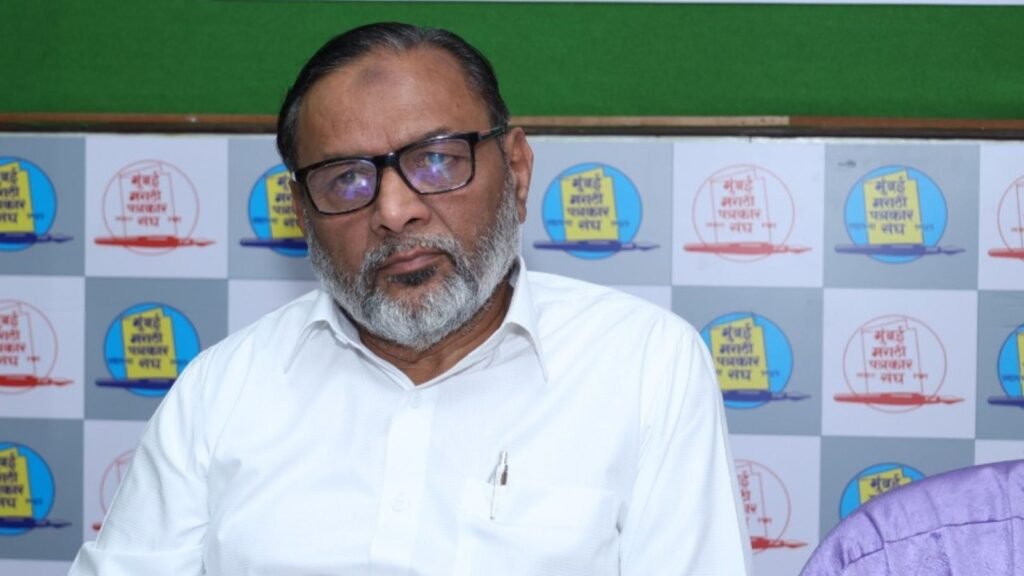
Talking about Umar’s case, he said, “We had taken the case to the Supreme Court several times when he was the CJI and six times the case was assigned to the bench of retired judge Bela Trivedi.” Contrasting the scale of the violence with his son’s prolonged detention, Ilyas asked, “If most of the victims were Muslims, did Muslims kill only Muslims?”
The event also marked the launch of a book by former prisoner Parvez Riyazoddin Khan, which translates the holy book Quran into the Marathi language. The book was written to help non-Muslim readers understand the Quran without directly engaging with translated religious texts, and to offer a basic, accessible introduction to Islam. The book was formally released in multiple languages.


