



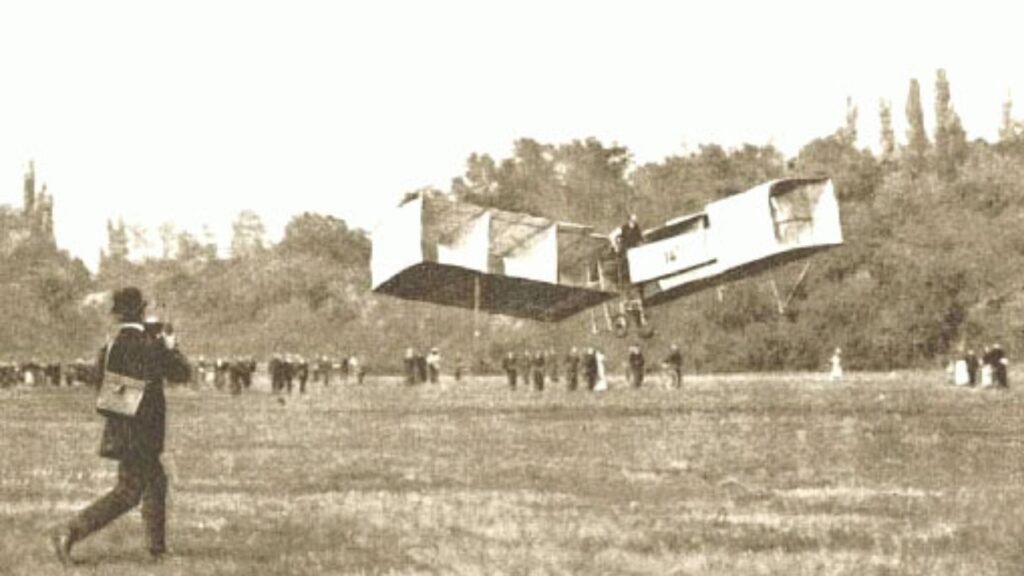
A large crowd got fascinated, gasped, and then broke into applause. A strange, boxy contraption with wings had just flown from the ground, going above and high, reaching 200 feet through the air, an aircraft it was! A Brazilian man, with a broad smile, took the humble credit of inventing it, claiming it as the first aircraft. His name: Alberto Santos-Dumont.
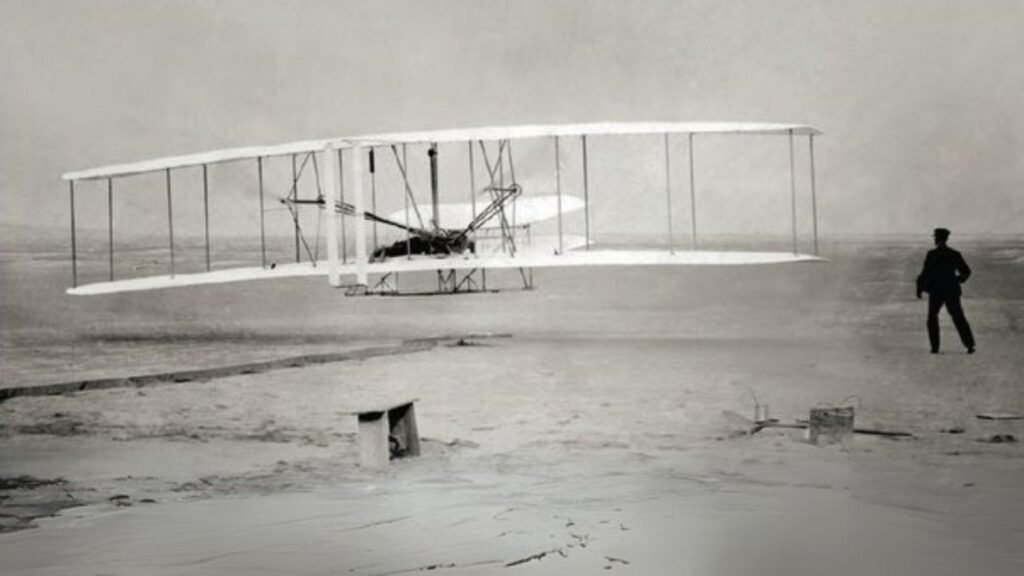
But was the claim correct? Two and a half years earlier and an ocean away from Brazil, on the desolate sand dunes of Kitty Hawk, North Carolina, the Wright brothers Wilbur and Orville secretly tested their machine, in silence, far away from the eyes of the public. On December 17, 1903, their flight covered 120 feet, a lesser distance than that of Alberto Santos-Dumont. However, they said, it was enough to prove that “humankind had flown.”
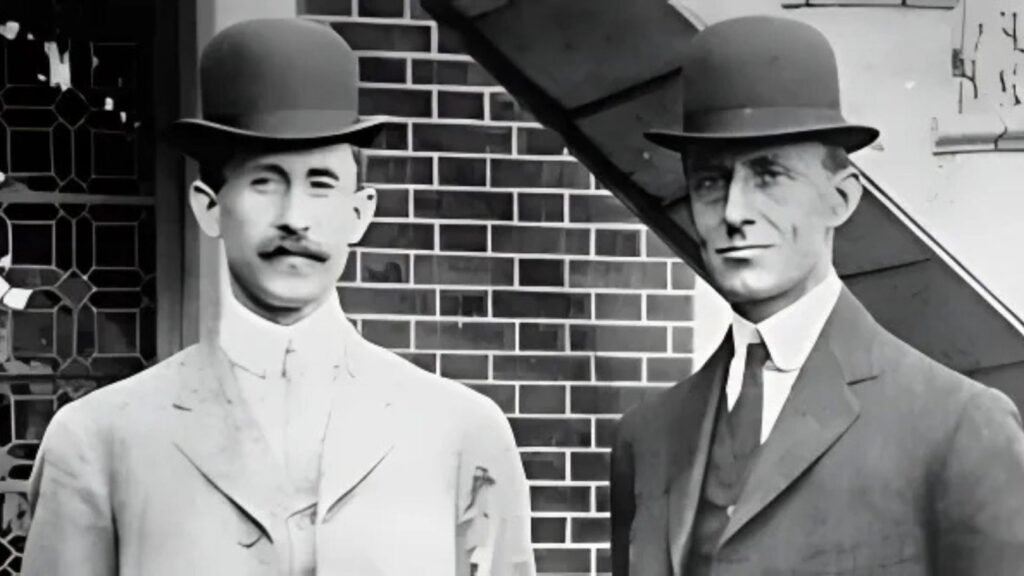
And here it began, one of history’s most bitter and fascinating debates. Who really first conquered the sky?
For the Wright brothers, the issue was clear. They had achieved powered, controlled, and sustained flight the first two and a half years before Santos-Dumont’s demonstration in Paris. However, critics, especially in Europe, challenged the legitimacy of this claim. They said the Wright brothers had no reliable witness, they claimed after Santos Dumont, and had no photography that clearly showed powered flight, and were conducted in isolation. In contrast, the brothers said it was done to “secure patents” before revealing their masterpiece to the world. Meanwhile, Santos-Dumont opined that flight should be a “public act,” not a private experiment.
Different Philosophies, Same Results
The Wright brothers aircraft used a “three-axis control system” pitch, roll, and yaw. But their flyer required a launch rail and strong headwinds. It had no wheels and couldn’t take off on its own from flat ground. Critics in Europe felt this disqualified it from being a true aircraft.
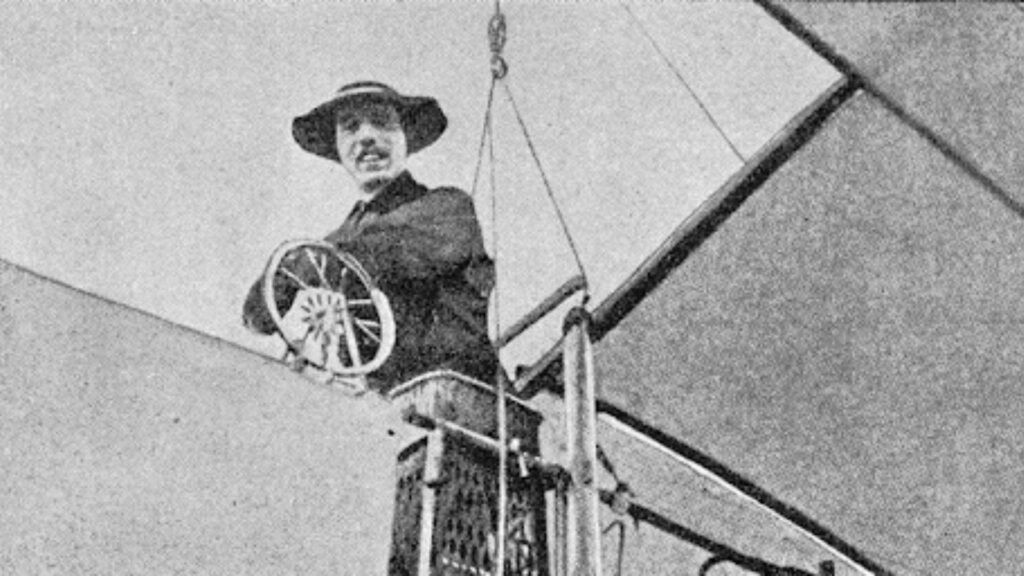
On the other hand, Santos-Dumont’s 14-bis was much simpler, a lesser-controllable machine. Taking off from the ground on wheels, it required “no assistance from wind or rail.” A few called it “Paris witnessing the birth of flight” and said that it rose like “a bird.”
Who Actually Conquered the Sky First?
Statues of Santos-Dumont erupted, cocktails were served, and Santos-Dumont became the father of aviation in Europe and Latin America. On the other hand, in the United States, the Wright brothers were given the honourable status.
The Wrights in 1908 publicly demonstrated their masterpiece in France, left European observers stunned, and skeptics were at a loss for words. But the debate does not stop here. In the pages of history, a few other names create a space in invention.
Some aviation historians claim that the Wright brothers were not the first to take flight. Among the contenders is Gustav Weißkopf (also known as Gustave Whitehead), a German immigrant in the United States who allegedly achieved powered flight as early as 1901.
In New Zealand, Richard Pearse is said to have flown a powered aircraft in 1903, possibly months ahead of the Wrights. In 1871, South African pioneer John Goodman reportedly launched the first manned glider flight, more than three decades before the events at Kitty Hawk.
Even earlier than the Wright brothers, in 1871, a South African named John Goodman reportedly conducted the first manned glider flight, decades before powered flight at Kitty Hawk. A memorial still stands in Howick, near the alleged launch site, marking his overlooked contribution to aviation history.
“It took hundreds of minds, dozens of failures, and years of determination”
This is precisely why many aviation historians hesitate to credit a single individual as the sole “inventor” of flight. According to Paul Jackson, former editor of Jane’s All the World’s Aircraft for 25 years, the journey to powered flight was a collective achievement, not the product of one genius.
“No one just woke up one day, sketched a plane, and flew,” Jackson explains. “It took hundreds of minds, dozens of failures, and years of determination.”