



The Delhi Development Authority (DDA) demolished the centuries-old Dargah Panch Peer in west Delhi’s Mangolpuri Industrial Area Phase II earlier on Wednesday, with claims making rounds from caretakers that the move was illegal and was taken without proper notice.
However, according to the administration, the land belongs to the Delhi Development Authority (DDA), and the action was part of an ongoing anti-encroachment campaign.
“This was done after getting due approval from the religious committee, with completion of all codal formalities, which established the said dargah as a patently blatant unauthorised construction on government land. The DDA had already served a show cause notice to the illegal occupants of the dargah in 2024 but their reply was not substantial. During the demolition drive, no damage was caused to any other assets at the site, since action was confined strictly to the identified encroached portion.” DDA spokesperson said.
However, opposing this, Maqbool Hasan, the in charge of the dargah, said, “My father and his father… We have all taken care of this dargah, which is more than 100 years old. We were not provided with any proper notice this week. Policemen came around 4-5am and threatened us. I even begged the SHO to stop and wait till proper court proceedings, but he threatened to arrest me. Now, the dargah is almost demolished,” Hasan said.
Meanwhile, residents also highlighted the shrine’s long-standing communal significance, saying that people from different faiths regularly visited the dargah. Many locals claimed that a majority of the devotees were Hindus, with some estimating the number at over 70 percent. To know the reality behind the demolition, this reporter went to the ground to find out the details. Amidst the claims and facts, what remained hidden was the human emotions, which this photostory aims to highlight.
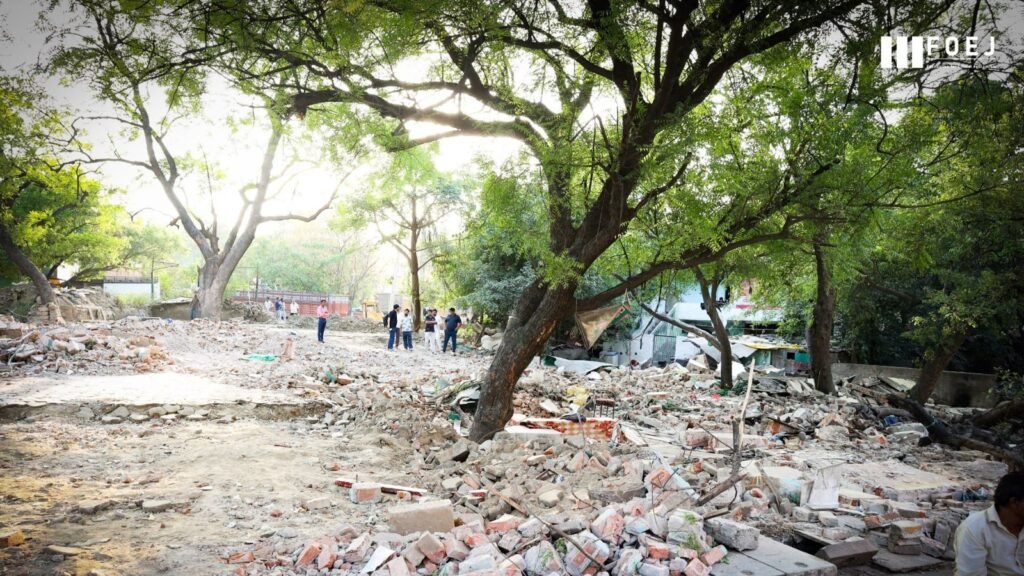
A wide view of the demolished dargah site shows heaps of rubble, broken bricks, and shattered structures spread beneath large trees, the surviving memories of the dargah.
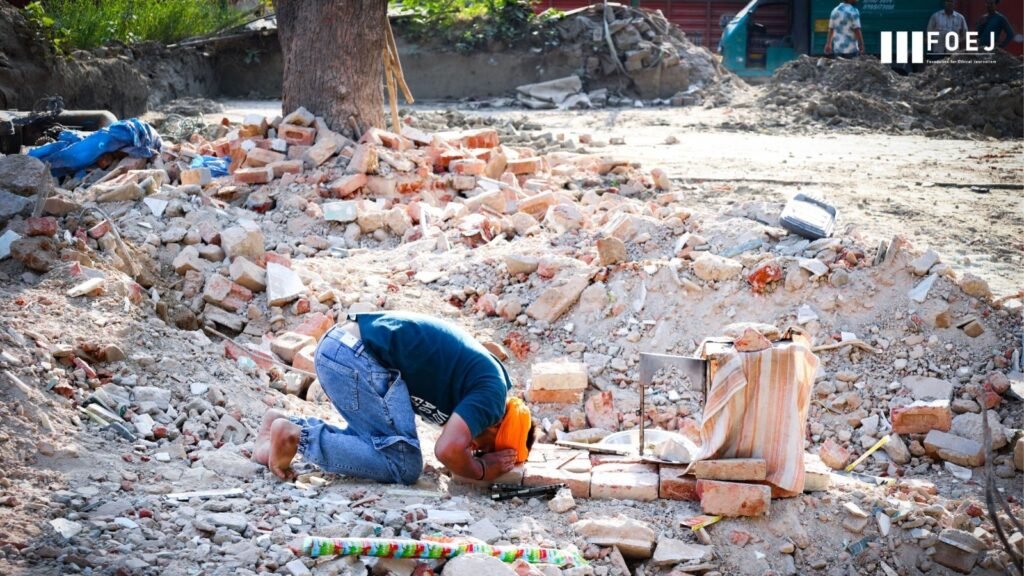
A man with a saffron scarf wrapped around the head bows in front of a small structure standing tall amidst the wrecks of the demolition, highlighting that the Darga was sentimentally close to not only Muslim communities but non-Muslims as well.
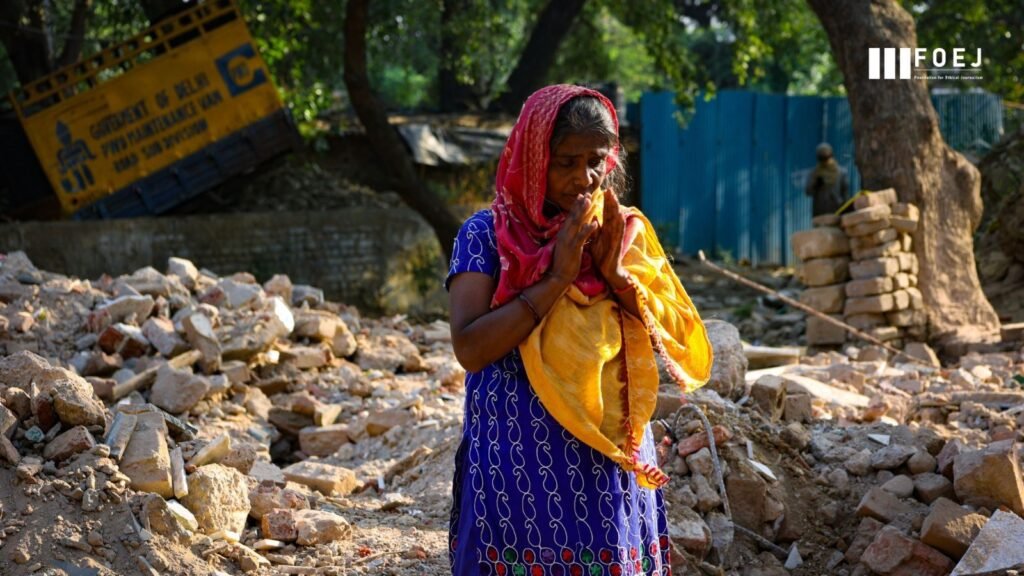
Crammed by the debris, bricks, and a leaned board reading “Government of Delhi,” stands a woman, praying under the open sky of the demolished site. Her faith, as she describes, says that her prayers are answered here.
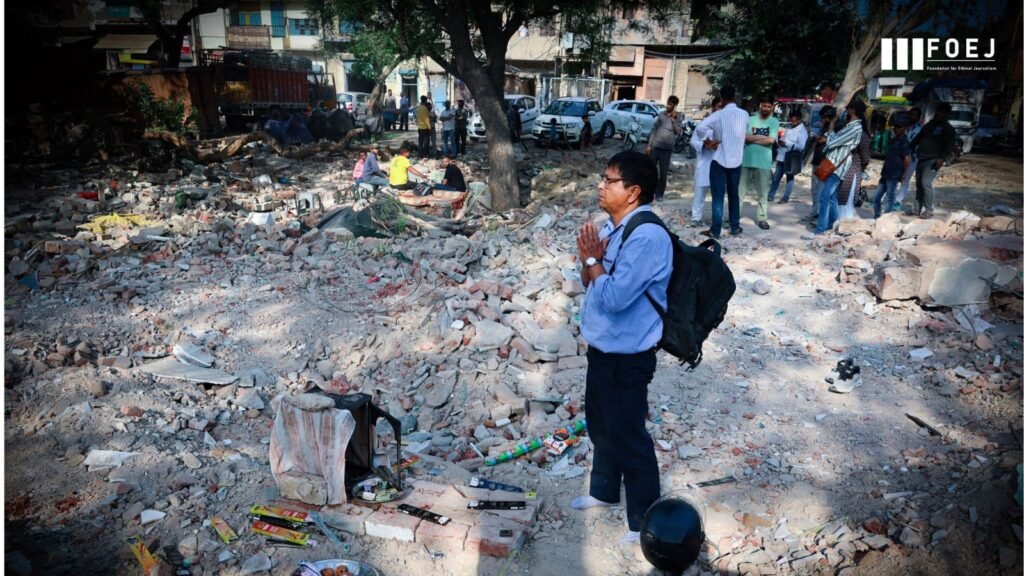
Following her comes a middle-aged man, ostensibly tired, praying on the remains of a darga, which once was a concrete structure. A few steps away from him sits a group of men taking shelter under the surviving tree, which, along with the urban setting, contrasts sharply with the destruction on the ground, highlighting the scale of demolition.
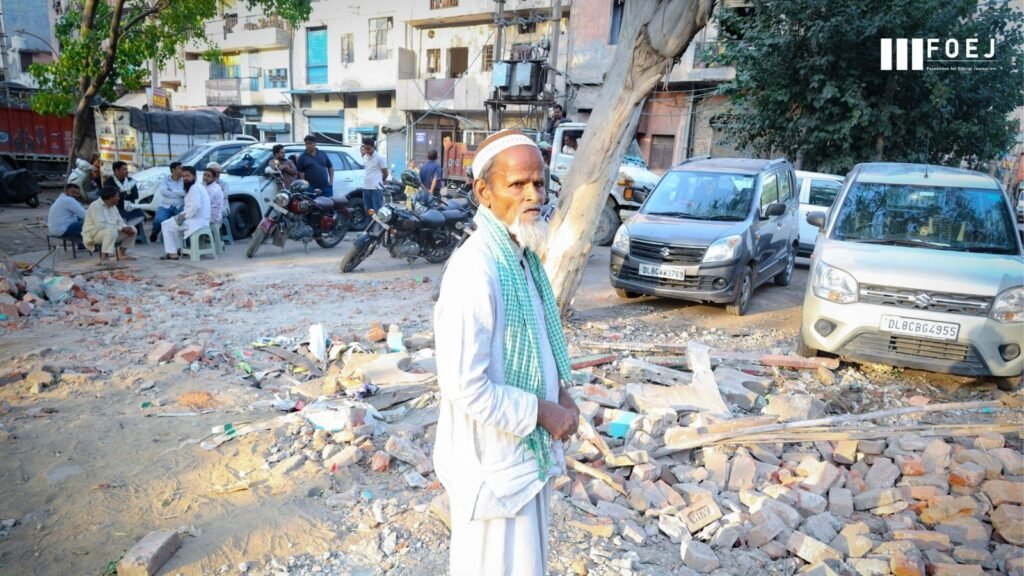
Dressed in traditional white attire with a skullcap and a green scarf draped around his neck, an old man stands on the demolished sites, looking into the distance with a solemn expression. In his hand, he holds prayer beads, reinforcing the spiritual connection to the place that once stood there.
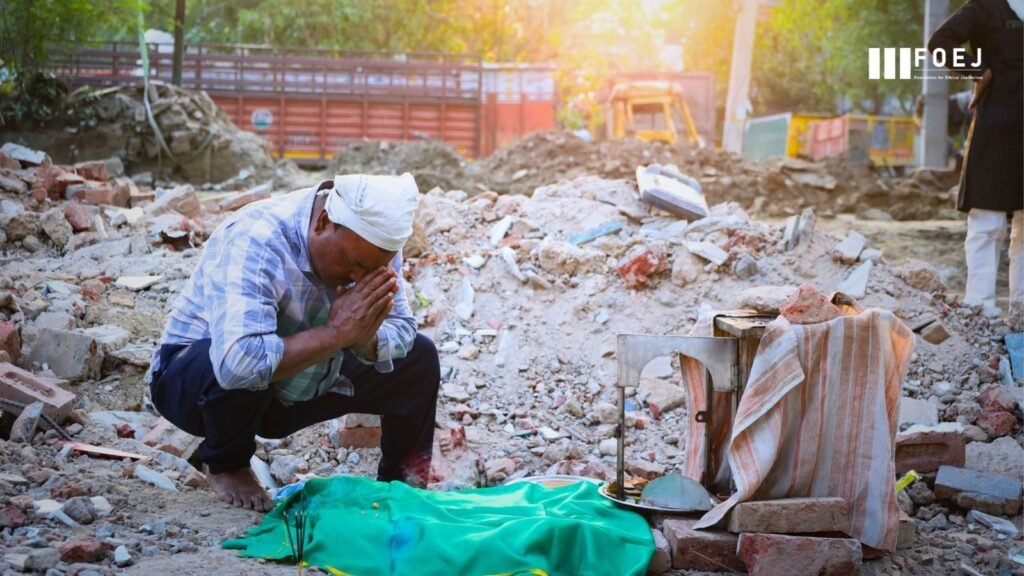
A man wearing a white headscarf and checked shirt crouches barefoot on the rubble, his hands folded in prayer and his head bowed. In front of him lies a green ceremonial cloth spread over the remains of the dargah, but his spirit is unshaken.
(Text Inputs: Sidra Fatima)