



On April 9, 2025, Gulfisha Fatima — a Muslim activist from Seelampur in Northeast Delhi — completed five years in jail under the draconian Unlawful Activities (Prevention) Act (UAPA), in connection with cases related to the 2020 Delhi pogrom. She is one of dozens of anti-CAA protesters accused of being part of an alleged conspiracy behind the February 2020 violence that claimed 54 lives, the majority of them Muslims.
An Urdu postgraduate from Delhi University and an MBA graduate, Gulfisha — affectionately known as “Gul” was also a trained radio jockey. She was part of the peaceful and vibrant anti-CAA-NPR-NRC movement that flourished in several parts of Delhi. The movement, rich in community participation, gave rise to local women leaders like her ordinary women with no prior political affiliations or experience in organising protests.
Fatima, the most educated in her family, was deeply interested in Urdu literature. She completed a radio jockeying course before pursuing an MBA from a private institute in Ghaziabad. At the time of her arrest, she was preparing for her second attempt to qualify as a college lecturer.
She faces 34 charges, including four under various sections of the UAPA. She is also among at least 14 CAA dissenters booked under FIR 59 a case widely seen as a tool to target critics of the controversial Citizenship Amendment Act.
Her Father’s Pain and Faith
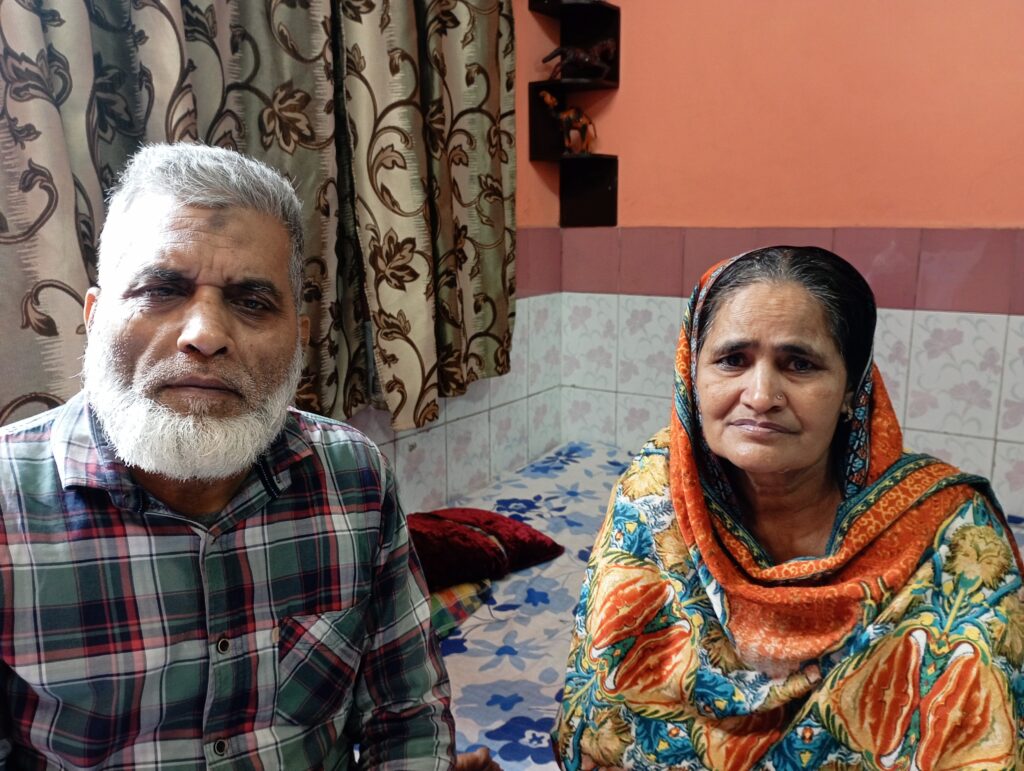
“It is very difficult for us to live without our daughter, Gulfisha. She is our only daughter, and she has been in jail for five years now—yet she still hasn’t been granted bail. Despite everything, she remains strong. Inside the jail, she teaches other women and children, and earns a modest amount—around three thousand rupees a month—which she uses for her basic needs.
We only see her in the courtroom during hearings. We don’t go to the jail for visits anymore because we cannot talk properly there—there’s a metal barrier that makes it hard to even hear each other clearly.
My health is failing, and her mother is also unwell. Gulfisha calls us from jail, but the calls last only five or ten minutes. What can we really say in such a short time? We are helpless. Her bail has been denied 24 times. But as they say, umeed pe duniya kayam hai. She stood up for others—now we can only wait and pray for her.” — said Tasneef Hussain, the father of Gulfisha Fatima, while talking FOEJ Media.
Gulfisha Fatima’s case is not an isolated one. There are countless others who remain behind bars under UAPA, waiting for justice. Years pass before courts finally declare them not guilty. But no verdict can return the time they’ve lost. Woh waqt laut ke aayega — not just as hope, but as a reminder of the cost of delayed justice.
From 2014 to 2022, a total of 8,719 cases were registered under the stringent Unlawful Activities Prevention Act (UAPA), and of these, there were acquittals in 567 cases, while 215 resulted in conviction. According to data, since 2014, except for one intervening year, the acquittals have been much higher than convictions consistently. This trend has not changed, as even 2022 saw the highest number of acquittals since 2014. In most UAPA cases, the time taken for investigation and trial is unusually long, and convictions remain rare, turning the process itself into punishment.
Last year, Gulfisha’s parents welcomed me with kind smiles, but their faces showed the weight of their suffering. After sitting with them for a while, I asked, “When do you think Gulfisha will get bail? What about the other political prisoners?”
Her mother started crying. It was heartbreaking to see her in so much pain. Her father tried to console her and looked at me, saying, “Allah ke ghar der hai, andher nahi.” His words reflected their belief in justice, but the sadness in his eyes said everything about their long wait.
Gulfisha has been in Tihar Jail for more than 1826 days now. Imagine spending so many days in jail and not getting anything except endless court trials.
The hope for her release has been lost, and her parents feel helpless. She is suffering because she raised her voice for justice and stood for her community.
Seeing her mother cry made me realize how unfair life can be. I tried to comfort her by saying,
“Zindagi ka safar chahe kitna bhi kathin ho,
Sach ke liye ladne wale kabhi akelay nahi hote.”
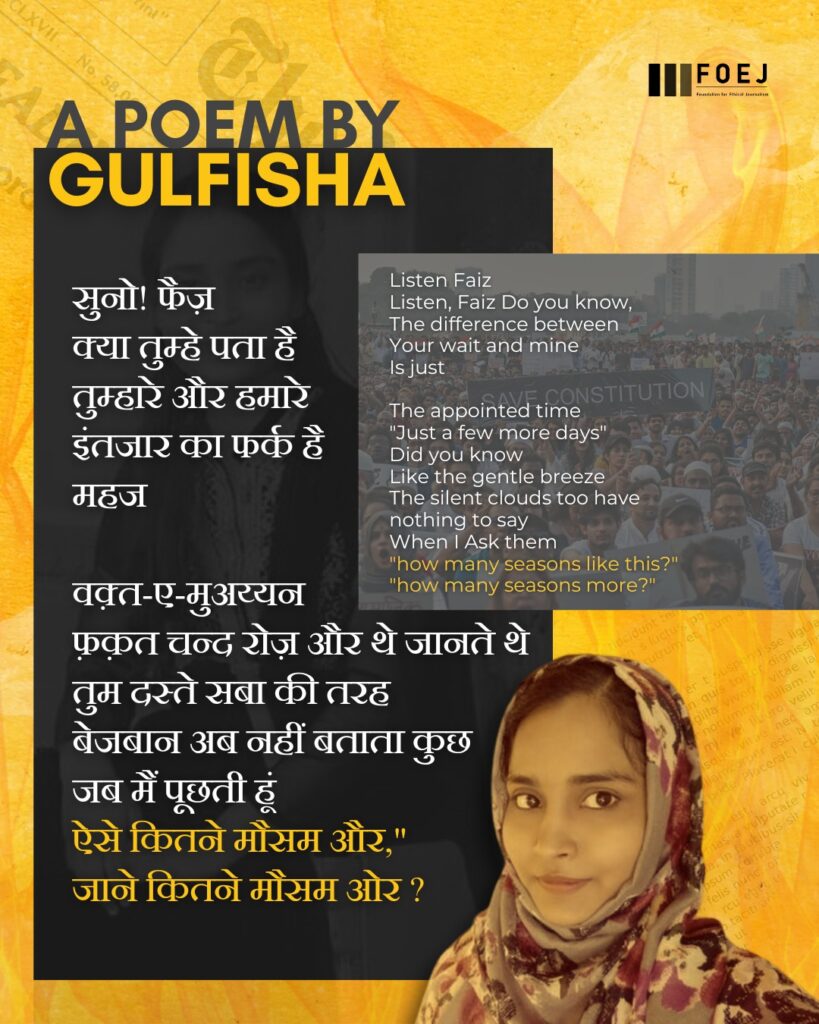
Her father remained calm, but I could see his pain. He told me, “We pray every day for her and for others like her. We have faith that Allah will bring justice one day.”
I left their home feeling heavy-hearted. Gulfisha’s parents are holding onto their faith despite facing so much injustice. Their words, “Allah ke ghar der hai, andher nahi,” stayed in my mind. It reminded me that no matter how long it takes, the truth will shine, and justice will prevail.