The refusal to form a coalition with Arab-led parties raises an essential question about the meaning of democracy in Israel: can a state claim to be the sole true democratic country in the Middle East while questioning the political legitimacy of a section of its own citizens, many of whom have lived there for decades?
The election produced no winner, resulting in a political deadlock. No party secured the 61 seats required to form a government in the 120-member Knesset. Netanyahu’s bloc secured 53 seats, falling eight seats short of the 61-seat majority required to form a government. Meanwhile, the Likud party emerged as the largest single party, with 27 seats, meanwhile the opposition parties secured a total of 67 seats, including the 19 seats won by the two predominantly Arab parties. However, both blocs are struggling to form a coalition government. The result, on the other hand, exposed a deeper contradiction in Israeli politics: the question of equal citizenship and the worth of Arab votes in the country’s political future.
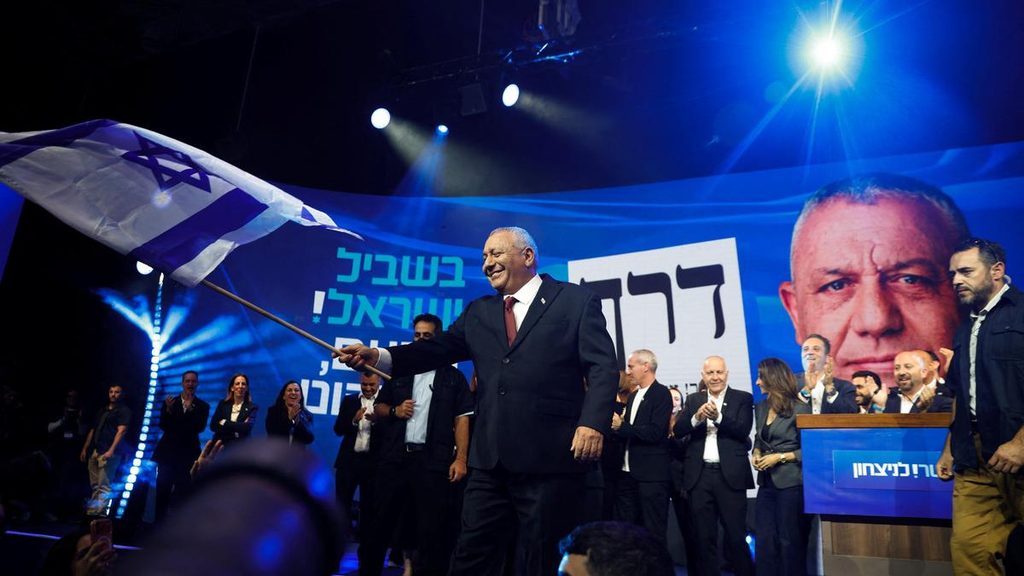
On 8 November, President Isaac Herzog formally tasked Gadi Eisenkot with forming a government; Ra’am has said it will support him, while the Joint List has offered backing from outside the coalition, making Arab-party support central to his bid for power.
Yair Golan, chair of the left-wing Democrats party, reiterated his call for a Jewish-Arab coalition on Friday in an opinion piece for Haaretz, arguing that ignoring the Arab parties, Ra’am and the Joint List, which together secured an unprecedented 19 seats, would be undemocratic. He wrote: “There are no conditional citizens in a democratic Israel.” Golan’s argument deserves attention because, in his piece, he argues that “a ballot cast on Tuesday by an Arab citizen in Sakhnin or in Rahat is worth exactly as much as a ballot cast by a Jewish citizen in Tel Aviv or Sderot. Anyone who believes in democracy cannot fight for it in the morning only to then, in the evening, invalidate the voices of hundreds of thousands of citizens because of their origins or their names”.
Golan remains the only leader of a Jewish-led opposition party, which won eight seats, to have openly expressed support for democratic values and called for a coalition government with Arab parties. No other political leaders or parties, including Netanyahu’s bloc and Gadi Eisenkot of Yashar, have embraced such a partnership; rather, they have ruled out an alliance with the two Arab political parties. This raises an uncomfortable question: what kind of democracy does Israel boast of when the political participation of Arab citizens is welcomed at the ballot box but resisted in the formation of a government?
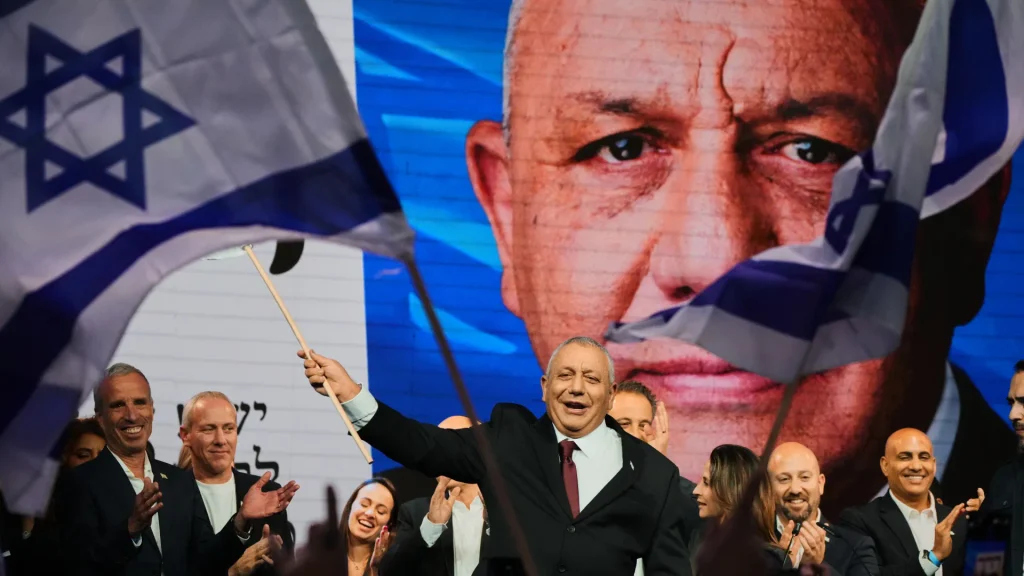
Similarly, around 2,000 Israelis rallied in Tel Aviv to demand a Jewish-Arab coalition government, arguing that the votes of Arab citizens should carry the same political value as those of Jewish citizens. The Standing Together group also called for a Jewish-Arab coalition government. They called for change in the next government they had voted for, because “without the Arab parties, there won’t be change,” as MK Ahmad Tibi, spoke to Channel 12. The message is simple: Arab voters are worth exactly as much as Jewish voters; therefore, a coalition government comprising Jewish and Arab political parties can be formed to shape the country’s future.
This is not a rhetorical demand but a call for equal representation, the essence of democracy. The value of a vote cannot be judged on the basis of the ethnicity, religion or national identity of the person who casts it. A democratic system should resist political leaders who recognise the votes of one section of society while ignoring almost 20 per cent of Arab voters when it comes to forming a government.
The record number of seats won by Arab parties could play a consequential role in determining the fate of the next government, provided that their political position is not reduced to that of mere voting citizens. Their political legitimacy must be acknowledged, as their representatives are elected through the same ballots that other Israeli citizens use to elect their representatives to the Knesset.
The term ‘kingmaker’, though dressed up in optimistic vocabulary, risks presenting Arab representatives as outsiders who have suddenly acquired the power to decide the political future of the state. They are not. Arab citizens, like other Israeli citizens, possess the same political rights. Their representatives have the same legitimate place in the parliamentary system as other Israeli representatives.
The outgoing opposition leader, Yair Lapid, wrote on X on Friday: “On Tuesday at 22:00, we all stared at the screen and waited for one number. 61. It didn’t appear. Not for us, and certainly not for him.”
Within Netanyahu’s bloc, the ultra-Orthodox Parties United Torah Judaism and Shas, which won seven and six seats respectively, hold influential positions in the coalition arithmetic.
On election day, three Ra’am party activists were arrested on suspicion of bribery. Later, according to a report by Haaretz, the police concluded that no evidence had been found of an attempt to bribe voters.
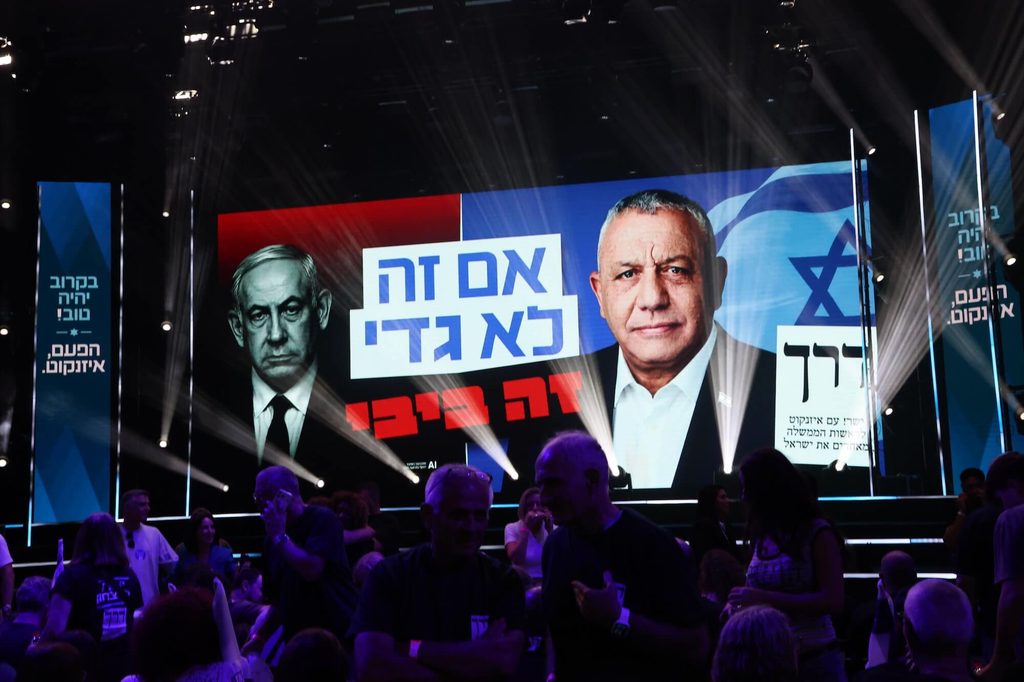
The Times of Israel reports that the case reportedly originated in the Prime Minister’s Office, following a tip from Ido Norden, the office’s chief of staff, who conveyed his suspicions directly to the office of Israel Police Commissioner Daniel Levy, prompting the police to conduct a raid. Netanyahu subsequently cited the case in an election-day video, claiming that the election had been “stolen”.
On 29 October, Dean Livne, acting director-general of the Central Elections Committee, rejected allegations of widespread electoral fraud, describing them as baseless.
Meanwhile, an investigation into alleged foreign influence aimed at paying Arab voters to increase their turnout at polling stations is under way. At the Shin Bet’s request, the Mossad joined the investigation. However, the Central Elections Committee has repeatedly said that “the scope of the investigation is limited in nature and that the results of Tuesday’s election — which yielded fresh parliamentary gridlock — are not in question”. Democracy is not simply the right to cast a ballot. It is also the right to have that ballot respected.