



The six-day state funeral was held in Tehran following the passing of Iran’s Supreme Leader.
Ayatollah Ali Khamenei, in July 2026, emerged not merely as a traditional mourner
ceremony, but as an unprecedented intersection of 21st-century global politics, diplomacy,
and international law. Held in the shadow of the war that followed Khamenei’s killing in the U.S.
and Israeli military strikes and the subsequent temporary ceasefire, this farewell took on
heightened significance. While the Western world has long portrayed Khamenei as a
‘dictator’ and a ‘villain’ completely boycotted the event; the presence of diplomats, heads of
state, and representatives from over 100 countries at Tehran’s Grand Mosalla (Imam
Khomeini Grand Mosque) narrated a new story regarding the global balance of power. This
The article presents an in-depth analysis and evaluation of the event, covering its geopolitical
messages, the priorities of the Global South, the symbolism of the “funeral as resistance,”
violations of international law, and India’s strategic autonomy.
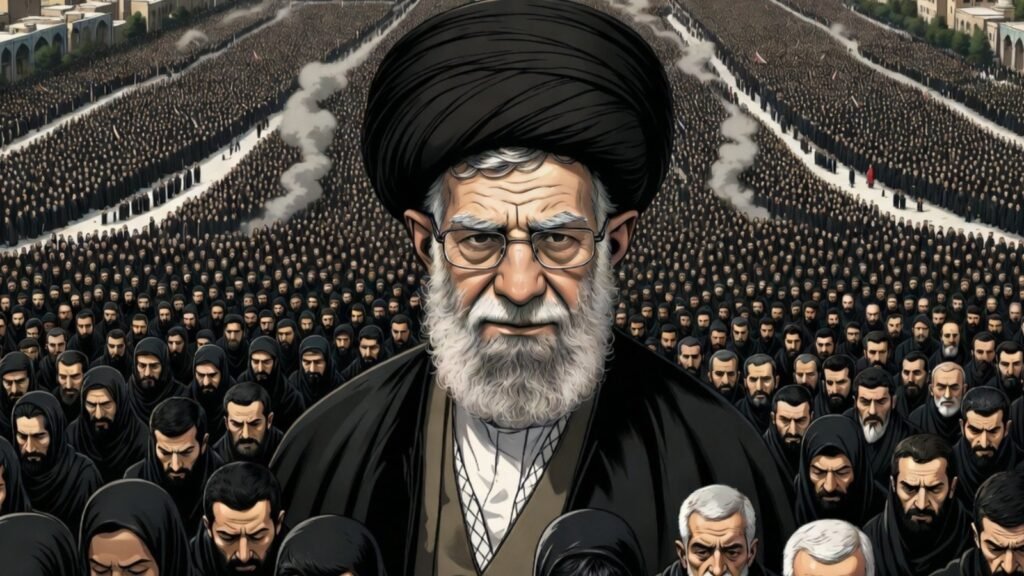
Western Isolation vs. Global Realities
For decades, Western media and policymakers have constructed a narrative that Iran is
completely isolated from the world (diplomatically isolated). However, Ayatollah Khamenei’s
The funeral completely exposed the limitations of this narrative. The presence of over 100
countries at the funeral of a leader whom the West called a “dictator” underscores a deep
division and realism in global politics. Was Iran truly isolated? If Iran had completely isolated
on the international stage, representatives from so many countries would not have flocked to
Tehran, despite the horrors of war and security risks. The main reason behind this
participation (Multipolar World Order) This presence demonstrates that global politics is no
longer unipolar, where dictates from Washington or Brussels dictate which countries survive.
diplomatically and which may not. Institutional Relations: Relations between states are not
limited to individual states but are based on long-term strategic, geographical, and economic
interests. Iran is an indispensable force for Eurasia, the Middle East, and Africa.
Diplomatic Protocol and Geopolitical Signaling
Sending a representative to a state funeral is not merely a formality or diplomatic protocol; it
is deep geopolitical signaling. By registering their presence, more than 100 countries sent a
strong message to the West that they cannot subordinate their relations with Iran to U.S.
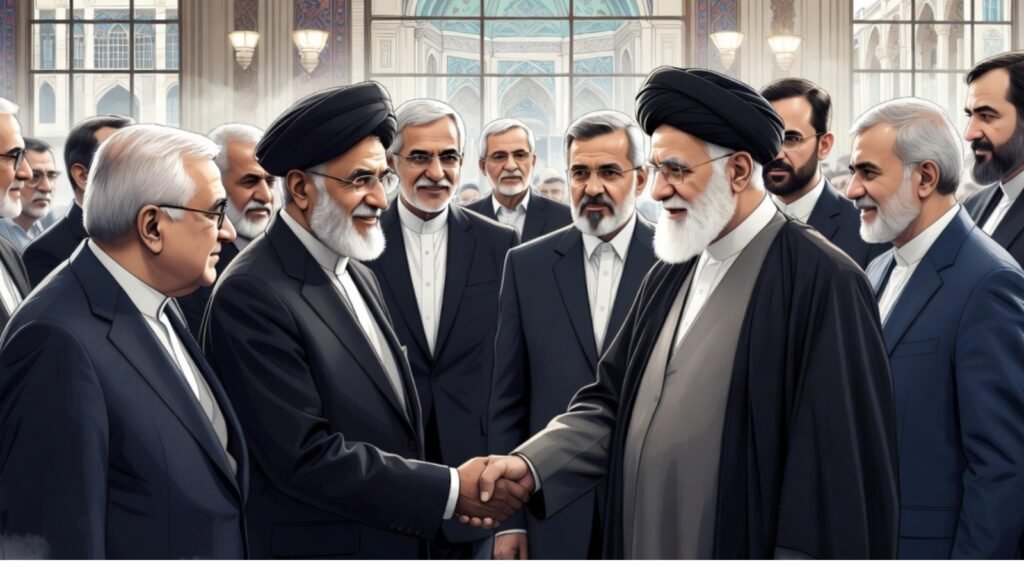
sanctions or vetoes. The attendance of Russia’s special envoy Dmitry Medvedev, Pakistan’s
Prime Minister Shehbaz Sharif and high-level delegations from China, Turkey, Saudi Arabia,
and Central Asian states made clear that the Eurasian bloc and regional powers have a strong
interest in a smooth transfer of power in Iran and in the stability of its institutions.
Funeral as Resistance (The Symbolism of Unity and Regional Implications)
The Islamic Republic of Iran presented the six-day farewell for Ayatollah Khamenei not only
as personal or national mourning but as a powerful symbol of national unity and the Axis of
Resistance. Following the deaths of the Supreme Leader and his family members (including
his 14-month-old granddaughter) in US-Israeli attacks, there was speculation that Iran’s state
Institutions might collapse, or internal unrest could erupt within the country. However, the
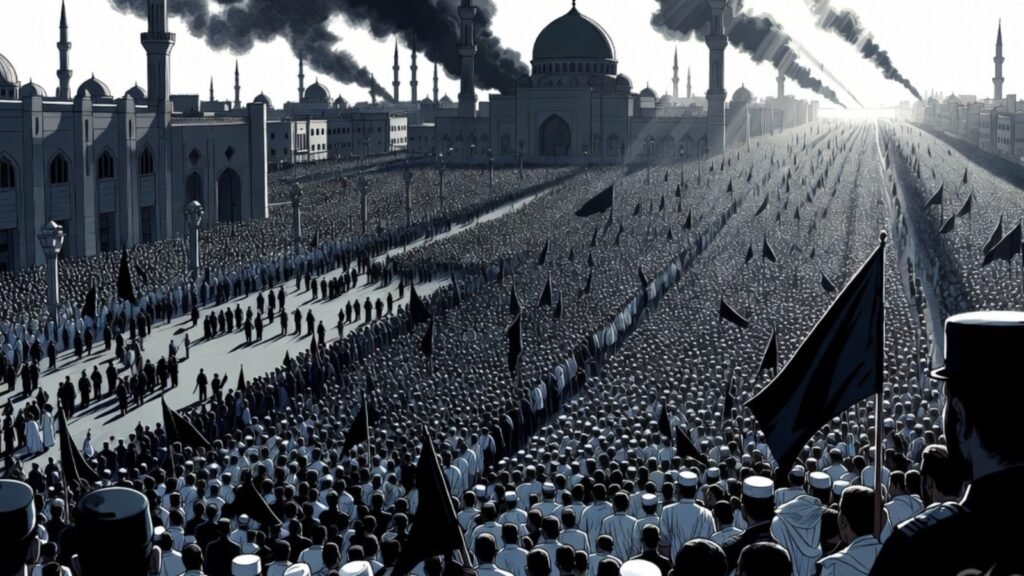
funeral produced the opposite result: the Millions of people who poured onto the streets of
Tehran, Qom, and Mashhad provided the state with a measure of domestic legitimacy. This
The turnout was reminiscent of the funeral of Ayatollah Khomeini in 1989.
Despite the ongoing war, the public gathering of Iranian President Masoud Pezeshkian,
Parliament Speaker Mohammad Bagher Ghalibaf and top Revolutionary Guards (IRGC)
commanders (such as Generals Ahmad Vahidi and Majid Mousavi) demonstrated that there
There was no vacuum in the country’s institutional structure. The popular emotion around the
The funeral reinforced the succession process of the new supreme leader, Mojtaba Khamenei. In
West Asian politics, this funeral directly implies that the Iran-led “axis of resistance” (which
includes Lebanon’s Hezbollah, Yemen’s Houthis, and Iraq’s Hashd al-Shaabi, who were
present at the funeral in the forefront) may become more assertive and united, rather than
weakened. The installation of a new giant sculpture of Khamenei’s clenched fist and his
distinctive ring in Tehran’s Enghelab Square during the funeral symbolizes that the ideology
of resistance will remain a core pillar of Iran’s foreign policy even after his death.
Targeted Killings and the Crisis of Regional Stability
The argument that the targeted killing of a sovereign head of state or leader eliminates
terrorism or brings regional stability is completely flawed. History shows that such actions
only escalate conflict. Khamenei’s assassination pushed the Middle East to the brink of an all-
out-regional war, leaving global waterways (such as the Strait of Hormuz and the Red Sea)
vulnerable and severely impacting the global economy.
Under international law, state sovereignty is paramount. Article 2(4) of the UN Charter
clearly prohibits the threat or use of force against any state’s territorial integrity or political
independence. UN Charter Article 2(4): “All Members shall refrain in their international
relations from the threat or use of force against the territorial integrity or political
independence of any state…”
Entering the capital of a sovereign country (Tehran) and carrying out airstrikes on the
compound of its supreme military and spiritual leader constitutes a direct act of aggression, a
gross violation of international law. This incident has raised serious questions about the
impartiality of global institutions (such as the United Nations Security Council (UNSC)) and
international courts (ICJ/ICC).
When actions against Western interests are committed, global institutions immediately
impose sanctions and issue warrants. But when powerful countries (such as the United States
and Israel or its allies) violate established international law by assassinating the sovereign
leadership and killing children, women, and innocent civilians of another country, these
The institutions’ response is extremely sluggish or even silent. This (selective justice) undermines
the credibility of international law.
The Indian Context: Strategic Autonomy and Bilateral Commitments
India’s delegation did not take its presence at the funeral lightly. The official Indian
The delegation included the minister of state for external affairs. Pabitra Margerita and Bihar
Governor Lieutenant General (Retd.) Syed Ata Hasnain. In addition, various Indian political
figures (such as Congress senior leader Salman Khurshid) and Shia religious leaders from
Jammu and Kashmir (such as Mehbooba Mufti and Aga Syed Ruhullah) received formal
invitations, many of whom went to Tehran to express their condolences. Demonstration of
strategic autonomy. The greatest strength of Indian foreign policy has been its strategic
autonomy. India does not blindly follow any single bloc (be it the US bloc or the Russia-
China-Iran bloc). Sending an official delegation to Khamenei’s funeral is a vivid example of this policy: On the one hand, India maintains deep strategic ties with the Quad and the United
States. On the other hand, India cherishes its relations with Iran, keeping its national interests
in mind. India has made it clear that it cannot abandon its long-standing and trusted
geopolitical partner at the cost of Washington’s displeasure.
For India, maintaining relations with Iran is not a matter of compulsion, but rather a matter of
sound strategic and geo-economic reasons:
Chabahar Port: India has a long‑term agreement to develop the Chabahar port, which is the
only bypass route to Central Asia and Afghanistan (because Pakistan denies India a land
route). The International North–South Transport Corridor (INSTC) offers the shortest and
most cost‑effective corridor connecting India to Russia and Europe, with Iran as the key
transit hub. Diplomatic engagement with Iran is also in India’s broader national interest for
the safety of millions of Indian expatriates in the Middle East and for stability in oil and gas
markets.
Ayatollah Ali Khamenei’s funeral will not be recorded in history simply as a religious rite,
but will be remembered as a major 21st‑century diplomatic show of strength. The gathering
of more than 100 countries in the capital of a nation declared untouchable by the West proves
that the world has moved beyond Washington‑centred policies. The Global South is now
shaping its foreign policy based on its economic and strategic interests, not under the pressure
of Western ideology. This entire episode exposed the double standards of international law
and, at the same time, gave countries like India an opportunity to more firmly assert their
strategic autonomy. The six‑day funeral from Tehran to Mashhad makes clear that erasing
Iran from the map of global diplomacy is impossible.