



“My name is Mohammad Irfan.”
This was no mysterious proclamation. It contained neither flowery rhetoric nor any provocative political statement. It was simply a citizen stating his name on a public platform. but, in the digital landscape of 21st-century India, this was no longer a mere self-introduction it evolved into a subject of national discourse, a heated debate, and a source of deep emotional resonance for millions. The video spread like wildfire across various social media platforms, where countless people shared it, commented on it, and sought to interpret its significance. The question arises, why does the simple act of a person stating their name become a political event in a multicultural, diverse, and democratic nation? When someone says, “My name is Mohammad Irfan,” they are not merely revealing their personal identity; they are confronting an entire framework of prejudices, stereotypes, and social expectations associated with that identity. This incident confronts us with a fundamental and sensitive question: when and why does the public utterance of a Muslim name in contemporary India transform into a declaration of a civic right and a ‘political act’?
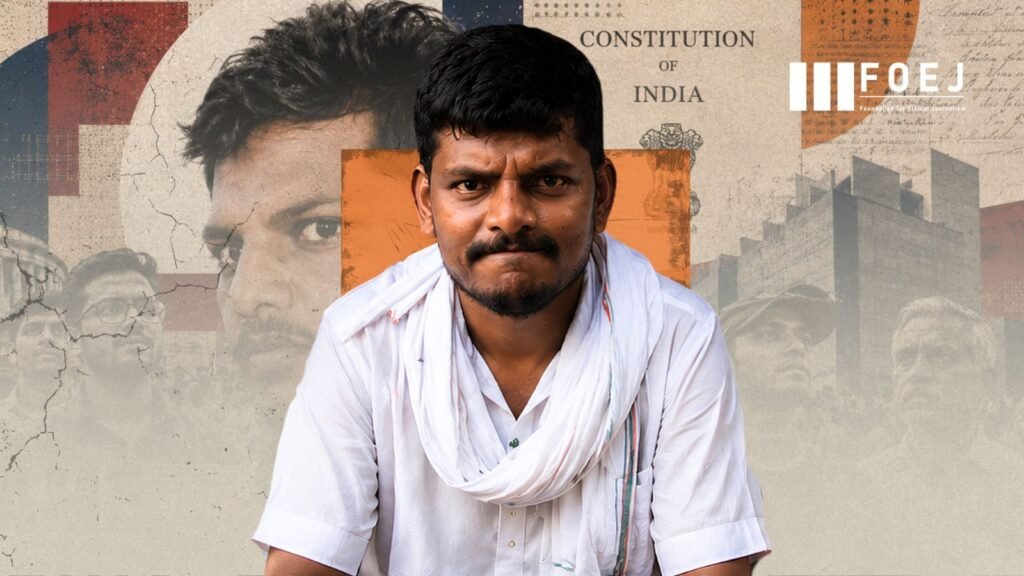
The virality of content on social media is not just a game of algorithms. A visual or sentence becomes national discourse when it touches a deep wound, tension, or truth buried in the collective unconscious of society. Mohammad Irfan’s moment did exactly that. This video did not merely show a person speaking, but rather a quiet but firm demand for dignity and recognition. The German philosopher G.W.F. Hegel argued in his famous Dialectic of Recognition that a person’s self-respect and consciousness are complete only when they are recognized by society. According to Hegel, identity isn’t merely a personal concept; it’s a social relationship. When a segment of society is under pressure to erase or conceal their identity, the open and fearless display of identity becomes a way to reclaim self-respect. People connected with this video because it wasn’t just Mohammad Irfan’s personal story. It was a reflection of the anguish and aspiration of millions of minorities in India who are forced to live with a strange hyper-vigilance about their identity in daily life. Social media transformed this moment into a democratic space where ordinary citizens adopted this sentence as a hashtag, a slogan and a symbol. This viral moment challenged the stereotypical notion that confines a person from a particular community to only a ‘special category’ and does not see him as an independent, thinking and sovereign citizen.
Contemporary Muslim identity in India
Mohammad Irfan’s viral moment is a small part of the broader socio-political reality under which Muslim identity is viewed and understood in India today. A name isn’t merely a verbal identity; it carries a person’s history, culture, religion, and social status. Viewed through the lens French philosopher Pierre Bourdieu’s theories of “cultural capital” and “Symbolic Violence,” a name plays a significant role in determining a person’s social position. When a large segment of society associates’ distrust, fear, or suspicion with a name, that person becomes a victim of “symbolic violence.”
Even in India’s largest metropolises, Mumbai, Delhi, Bengaluru, or Kolkata finding a rental house becomes an exhausting and humiliating process for someone called “Mohammad” or “Irfan.” Landlords often refuse outright or make flimsy excuses. Although qualifications are officially supposed to be the basis for selection, multiple studies have shown that resumes with Muslim names are comparatively less likely to be called for interviews than equally qualified applicants. From extra checks at airports to demands for identity documents by police on public transport or streets, a particular name can place a person within a circle of suspicion.
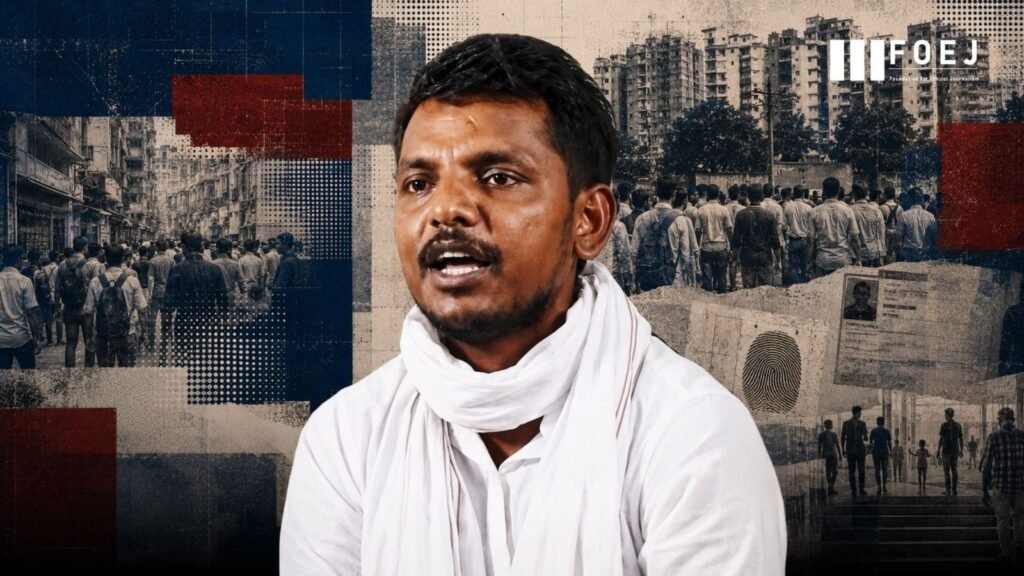
Indian Muslims are not a homogeneous group. They come from diverse linguistic, regional, economic, and cultural backgrounds. The life and culture of a Tamil Muslim is completely different from those of a Kashmiri, Assamese, or Uttar Pradesh Muslim. However, contemporary political discourse often makes the mistake of viewing the entire population solely through the narrow lens of their religious name, obscuring this diversity. Irfan’s insistence, “My name is Mohammed Irfan,” demands that he not be judged solely on the basis of his religion. They should be seen as professionals, citizens, fathers, neighbours, and independent human beings with their own aspirations. Their patriotism, citizenship, and contributions should not be subject to repeated demands for explanations or proof simply because of their name.
The renowned Indian economist (Amartya Sen) wrote in his book (Identity and Violence) that when we reduce a person’s multifaceted identity (such as their language, profession, love of literature, citizenship) to a single religious identity, it sows the seeds of violence and division in society.
Media and Public Discourse:
The Mohammad Irfan incident has also raised serious questions about the role of the Indian media especially mainstream television news channels and social media platforms. Today’s news media creates a “Society of the Spectacle,” as the French thinker Guy Debord warned. According to Debord, modern capitalist media reduces real human experiences and complex structural problems to mere visual spectacles. When mainstream media does raise such issues, it often ignores the socio-economic conditions (e.g., education, health, livelihood) of minorities. Instead, it turns the incident into a high-voltage “symbolic debate.” The Sachar Committee and Kundu Committee reports clearly highlighted that a large section of Indian Muslims remain extremely backward on social and economic indicators. But instead of discussing these structural concerns, prime-time debates are limited to identity politics, polarization, and sensationalism to garner TRPs.
While social media provides a direct democratic platform for ordinary citizens like Mohammad Irfan to raise their voices, it also becomes a means for the rapid spread of hatred and prejudice. Complex and multi-layered life experiences are reduced to mere seconds of Reels or Tweets, simplifying the underlying problem.
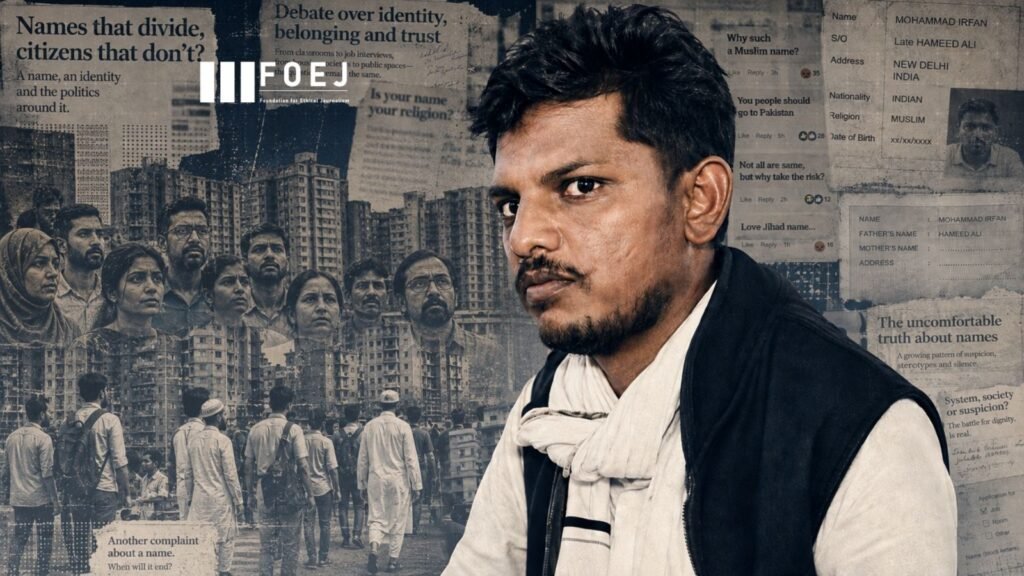
American political philosopher John Rawls introduced the concept of the Veil of Ignorance in his landmark work, A Theory of Justice. According to Rawls, when imagining the creation of a just society, we must assume that we do not know what religion, caste, gender, or name we will be born with. Rawls’s argument is that a truly just and democratic society is one in which the most disadvantaged or minority person enjoys the same freedoms, respect, and security as the majority or most powerful person. If a society requires someone to summon extra courage or explanation merely to say their name, then that society fails Rawls’s test of justice. India’s Constitution itself advocates this Rawlsian justice, treating citizenship as a supreme and autonomous status beyond religious or racial identity.
Mohammad Irfan’s statement, “My name is Mohammad Irfan,” isn’t just a three-word sentence. It’s a living document etched into the social fabric of contemporary India. It reminds us that the true test of democracy isn’t merely holding elections or constructing grand buildings, but rather how safe, respected, and fearless its most ordinary citizen feels in public life.
A vibrant and healthy democracy is not one where minorities can live peacefully only by hiding or making their identities invisible. On the contrary, a true democracy is one where every citizen can stand with full fearlessness, dignity, and equality, with their identity, their name, their faith, and their culture. If something as simple and natural as “My name is Mohammad Irfan” becomes national news and the subject of debate, it clearly means the problem is not with the person or their name. The problem lies in the society that hears that name, and in the system that compels people to seek politics and prejudice even behind an ordinary name. This moment is a mirror for all of us a mirror that asks what kind of India we want to build.