An FIR has been registered by the Police against Imam Mohammad Surfan Raza Qadri in Uttar Pradesh’s Shahjahanpur district after a lawyer alleged that he refused to solemnise his sister’s nikah just a day prior to the ceremony, because the nameplate outside the family’s home carried the slogan — “Vande Matram” , additionally, the lawyer also uses Bhagat Singh’s name attached to his own, as an alternative to caste affiliations.
Police said, the Imam has alleged that he had already informed the family on November 14 that he will not be able to officiate the ceremony as his father was unwell. Consequently, the nikah was officiated by another Imam as it was scheduled.
According to the lawyer Monish, he had informed the Imam 10-15 days before the ceremony was scheduled, he also alleged that the Imam said that some practices of the family were contrary to the beliefs of Islam and were against deen.
In his complaint, Monish, a resident of Barmaula Arjunpur village, alleges that the Imam hurt his religious sentiments and caused him mental distress over his views on nationalism and his respect for the Hindu traditions. Elsewhere, he suggested that he has been objected to regarding his politico-religious views on various occasions in the past and that he paid no heed to these objections.
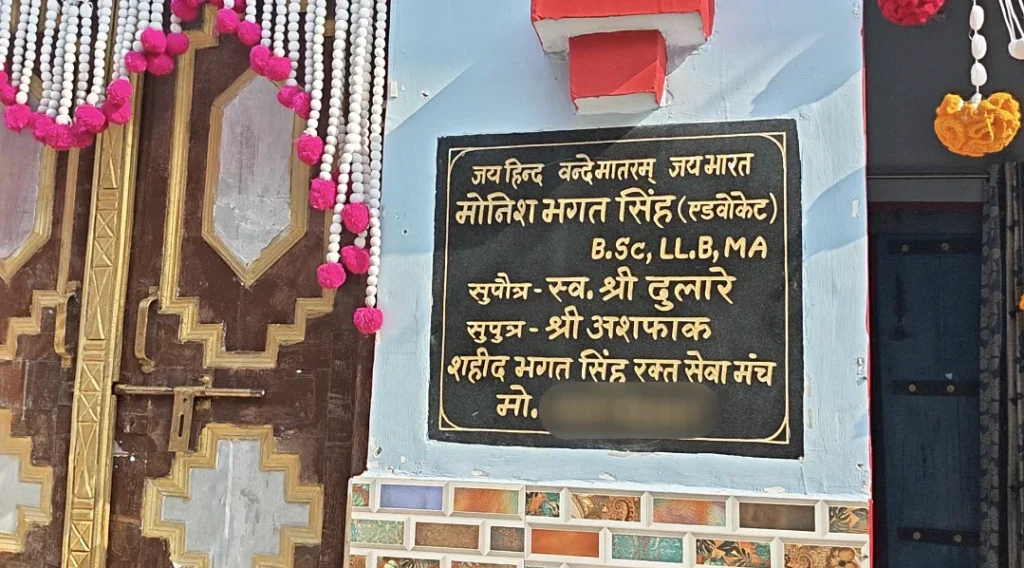
The Police have said that they have recorded the statements of both the parties and their sides and an FIR has been registered in the Roza police station on November 19, on the written complaint of the lawyer, Monish.
The treatment of the FIR raises various important questions pertaining to the nature of legality of marriage, state intervention, understanding of personal law and the extensive authority of clerics to refuse participation in such ceremonies.
Many clerics, in the past, have refused to participate in Nikah and marriage ceremonies over specific violations including: extravagance such as playing loud DJ music or dancing and practices relating to dowry exchanges.
While the Muslim Personal Law (Shariat) Application Act, 1937 governs marriage, Indian courts have established that no religious ceremony is legally essential for a valid Muslim marriage, yet a cleric can refuse to solemnize a Nikah in India if the marriage violates Sharia guidelines or community norms. The relationship between the state and Muslim Personal Law regarding marriage reflects the classic tension of modernizing a traditionally sacramental institution into a structured legal framework.
The established institution of marriage and the practice of Nikah, understood as a mere legal institution or a civil transaction is reducing and oversimplifying the nuances of marriage in all its forms. In the leading case of Anis Begum v. Muhammad Istafa (1933) 55 All 743, Chief Justice Sulaiman provided a nuanced corrective to the purely contractual theory. He observed that while the form of the marriage is contractual, the union itself is a religious sacrament.
This dual nature has profound legal implications. Because it is a contract, the breach of its terms—such as not aligning to the norms established by the community—gives rise to specific civil remedies like the right to refuse cohabitation. Because it is a sacrament, it imposes moral and religious duties that courts often translate into legal obligations.
In legal terms, the acts of the Imam can be discriminatory for refusing to solemnize the nikah, yet the registration of the FIR over his religious views and moral bindings also amounts to the violation of his rights to practice and profess his religion, promised under the Article 25 of the Indian constitution.