



The state funeral of slain former Supreme Leader Ayatollah Ali Khamenei began on Friday, 3 July, with delegations from around 100 countries, excluding the European countries that supported the military campaign by Israel and the United States against Iran.
A seven-day state ceremony started with tributes from officials, scholars, and dignitaries at Tehran’s Grand Mosalla, the shrine of Ayatollah Ruhollah Khomeini. The casket of Khamenei, along with those of his family members who were killed in the airstrikes during the US-Israel war against Iran on 28 February, was laid in a vast hall built to honour his predecessor, where mourners paid their respects to the leader after his 37-year rule.
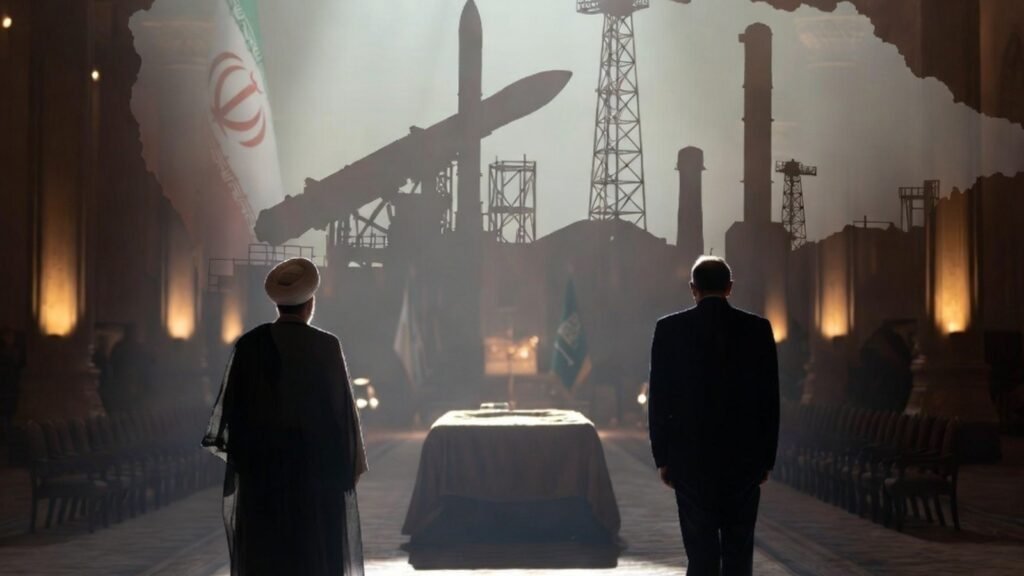
The burial had originally been scheduled for March, but the war in Iran delayed the funeral rites until this week. The ceremonies started from 3 July to 9 July, when the final burial ceremony is scheduled at the Imam Reza Shrine in Mashhad. Khamenei’s coffin was draped with the red flag flew over the Shrine of Imam Husain in Karbala, symbolising resistance, sacrifice, and martyrdom.
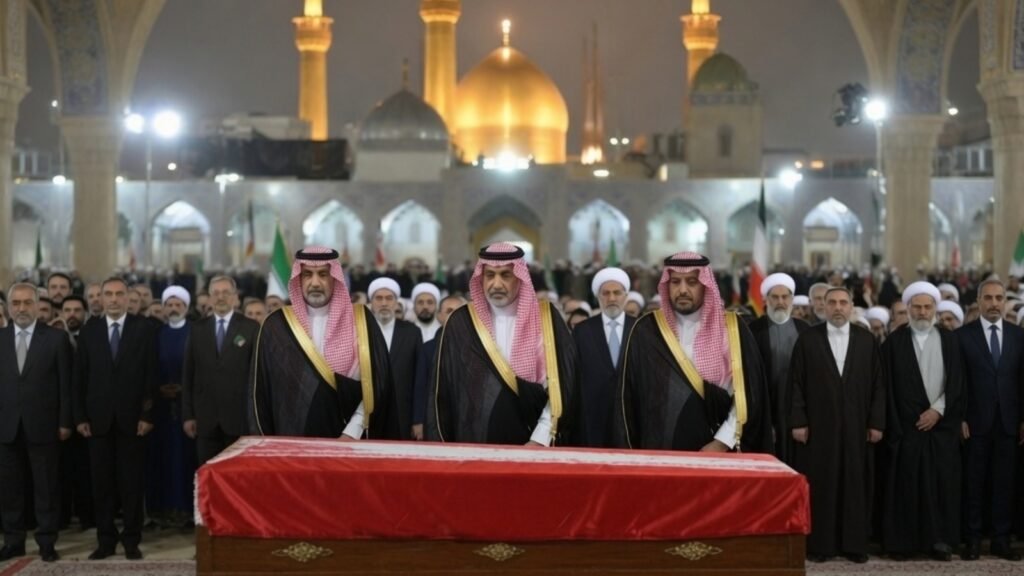
But what caught our attention was something beyond the rites. The coffins were laid out in a vast prayer hall. Delegations, standing at a distance, paid tribute to the martyred Khamenei. As each foreign delegation approached a designated point, a verse from the Holy Quran was recited, with a different verse chosen for each delegation.
The selection of the verses was deliberate. For the delegation from Saudi Arabia in particular, the recitation appeared to convey a significant message both to Riyadh and to the wider world. In the shadow of the war between Iran and the US-Israel alliance, the Saudi delegation, headed by Deputy Foreign Minister Waleed bin Abdulkarim Khareiji, represented a particularly significant moment for both capitals. While the delegation was standing in front of Khamenei’s casket, Quranic Verse 13 of Surah Aal-e-Imran was recited, sparking debate on social media. The verse states:
“Indeed, there was a sign for you in the two armies that met in battle—one fighting for Allah and the other disbelieving. The believers saw their enemy as twice their number. But Allah grants victory to whomever He wills. Surely in this is a lesson for people of insight.”
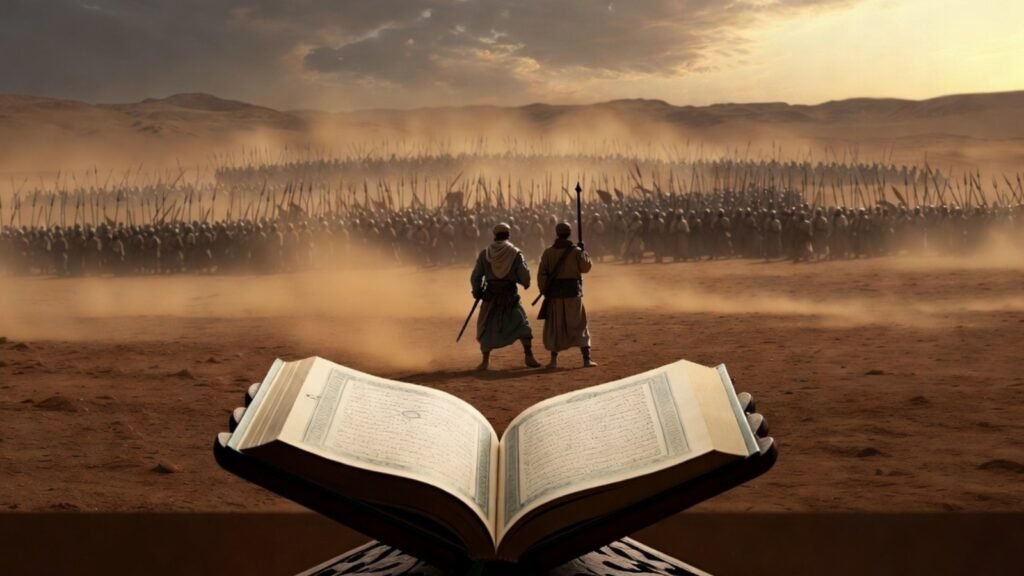
This verse refers to the historic Battle of Badr, the first battle between the Muslims of Medina and the Quraysh of Makkah, in which 313 ill-equipped Muslim fighters defeated a heavily armed Quraysh force numbering nearly 1,000. Scholars have interpreted the account of the Battle of Badr as describing a divine intervention. According to these interpretations, the Muslims saw the Quraysh as fewer than they actually were, while the Quraysh perceived the Muslim force to be much larger than its actual size.
Iranian and Arab social media users argued that the selection of the verse, coming at a time of a shaky ceasefire, was deliberate and conveyed a powerful message, especially to Saudi Arabia, one of the region’s leading powers, and to the wider world. They viewed it as a reminder that, “Indeed in that is a lesson for those of vision,” emphasising that ultimate victory does not come from superior numbers or weaponry but through Allah’s divine support and will.
During the recent war, Tehran accused Riyadh of supporting the United States in its attacks on Iran. According to Iranian claims, Tehran later targeted US military bases and oil facilities in Saudi Arabia with drones and missiles in retaliation.
According to The New York Times, citing informed sources, Saudi Crown Prince Mohammed bin Salman asked US President Donald Trump to continue attacks on Iran until the Islamic Republic was overthrown, calling the continuation of the war a “historic opportunity” to establish a new order in the region. However, following Iran’s continued retaliatory strikes and the resulting regional damage, Arab leaders, including Crown Prince Mohammed bin Salman, reportedly pressured the United States to reach an agreement to end the war with Iran.
Therefore, the selection of this specific verse appears to have been ‘very deliberate’, intended to convey a political message by the leadership of the Islamic Republic of Iran. Historically, the same verse was chosen during the 33-day war between Hezbollah and Israel in 2006. In a letter to Hassan Nasrallah, Ali Khamenei quoted the same verse, describing it as “a message of congratulations on the occasion of victory” following the war.
In the letter, he wrote: “Your victory was the victory of Islam. You have been able to prove by the power of God that military superiority is not based on tools, weapons, planes, ships, and tanks, but on the power of faith, jihad, sacrifice, wisdom, and prudence.”