



India’s decision to acquire the US-made Javelin anti-tank guided missile system marks another significant development in the country’s growing defence relationship with Washington.
On August 28, the Indian Army signed a Letter of Offer and Acceptance (LOA) to procure the system through the US Foreign Military Sales process. The agreement follows a request from New Delhi and comes roughly nine months after Washington approved the possible sale.
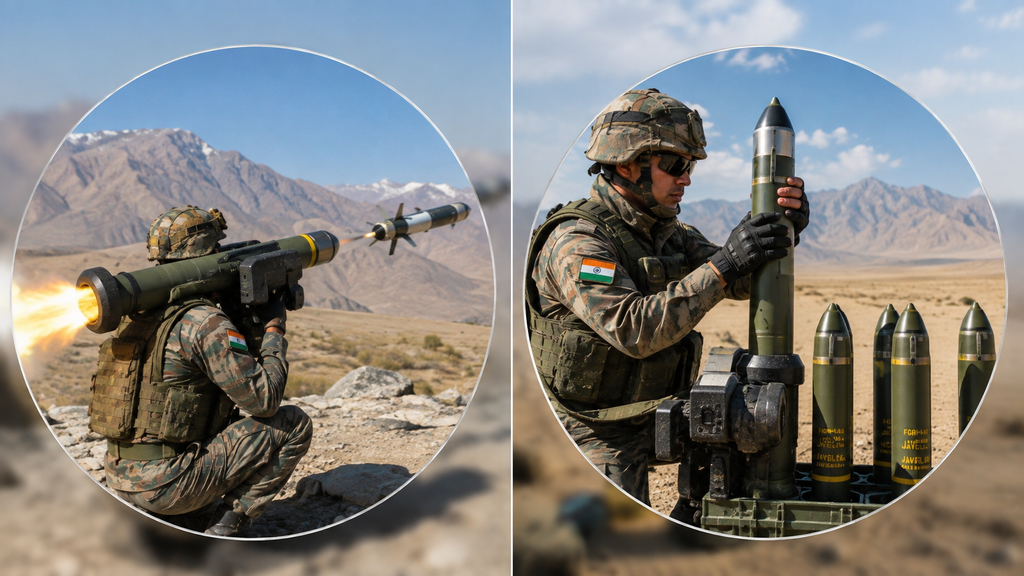
The Javelin is a man-portable, fire-and-forget anti-tank missile designed to engage armoured vehicles and fortified positions. It is produced by a joint venture between RTX and Lockheed Martin. The system has been used by the US military and several international customers. Its portability and guidance system allow operators to engage armoured targets while reducing their exposure to counterattack.
The proposed package was previously estimated by the US government at $45.7 million.
The package includes 100 FGM-148 Javelin rounds, one fly-to-buy missile and 25 Lightweight Command Launch Units, alongside training, technical assistance, spare parts, support equipment and other logistical components.
However, reports on August 28 noted that the final number of systems being procured and the final cost of the agreement had not been publicly disclosed.
For India, the acquisition has a clear operational dimension. The Indian Army continues to modernise its anti-armour capabilities as military technology evolves and armoured formations remain an important component of land warfare.
The Javelin’s ability to engage armoured targets from a distance provides another capability that could complement India’s existing anti-tank systems. Its acquisition also gives Indian forces access to a weapon that has been extensively deployed by the US and its partners.
But the significance of the agreement extends beyond the missile itself.
US Ambassador to India Sergio Gor described the deal as evidence of a defence partnership becoming “deeper, more capable and more consequential.”
The US Embassy said the agreement could create opportunities for cooperation between the two countries’ defence industries, including discussions on co-production.
This industrial dimension is particularly relevant to India’s broader defence strategy.
New Delhi has sought to reduce dependence on foreign suppliers while simultaneously expanding domestic defence manufacturing and technology partnerships. Greater cooperation with American companies could potentially provide opportunities for technology collaboration and industrial integration, although the extent of any future co-production remains to be determined.
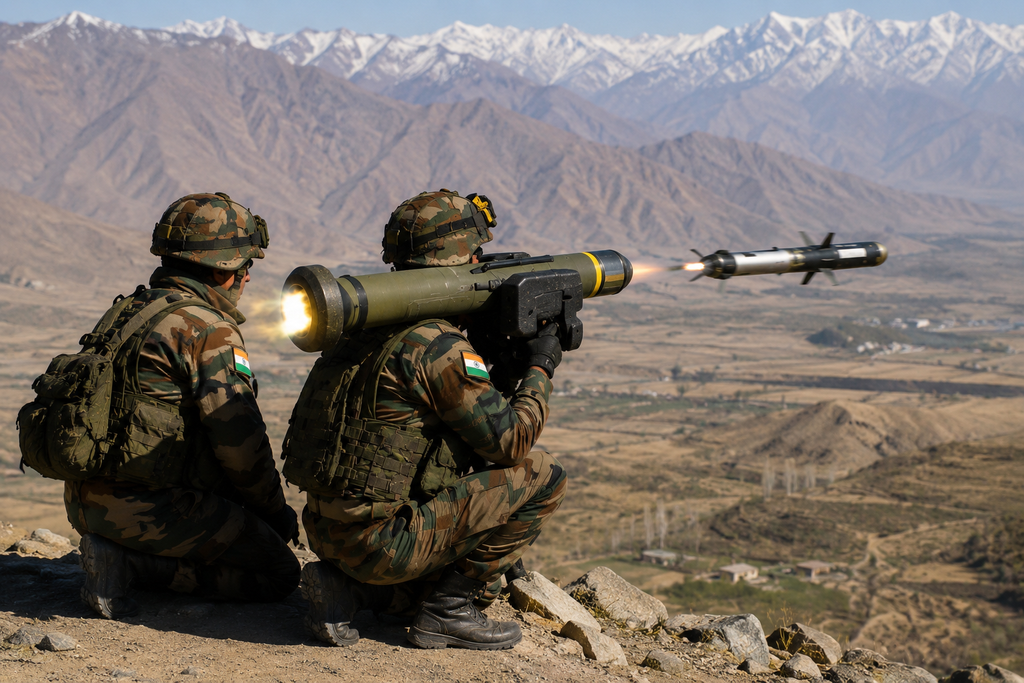
The agreement also fits into a wider effort to deepen India-US defence relations. The two countries signed a 10-year framework last year which was aimed at strengthening their bilateral defence relationship. Washington has repeatedly described India as an important defence partner in the Indo-Pacific and South Asia.
For New Delhi, the Javelin acquisition is not simply another weapons purchase. It combines an immediate military requirement with a broader strategic relationship.
At the same time, India’s decision to acquire a US-origin system illustrates the diversified nature of its defence partnerships.
As India seeks to strengthen its military capabilities while maintaining strategic autonomy, the Javelin deal reflects the balancing act at the heart of its defence policy.