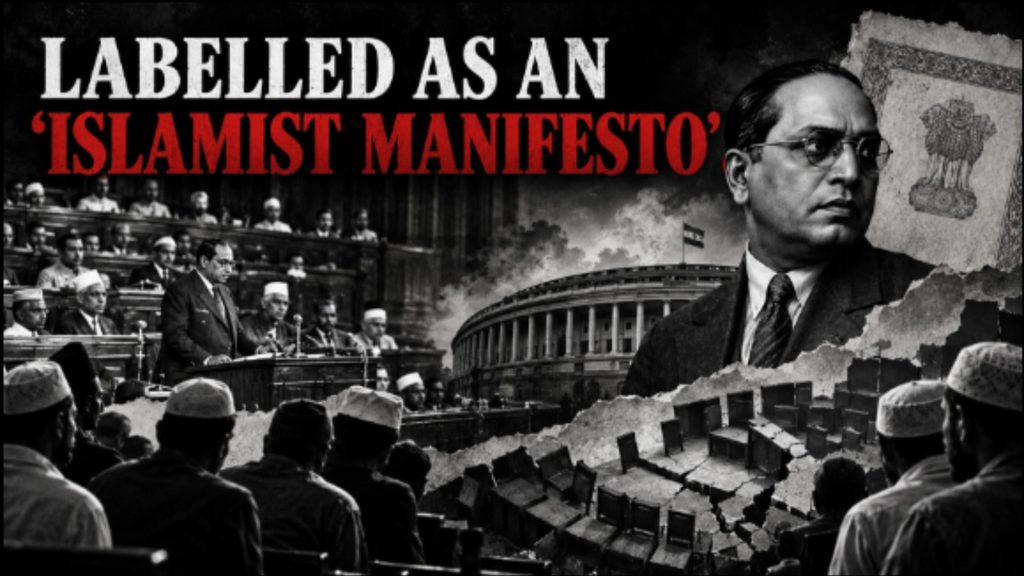
The recent interview of Sharjeel Imam with TheQuint sparked outrage from the Political right and maintained complete silence from the Liberal Left . Following the article of Khaldun Bharati “Sharjeel Imam’s Islamist manifesto will be forgotten. The silence of liberals will not” ,Also framed imam views as extremist and dangerous . Bharati also goes on to discuss how their silence indicates an underlying ‘Red-Green alliance’.
National criticism and liberal silence comes by misunderstanding the views of the imam. Imam is not someone trying to create a platonic leftist alliance. Nor is he a medieval theologian trying to create a state within a state. His politics represent an unabashed critique of the post-colonial Indian state. He has no interest in receiving backing from secular liberals, rather he wants Indian Muslims to be able to act politically independent.
Breaking the Accusation of an Islamist Manifesto
The accusations around Imam (as per Ibn Khaldun Bharati’s article) is that ,he has abandoned secular democratic politics and instead turned to an ‘Islamo-Marxian’ ideology
The author is trying to frame Imam like an extremist using radical Islamist ideologies by claiming that he is influenced by thinkers such as Ali Shariati and Abul A’la Maududi. They claim that he sees polytheism (shirk) as an oppressive ideology.
This is an absolute misrepresentation of Imam’s views. In the interview with The Quint, he did not make any religious proclamations. Rather provides a harsh critique of the Indian post-1947 constitution. He criticises the ‘Save the Constitution club’ for wanting to save the Constitution by:
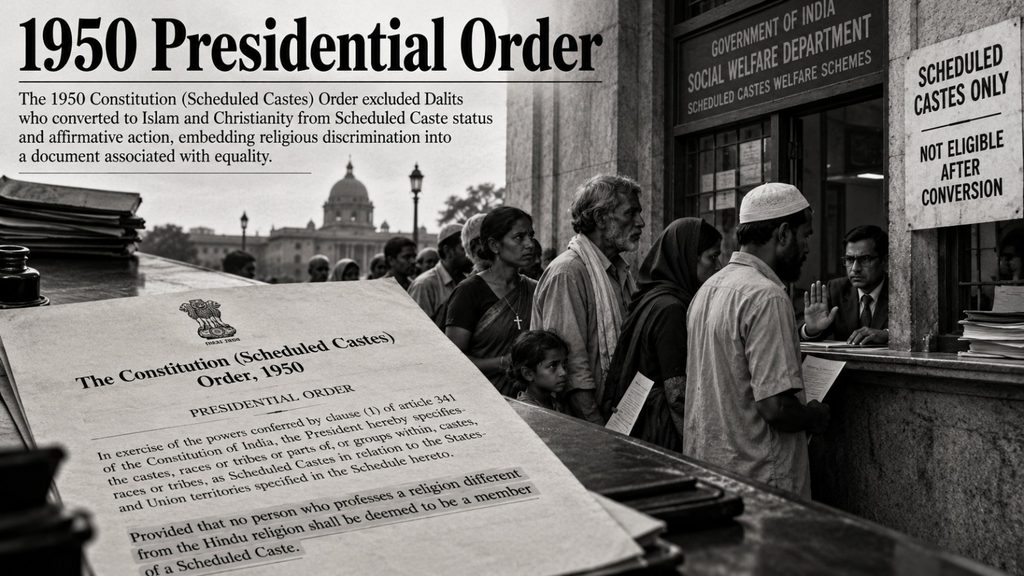
1950 Presidential Order
Pointing out that the 1950 Constitution (Scheduled Castes) Order explicitly excluded Dalits converting to Islam and Christianity from receiving any affirmative action or Scheduled Caste status. A document celebrated for being the pinnacle of equality had explicitly included religious discrimination against the most oppressed.
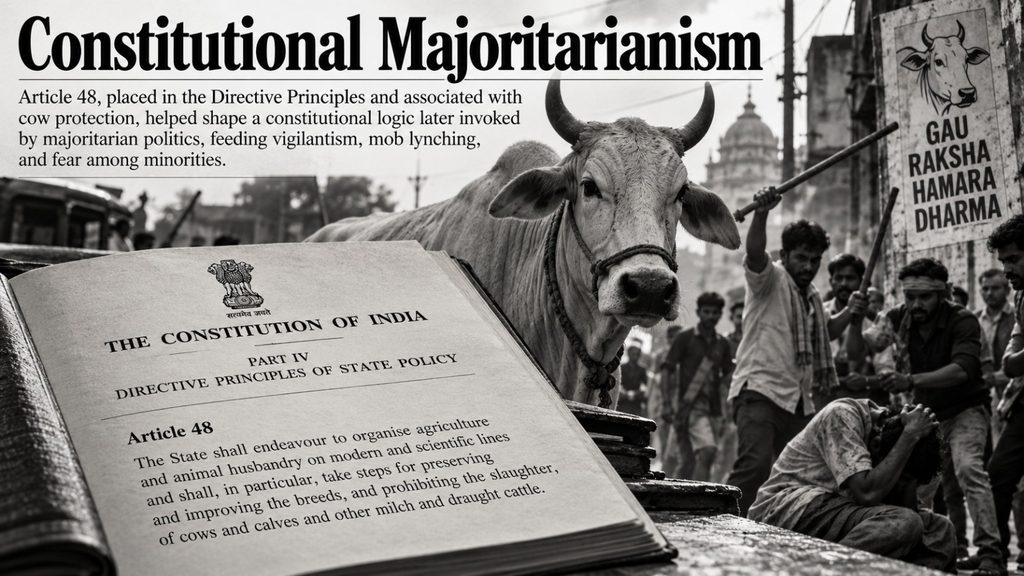
Constitutional Majoritarianism
Highlighting elements from articles such as Article 48 (Directive Principles) which included ‘cow protection’ into the constitution under the guise of modern agricultural methods. This created the foundation for today’s vigilantism which leads to many cases of mob lynching and affecting the minorities.
Lack of Representation
He also criticises the post-independence constituent assembly for removing separate electorates and proportional representation (which would have given religious minorities autonomy in their political leadership). Instead, they created a first-past-the-post system which left Muslims in a position of vulnerability and dependency.
Now Calling is viewed as ‘Islamist manifesto’ is a ridiculous attempt to avoid addressing what Imam actually believes in and speaks for and framing his views and him as extremist.His ideology stems much more from B.R. Ambedkar’s harsh criticisms of the constituent assembly’s majoritarianism. Ambedkar was celebrated for pointing out that ‘constitutional morality’ is not natural in India and that democracy is merely a ‘top dressing’. However, when Imam points out how this ‘top dressing’ has always suffocated Muslim political representation, he is being labelled as an extremist.
Two Nations Fallacy and Consociational Federalism
Bharti accuses him of dreaming to divide states within states and framed imam for dividing India . This is due to Imam not condemning figures such as Muhammad Iqbal and Muhammad Ali Jinnah, and wanting to revisit the history of Partition.
The establishment claims that anyone who questions the idea of unity in 1947 is a traitor. However, We know from the history of the 1946 Cabinet Mission Plan that Muslim leaders in the subcontinent were pushing for a federalist structure.This isn’t radical rhetoric; it’s an established historical argument pioneered by scholars like Ayesha Jalal.This meant that the provinces would be autonomous and the minority communities would have a veto in the constitution.
Imam don’t want to divide the country. Instead, he recognises that the Indian nation state is overly centralised and He argues that Indian Muslims should be recognised as an autonomous political body. Therefore he is advocating for a radical federalist approach.
Those who accuse him of wanting to divide the nation by calling for autonomy and political protection for certain communities are proving his argument.
The Hypocrisy of Disruption -The Chakka Jam
Much of the case against Imam comes from his speech in January 2020 in Aligarh. In this speech he discussed blocking the Siliguri Corridor (Chicken’s Neck) to Assam. This was taken by the state as a plan for armed rebellion.
However, what the Imam was proposing was a simple chakka jam. Blocking key transport routes, highways and rail lines is a fundamental tool used during mass mobilisation in India.
When the Samyukta Kisan Morcha blocked all of the highways surrounding Delhi for over a year, By cutting transport and stopping industrial goods from moving in order to force the repeal of 3 farm laws, the liberal media praised them for their organisation and tactics. When regional political parties block rail lines in whole states during statehood protests, this is seen as healthy democratic action. But when Imam suggested the same tactics he was instantly criminalised by the political class.
Mainstream Indian liberals have a silent agreement with minorities. The secular elite will protect them from majoritarianism if they are polite enough. They must always be respectful, never mention their suffering outside of the context of national unity and have limited political representation.
Imam completely broke this mould. He told his community that ‘If they are our sympathisers, then they’ll stand with us. If they won’t stand with us then they aren’t our sympathisers’.
He exposed the post-1947 secular ideology as a trap to force Muslims to constantly prove their patriotism whilst still being excluded from society. Liberals cannot support him as they would be admitting to their complicity in silencing independent Muslim leadership.
Sharjeel Imam isn’t in prison because his ideas are too complicated to understand rather they are too straightforward. He is challenging the idea of a kind central state and exposing how liberals are only giving patronage on the surface and demanding autonomy. His continued pre-trial imprisonment under harsh draconian laws shows the failure of the justice system and the silence surrounding him shows the failure of the intellectual community to protect liberty.
The views expressed in this article are those of the author and do not necessarily reflect the views of FoEJ Media