



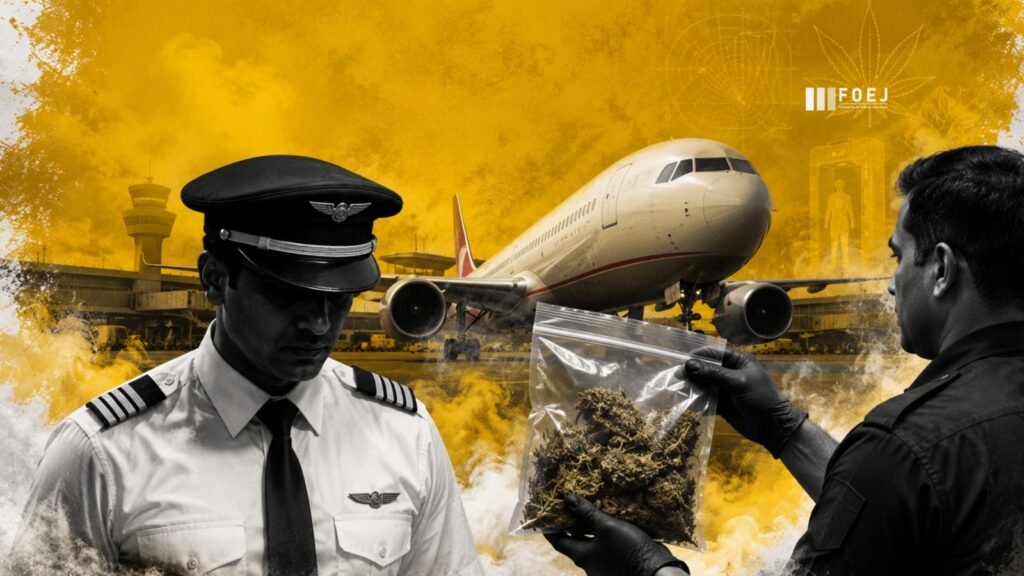
According to reports, the Air India pilot-in-command of a Phuket-Delhi flight which left 24 people injured gave a positive result for marijuana in a drug test. The Ministry of Civil Aviation (MoCA) told that the preliminary drug test gave a non-negative result.
The result of the samples came positive with marijuana identified as the substance that was taken by the pilot. In case of non-negative result in the first screening, a second-confirmatory test is required as some foods and medications can sometimes give up false positives.
An Air India flight was operating from Phuket to Delhi having 137 passengers, six cabin crew members and two pilots on board on August 4, 2026. In a moment of time, the aircraft experienced a rapid descent of approximately 300 feet which resulted in 20 passengers and 4 cabin crew being injured; 17 had to be hospitalised. This episode is under investigation by Aircraft Accident Investigation Bureau (AAIB).
According to the sample reports that resulted in positive drug test, the conduct of the pilots is also being scanned. Along with that, the possibility of the aircraft having an impediment or an unseen problem with its hydraulic and control systems is too being investigated by the AAIB. It is learnt that, the Bureau of Enquiry and Analysis for Civil Aviation Safety (BEA) which is the official French government agency will be taking part in the investigation.
Earlier on Tuesday, a delegation from Air India, headed by the airline’s outgoing CEO Campbell Wilson, met senior officials of the Ministry of Civil Aviation (MoCA), according to sources. When asked about the meeting, Wilson told reporters outside the ministry that the Air India team had been there to give officials “an update on the status of the investigation”.
Under DGCA regulations governing tests for psychoactive substances, a positive confirmatory test requires the medical officer of the concerned organisation to consult a Medical Review Officer (MRO). The purpose is to establish whether the result could have been caused by legitimate therapeutic medication or another harmless source rather than drug abuse. For example, certain painkillers containing codeine can result in a positive test for opiates.
If the MRO determines that the positive result is linked to drug abuse, the employee is subject to a prescribed series of disciplinary measures. For a first positive test, the employee is referred to a specialist, counsellor or de-addiction centre for rehabilitation, following consultation with the MRO.
In order to return to active duty, the officer must undergo a new test with a negative result and secure a fitness certificate from the medical in-charge of the organisation. A second offence results in the suspension of the license for three years. In case of third offence, the license gets cancelled.
Meanwhile, the Aircraft Accident Investigation Bureau (AAIB) said it is currently carrying out a systematic process to collect, preserve and examine all relevant technical, operational, medical and human-factor evidence. This includes the aircraft and its systems, recorded flight data, operational and maintenance documents, medical information and interviews with individuals concerned. The agency said all available evidence would be assessed in its entirety before any conclusions are reached.
The AAIB stressed that the investigation is aimed solely at establishing the circumstances and contributing factors surrounding the occurrence and identifying safety measures to prevent a similar incident in the future. It warned against drawing conclusions from isolated information and said certain records, statements, medical details and other material gathered during the probe are protected and confidential under the applicable investigation framework. The bureau also urged the media and public to respect the process and avoid reaching conclusions based on incomplete, unverified or selectively available information.