



The ongoing debate over the Uniform Civil Code (UCC) in Gujarat is not merely a matter of legal reform. It is a serious issue connected with religious freedom, personal laws, constitutional rights, and the social fabric of India. In my opinion, the most important question in this debate is whether a law introduced in the name of equality will deliver justice to every citizen and adequately protect their religious beliefs and constitutional rights.
I am not opposed to equality or justice. However, if any provision introduced in the name of equality raises serious questions concerning religious freedom and personal laws based on the Quran, I have every democratic right to question it. My Shariah and the Quran are not merely part of my religious tradition; they are inseparable from my faith, values, and identity. I am an Indian citizen, and I respect the Constitution of my country. At the same time, the right to practice my religious beliefs is equally important to me.
My Shariah and the Quran Are My Identity: As an Indian Muslim, my religious identity and my citizenship are not contradictory. In India’s diverse cultural environment, every individual should have the right to live according to their religious beliefs while exercising their constitutional rights.
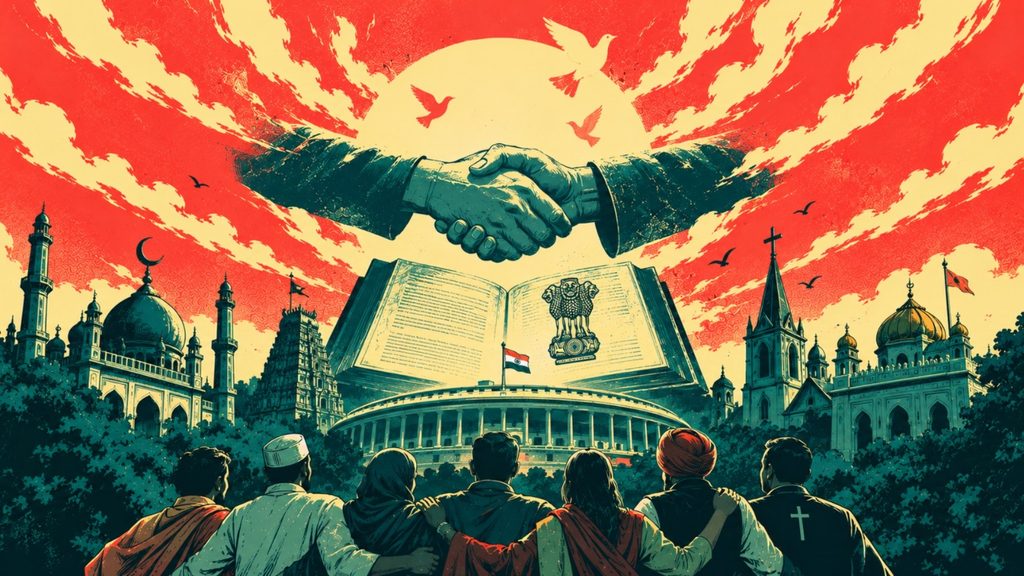
For me, the Quran is not merely a religious book; it is guidance for life. Matters such as Nikah, divorce, inheritance, and family responsibilities are connected with Islamic religious guidance. Therefore, these matters should not be treated merely as administrative or political issues. Their religious and social implications must also be understood.
The Quran provides guidance on inheritance rights in Surah An-Nisa 4:7, 4:11–12, and 4:176. Polygamy is addressed in Surah An-Nisa 4:3, with specific conditions. Guidance concerning divorce is found in Surah Al-Baqarah 2:229–232 and Surah At-Talaq 65:1–7. The significance of marital life is also discussed in Surah Ar-Rum 30:21.
For Muslims, this religious guidance is a matter of faith. Therefore, when provisions affecting personal laws are drafted, the relationship between religious freedom, citizens’ rights, and constitutional limitations must be understood and considered seriously. This does not mean that every social practice should be beyond the reach of the law or that citizens’ rights should not be protected. However, whenever reforms are discussed, religious beliefs and legal questions must be properly heard and understood.
Equality Should Not Mean Ignoring Everyone’s Religious Identity: Equality is a fundamental principle of democracy. But does equality simply mean applying the same rules to everyone, or must it also ensure that every individual receives justice? If a law affects matters such as marriage, divorce, inheritance, and family life, its religious, social, and legal implications must be assessed. The purpose of a law should be to eliminate injustice and protect citizens’ rights.
No law can be considered fair merely because the word “equality” appears in its name. It must be evaluated on the basis of its actual provisions, legal foundations, practical consequences, and the concerns of the people affected by it. Instead of dismissing the objections raised by the Muslim community as merely political opposition, it is essential to examine whether those objections have valid legal or social grounds.
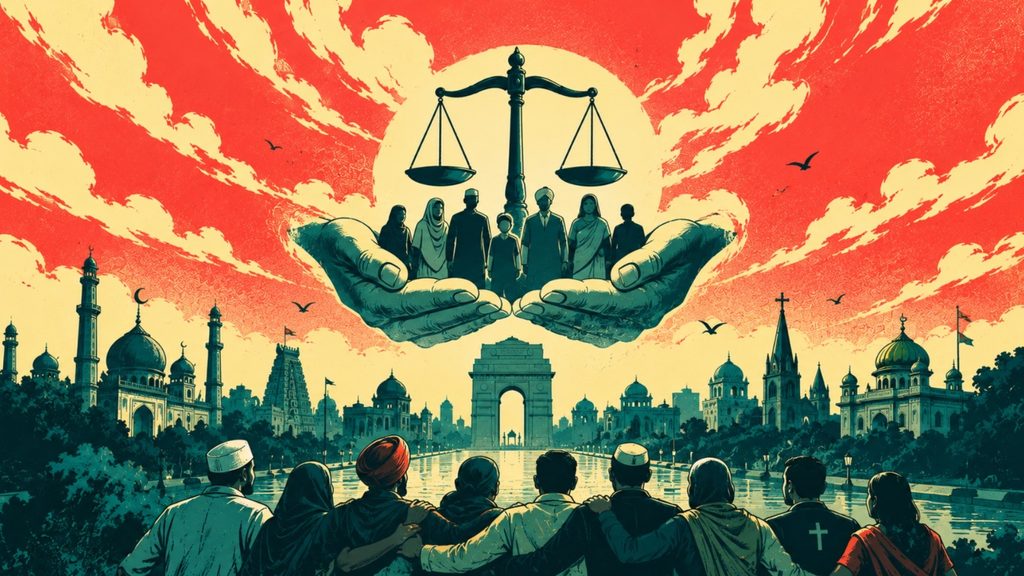
The Constitution Gives Importance to Both Religious Freedom and Equality
The Constitution of India protects both equality and religious freedom. Article 14 guarantees equality before the law and equal protection of the laws. Article 15 protects citizens against discrimination on specified grounds. Article 25 guarantees freedom of conscience and the right to profess, practise, and propagate religion, subject to public order, morality, health, and the other provisions of Part III of the Constitution. Article 26 recognizes the rights of religious denominations, subject to specified constitutional conditions.
On the other hand, Article 44 directs the State to endeavor to secure a Uniform Civil Code for citizens. It is a directive principle of state policy, not a fundamental right in itself. Whether a particular provision of a UCC is constitutional will depend on the law concerned and its judicial interpretation by a competent court.
In my opinion, the authority to make laws also carries a responsibility. Particularly when a law may affect people’s religious beliefs and family life, clarity and transparency regarding its provisions become essential.
No Community Benefits by Undermining Another Community
India’s greatest strength lies in its diversity and the coexistence of people belonging to different religions. In my opinion, undermining the religious freedom or rights of one community does not automatically provide another community with any lasting benefit.
If a policy creates the impression that the concerns of one religious community are being ignored to appease another, it may weaken social trust rather than strengthen it.
Indian citizens are capable of understanding that placing communities against one another for political gains does not solve the problems of ordinary people. A question raised today about the rights of one community could tomorrow arise concerning the traditions or freedoms of another.
Therefore, the UCC debate should not be presented as a conflict between Hindus and Muslims. Justice and constitutional rights do not belong exclusively to any one religion. Citizens of every faith deserve dignity, protection, and justice.
Listening to the legitimate concerns of one community does not diminish the rights of another. However, if people begin to feel that a particular community is being targeted, that becomes a matter of concern for the country’s social harmony and mutual trust.
If the real objective of the UCC is justice and equality, the government must clearly explain the basis and implications of its provisions to all citizens. Justice, transparency, and social unity must take precedence over political gains.
What Action Has Been Taken on the Objections Raised by the Muslim Community?
Reports concerning objections and suggestions submitted by Muslims or Muslim organizations in Gujarat before the UCC Committee chaired by Justice Ranjana Desai raise an important question: What happened to those submissions?
Which issues were considered? Which objections were accepted? Which were rejected?
If any objection was rejected, what were the legal or reasoned grounds for doing so?
Merely receiving representations is not enough. Citizens also have the right to know what consideration was given to their submissions and what conclusions were reached. If an objection was rejected on legal grounds, the reasons should be explained. If any submission led to a change in a provision of the proposed law, the details should also be made public.
In this context, I put the following direct question to the Gujarat government and the concerned committee: What action has the Gujarat Government or the concerned committee taken on the objections and representations submitted by Muslims in Gujarat before the UCC Committee chaired by Justice Ranjana Desai, whether against the UCC or concerning its specific provisions? Which objections were accepted, which were rejected, and what were the reasons for those decisions? Will the government make these details publicly available, point by point?
The answer to this question should be based on official reports, details of decisions, and available documents. Questioning a government policy is not opposition to the country or its Constitution; it is an essential part of responsible citizenship.
The Debate on Reform Must Rise Above Political Gains: It is unfair to label everyone who criticizes a law as an opponent of equality. Asking questions about legal provisions, seeking to understand their impact, and expressing concerns about one’s rights are all legitimate democratic rights.
If the government believes that the provisions of the UCC are fair and constitutionally sound, it should clearly explain the reasoning behind them. If a genuine problem is identified in any objection, the government should not hesitate to review it.
Social reform requires dialogue. Trust is built not by suppressing disagreement but by listening to different viewpoints and answering legitimate questions. When the government clearly explains the reasons behind its decisions, it strengthens its commitment to democracy.
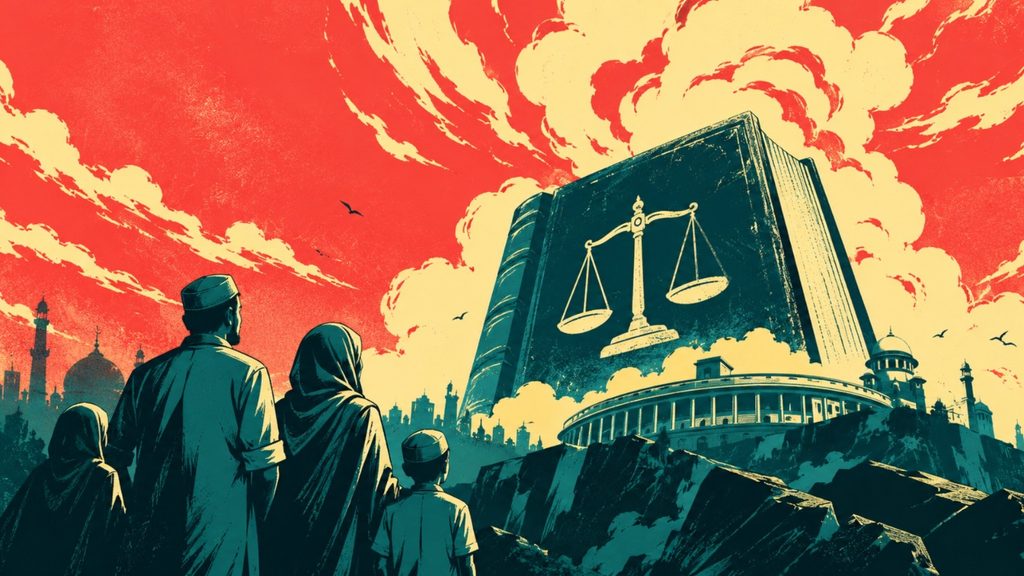
Final Word: I Am an Indian Muslim, and I Will Remain One
I am an Indian Muslim, and I will remain one. My Shariah and the Quran are my identity. I respect the Constitution of my country, and I also wish to preserve my right to practice my religious beliefs. My religious identity and my Indian citizenship are not contradictory. I am not demanding that the rights of people belonging to any other religion be reduced. My only demand is that concerns relating to my religious freedom, personal laws, and constitutional rights must also be heard with equal seriousness.
I am not opposed to equality or justice. However, when a law introduced in the name of equality raises questions concerning my religious beliefs, I have the democratic right to ask questions and demand clear answers. If the Gujarat government describes the UCC as a step towards justice and equality, it should transparently disclose the action taken on the objections raised by all affected citizens, including the Muslim community. It must also build public confidence that the concerns of any community have not been ignored for political convenience.
The true test of equality is whether a law is just, respects the rights of every citizen, and takes the questions of those who disagree seriously. My Shariah and the Quran are not merely words to me; they are integral to my faith and identity. Preserving this identity, respecting the Constitution of India, and demanding justice for every citizen are not contradictory positions. They reflect the spirit of democracy and a diverse India.
The views expressed in this article are those of the author and do not necessarily reflect the views of FoEJ Media.


