



By the time I entered the An-Noor Literature Festival at the Jamaat-e-Islami Hind headquarters in New Delhi on September 27, the venue was already filled with readers, students, writers and speakers moving between sessions. Three stages were running across the venue, with discussions ranging from literature and philosophy to Islamic history, art, culture and contemporary issues.
Over two days, more than 60 speakers took part in around 30 sessions. There was also a book fair, an art and culture programme and a food court. But what stood out was that An-Noor was not built around books alone. The discussions repeatedly moved from literature to questions about faith, freedom, civilisation, identity and the way people understand the world around them. Literature was placed alongside Islamic civilisation, philosophy, history, art and contemporary society.
Islamic civilization was not presented only through historical discussions. Its literature, philosophy, art and cultural contributions were discussed as subjects that could be examined in relation to the present. The festival opened with a keynote address by Syed Sadatullah Hussaini, President of Jamaat-e-Islami Hind (JIH), on ‘Towards a Grammar of Liberation: Thinking Islam in the Postmodern Condition’. Advocate Anees Rahman, National General Secretary of the Students Islamic Organisation of India (SIO), welcomed the gathering and spoke about the intent behind the festival’s second edition, highlighting the support it received from the SIO cadre across the country.
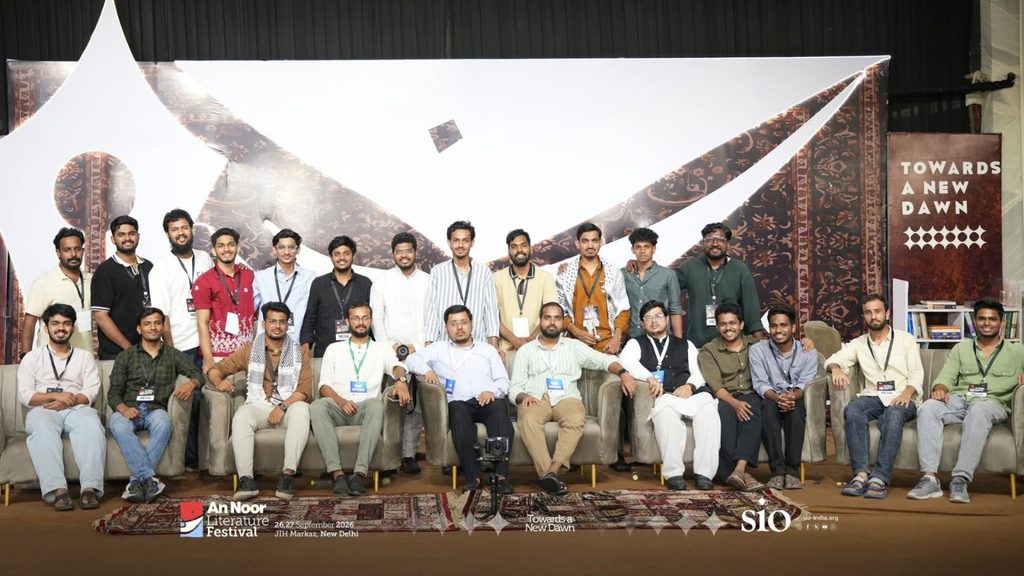
The festival featured a wide range of speakers, including Member of Parliament Mohibbulah Nadvi, Prof. Nivedita Menon, Prof. Shafey Kidwai, Prof. Amitabh Kundu, Dr. Amirullah Khan, Dr. Ghazala Jameel, journalist Kunal Purohit and filmmaker Nakul Sawhney.
One of the key discussions, titled ‘When the Last Line of Defence is Challenged: The Future of Waqf, Madarsa and Masjid’, examined the challenges facing Islamic institutions in India. Moderated by Talha Mannan, the session featured Mohibbullah Nadvi, Malik Moatasim Khan and Dr. S.Q.R. Ilyas.
As the festival also marked two decades since the Sachar Committee Report was published in 2006, another session examined its continuing relevance. Prof. Amitabh Kundu, Dr. Abu Saleh Sharif and Amirullah Khan, in a discussion moderated by Dr. Kashif Mansoor, reflected on the report’s findings, regional disparities and the continuing marginalisation of Muslims.
Questions of knowledge and power were taken up in a session titled ‘Whose Knowledge Counts as Indian? Education, Curriculum and the Reconfiguration of Power’. Prof. Nivedita Menon, in conversation with Fawaz Shaheen, discussed educational policy, secularism and decolonisation.
Independent journalist and author Kunal Purohit spoke about the use of hate-driven music and popular culture in creating hostility and communal polarisation. He also discussed the role of digital platforms in monetising hate speech and the need to address forms of political violence shaped through popular culture.
The festival also turned to questions within Muslim intellectual and religious traditions. In ‘Reading Dr. Abdul Haq Ansari: On Sufism and Shariah’, Dr. Khan Yasir and Dr. Muhammad Mushtaq Tajarwi, in a session moderated by Farhan Saifi, discussed the relationship between Tasawwuf, or spiritual discipline, and Shariah, or Islamic jurisprudence.
Scholar Dr. Hasan Raza delivered an address on Islamic aesthetics, literature and postmodernism, while another session, ‘Within and Against: Muslim Women, Agency and the Structures of Power’, examined the experiences and choices of Muslim women beyond simplified binaries of oppression and freedom. Dr. Ambreen Agha and Shayma S., moderated by Yusra Hasan, discussed the different ways Muslim women navigate ethical and social structures.
Education remained another major theme of the festival. A panel featuring Muhammad Sajid, Zarine Khan and Supriya Joshi, moderated by Dr. Roshan Mohiddin, discussed alternative approaches to learning, advocating models centred on empathy, curiosity and individual needs rather than rigid, examination-driven systems.
Other sessions explored civil liberties, technology and artificial intelligence, media representation, environmental philosophy, alternative education and public knowledge systems.
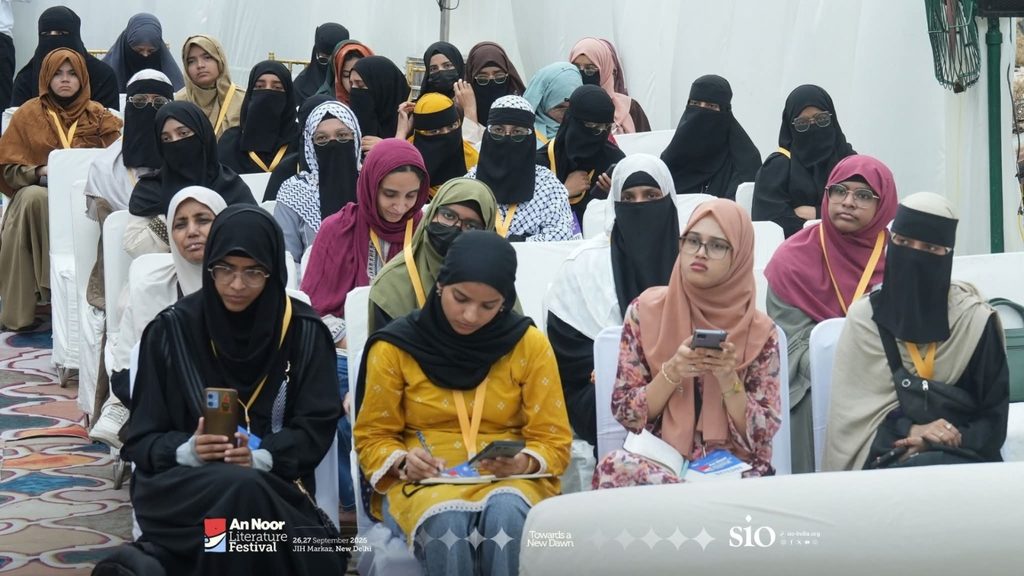
The festival also included three interactive workshops aimed at connecting intellectual discussions with practical engagement. Adnan Safee conducted a workshop on film and screenwriting, while Dr. Irfanullah Farooqui led ‘Thinking Through Azad: On State, Nation and Religion’. Dr. Huzaifa Omair Siddiqui conducted ‘Thinking With Allama Iqbal: On Philosophy, Power & Politics’, examining Iqbal’s ideas in contemporary discourse. Dr. Sumaira Nawas, in ‘Masjid Se Maikhana Tak: Religion, Satire & Literary Modernity’, explored the role of self-reflexive humour in Muslim intellectual history.
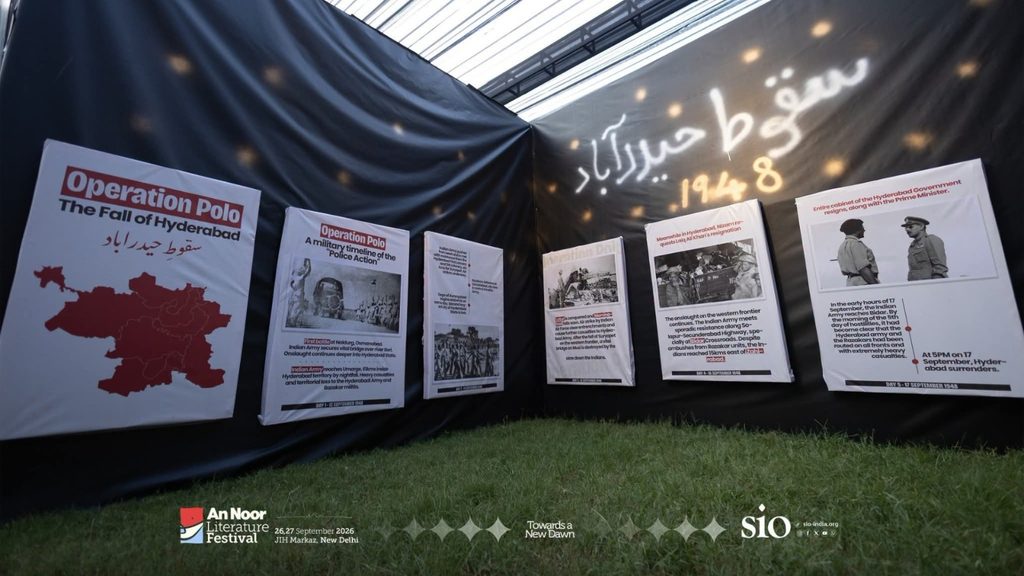
Alongside the discussions, the festival featured a range of cultural and artistic performances. An exhibition dedicated to Dr. Refaat Alareer, the Palestinian academic, poet, writer and activist from Gaza, brought together representations of Islamic civilisation, art, calligraphy and literary history. The exhibition also reflected solidarity with political prisoners across the world through artistic expression and was linked to the festival’s theme, ‘Towards a New Dawn’.
The cultural programme included a recitation of Allama Iqbal’s poetry by Khurram Murad and his team, a Dastan storytelling performance on Sultan Salahuddin Ayyubi by Syed Sahil Agha, and a South Indian Duff Muttu folk performance by young artists.
An evening Mushaira brought together established and emerging Urdu poets, who presented verses centred on social justice, hope, identity and liberation.
The two-day festival concluded with a musical performance by Dr. Haider Saif, titled ‘Melodies of Dawn’, combining spiritual and poetic themes. The closing session featured remarks from Curator Saiful Islam, an address by SIO National President Abdul Hafeez, a presidential address by Syed Sadatullah Hussaini and a vote of thanks by Festival Convenor Dr. Roshan Mohiddin.
Through its mix of panel discussions, workshops, literary conversations and artistic performances, the festival sought to create a space for critical thought, cultural expression and dialogue around questions shaping contemporary society. One who attended An-Noor can clearly say that the approach is clearly different from a literary festival that focuses mainly on publishing, authors and books.
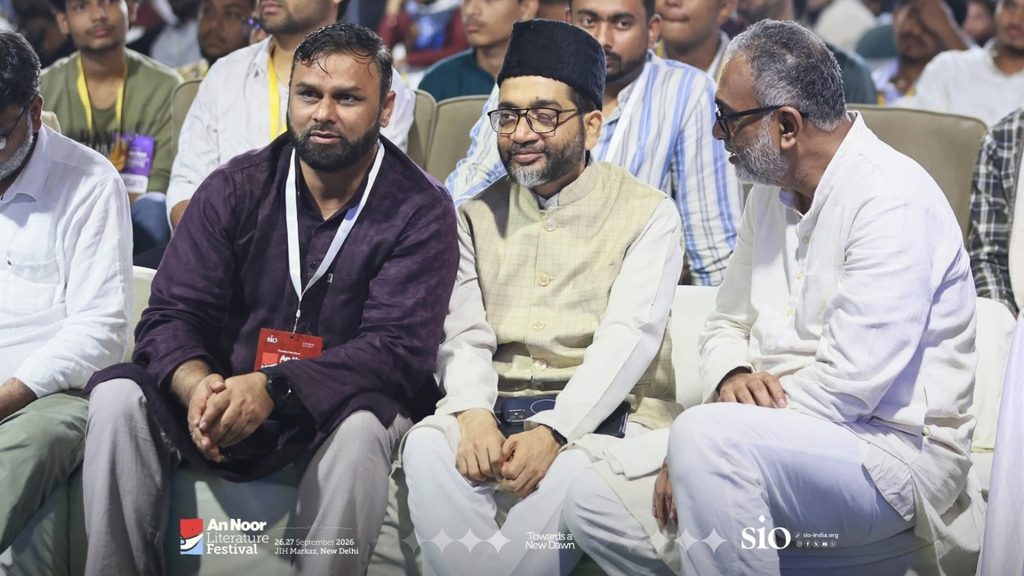
Its organisers have given Islamic civilisation a central place, bringing literature, philosophy, art and history into discussions about the present. The festival is also designed to engage students and young people and to encourage them to explore Islamic intellectual and cultural traditions. An-Noor began with literature, but the conversations kept returning to larger questions about how people understand themselves, their faith, their history and the world around them.