



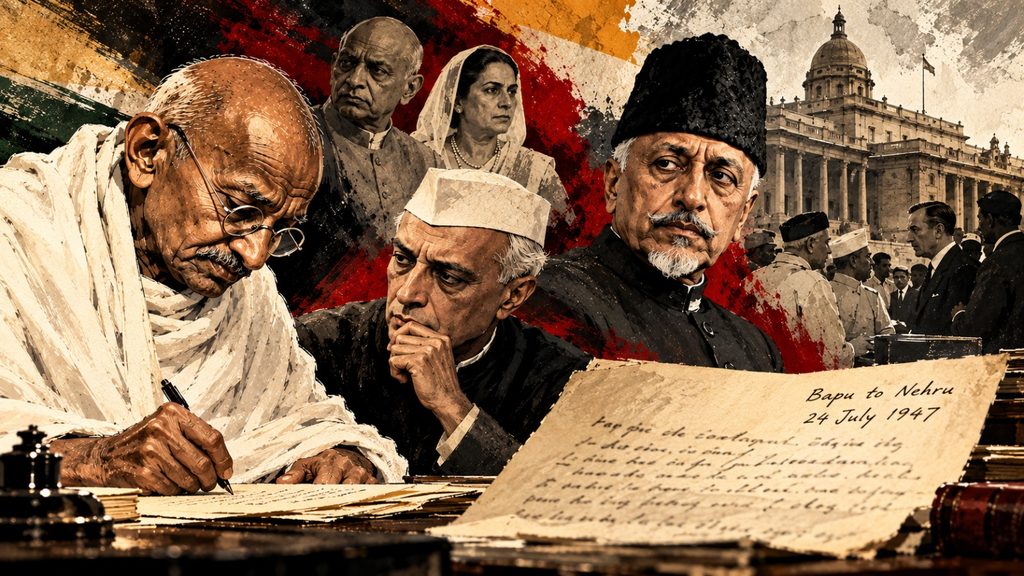
Three weeks before Independence, Mahatma Gandhi asked Jawaharlal Nehru to keep Maulana Abul Kalam Azad out of India’s first cabinet. Nehru said no the same day. On 24 July 1947, with India 22 days from freedom, Mahatma Gandhi sent Jawaharlal Nehru a blunt note about the most prominent Muslim leader in the Congress. “Sardar is decidedly against his membership in the cabinet and so is Rajkumari,” Gandhi wrote. “Your cabinet must be strong and effective at the present juncture. It should not be difficult to name another Muslim for the cabinet.”
The man Gandhi wanted out was Maulana Abul Kalam Azad. “Sardar” was Vallabhbhai Patel; “Rajkumari” was Rajkumari Amrit Kaur, soon to be India’s first health minister. This is no WhatsApp forward. Gandhi’s words survive in the official record, quoted in the Selected Works of Jawaharlal Nehru , Second Series, Volume 3. They capture a decision that could have reshaped free India’s first government. The man in question Azad was no ordinary minister. He led the Congress as president from 1940 to 1946, through Quit India, years of imprisonment at Ahmednagar Fort, and the high-stakes talks with the Cabinet Mission.
He opposed Partition, and stood as living proof against Jinnah’s claim that the Muslim League alone spoke for India’s Muslims. By July 1947 he already held the Education portfolio in the Interim Government. When Nehru wrote to Viceroy Mountbatten on 19 July to rebuild that government after the Muslim League’s exit, Azad was among the members set to continue. A fuller text of Gandhi’s note, reproduced by journalist Saeed Naqvi, shows how firm he was.
His objection still stood, he wrote. Azad leaving the cabinet need not cost them their bond with him, and there were many public roles he could fill instead. Gandhi closed by saying he had destroyed the two copies Nehru had sent him the previous day, a detail that hints at how closely held the discussion was. “It would harm us much” Nehru did not budge.
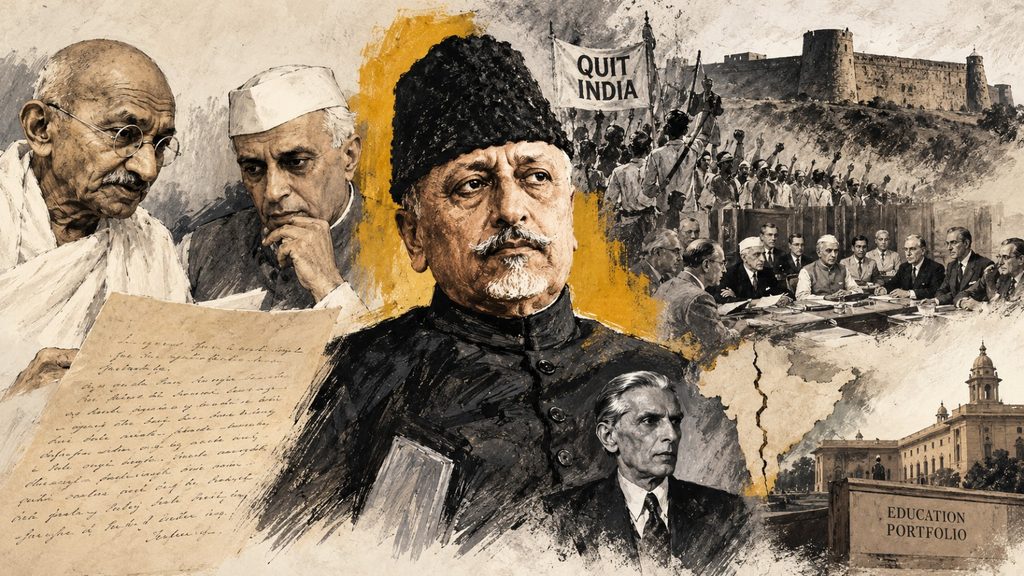
He replied the same day, in Hindi. Gandhi’s views always deserved full attention, he wrote, but if the Maulana goes out, “it would harm us much.” Page 1 of 3 The Letter That Tried to Drop Maulana Azad He accepted Gandhi’s principle that a cabinet should be built from those who could do the best work. But that test, he noted, was rarely the only one, in the Congress or in the provinces.
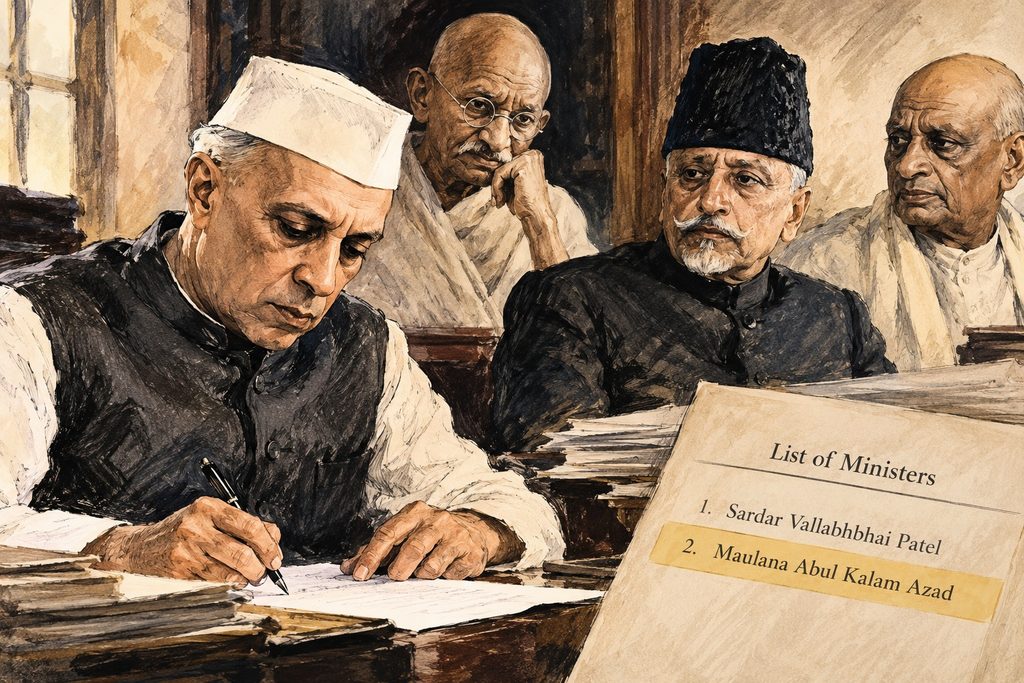
They would all talk it over later. Within days the question was closed. On 1 August Nehru formally invited Azad to join the new cabinet, assuming he would keep Education. On 4 August, the list of ministers Nehru sent to Mountbatten put Azad second, right below Patel, the man who had opposed him. The minister India almost didn’t have On 15 August 1947 Azad became free India’s first Education Minister. He held the post for more than a decade, until his death on 22 February 1958.
His tenure laid much of the groundwork of Indian higher education and culture: the first IIT at Kharagpur in 1951, the University Grants Commission, the Indian Council for Cultural Relations, and the Sahitya, Sangeet Natak and Lalit Kala Akademis. India marks his birthday, 11 November, as National Education Day, and he received the Bharat Ratna posthumously in 1992. Had Gandhi’s advice carried the day, that legacy might belong to someone else, or look very different. Buried in a footnote For decades the episode stayed out of view.
Nehru’s reply is held in the Pyarelal Papers at the Nehru Memorial Museum and Library, now the Prime Ministers’ Museum and Library, and the Selected Works printed Gandhi’s lines only as a footnote beneath it. They reached a wider audience in 2016, when Naqvi reproduced the note in his book Being the Other: The Muslim in India. What it proves, and what it doesn’t The record settles what was said.
It does not settle why. Gandhi argued his case in terms of a strong and effective cabinet, and his line about “another Muslim” was about keeping Muslim representation, not ending it. Neither letter explains why Patel and Amrit Kaur objected. That gap has made the note a staple of social-media history wars, usually stripped of its ending. The full story is awkward for every camp: Gandhi wanted Azad out, Patel and Amrit Kaur agreed, and Nehru kept him in.