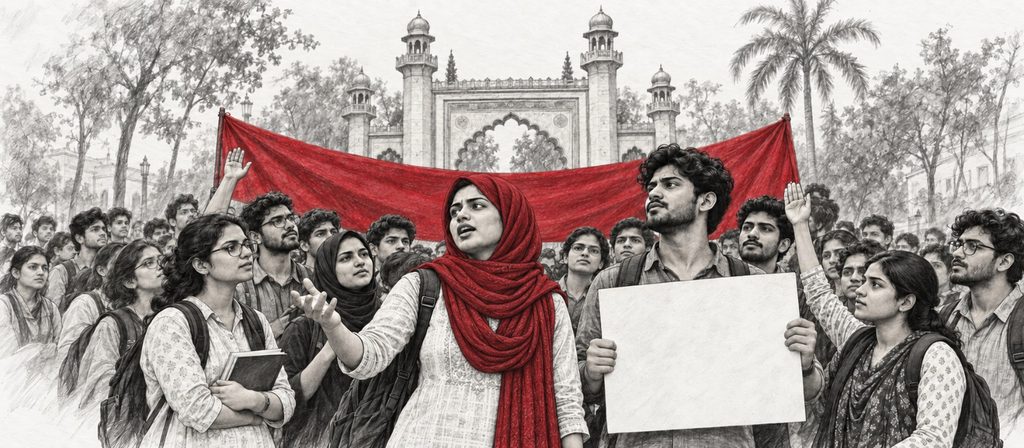



History is usually kept alive by the events that happen rarely by the moments when events stop. At Aligarh Muslim University the story of student democracy is not about elections that were held leaders who were chosen or movements that were remembered. The story of student democracy also covers the years when an entire generation passed through the university without electing a Students’ Union.
A student enters a university believing that its history belongs to the past. At Aligarh however history has a way of entering the present. History lives in the buildings in the stories passed between generations and in the questions that refuse to disappear. The demand, for a Students’ Union is one question. To understand why history continues to matter we must look beyond the ballot box. Ask what happens to a tradition when the institution that carries it falls silent.
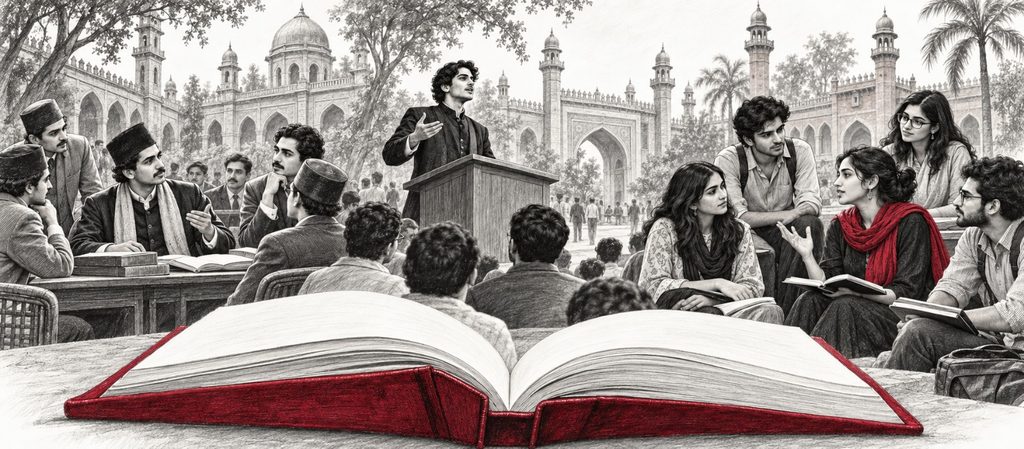
A legacy older than the present
The story of student representation at Aligarh did not start with the university we know. It grew from a tradition of debating and intellectual exchange giving students a place to speak ideas, challenge arguments and engage with questions of their era.
These beginnings matter because they remind us that student representation was never about holding positions. It was also about learning to speak to disagree and to take part in life.
When the institution became Aligarh Muslim University in 1920 student representation carried forward a legacy shaped by education, intellectual debate and social change. Over the decades student representation became part of the political conversations about colonialism, nationalism, identity and the future of the country. The campus was not closed off from history; it was a place where history was discussed, contested and lived.
The Students’ Union became part of this tradition. Its importance lay not in the names of those who held office but in the idea that students could organise themselves and claim a place in the affairs of their university.
Of Course no institution has a flawless history, Student politics, like politics, outside the campus has seen disagreements, rivalries and interruptions.. The existence of these imperfections does not erase the value of the institution itself. Democracy is not the promise that everyone will agree. It is the recognition that disagreement deserves a space.
The history of the AMU Students’ Union has also been marked by breaks in elections. The latest break has been very important: the last election happened in 2018. The students who came after that never had a chance to elect a new Union.
A student who came to AMU after 2019 may have spent years going to classes studying for tests living in a hostel and making friends without taking part in a Students’ Union election. They may have listened to older students talk about elections describe the excitement of student campaigns or explain what it means to be a leader.. For them those experiences were just stories, not real memories.
With every group of students who graduate the gap between those who had an elected Union and those who did not got bigger.
An election is one day but not having it can change years of university life. It changes how leaders are chosen, how groups of students work together and how students see their connection to the university administration.
Students can always share problems send letters join meetings or take part in protests.. These ways of speaking out are not the same as having an elected group. A Union gives a way for students to pick leaders ask questions and expect those leaders to be responsible to the whole group.
There is a difference between being able to speak and having a group that represents the student body. That difference becomes clear when students have worries that’re not just personal. Things like hostel conditions, classroom quality, campus buildings and decisions made by the university can affect students at once. An elected group can bring these worries together. Offer a way to keep talking.
The lack of elections was not a missing date, on the calendar. It was a part of a tradition of being involved.
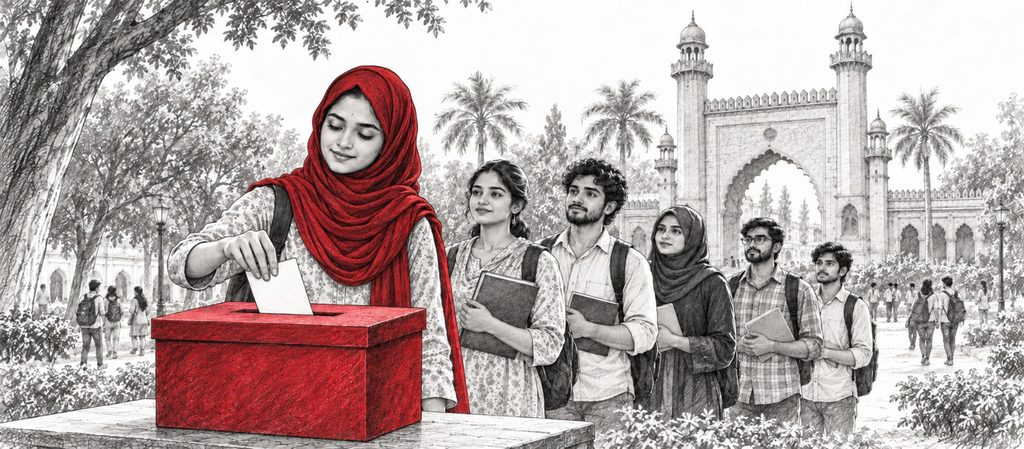
Beyond the return of a ballot
The announcement of the 2026–27 Students’ Union elections offers a turning point in this story. Following the protests AMU has announced that polling is scheduled for 5 November 2026. For students who have spent years without an elected Union this announcement carries a meaning that extends beyond the date itself. It offers the possibility of reconnecting the generation with a tradition that began long before many of them were born.
The real measure of this moment will not be the announcement alone. It will lie in what follows: whether elections become a feature of university life whether elected representatives remain accountable and whether the administration and student body can establish a constructive relationship.
The return of elections cannot recover the years that have passed. It cannot give batches the experience they missed or erase every disagreement between students and the administration.. It can allow the next generation to experience something that had been absent: the opportunity to choose its representatives through an election.
Perhaps that is the meaning of this moment. History does not always return through ceremonies or dramatic declarations. Sometimes it returns through a democratic act that had been missing for too long.
A ballot paper may seem like a piece of paper.. It carries a choice, a voice and a measure of responsibility. For a university with Aligarh’s history its significance lies not in who wins but in the restoration of the opportunity to participate.
The silence between two ballots has lasted for years. It has been experienced differently by batches but it has remained part of the university’s recent history. Now that silence is approaching its end. Finally the AMU Students’ Union elections are scheduled to take place on 5 November 2026. A new generation will have the opportunity to vote choose its representatives and begin writing the chapter of this unfinished story.
The history of student democracy at Aligarh is not merely something to be remembered. It is something that must be carried forward.