



What began as decades of uneasy diplomatic maneuvering and volatile border skirmishes has formally fractured into an unprecedented, conventional state-on-state conflict. Following Pakistan’s official declaration of an “open war” and the deployment of extensive aerial campaigns, the decades-old geopolitical fault lines between Islamabad and Kabul have ruptured. The two deeply intertwined neighbors are now locked in their most severe and direct military crisis in modern history, altering the security landscape of South Asia.
Roots of the Breakdown
The structural roots of this war lie heavily in a colonial-era legacy: the Durand Line. Established in 1893, this porous 1,600-mile border bisects ethnic Pashtun heartlands and has never been formally recognized by any Afghan government, including the current regime. However, the immediate catalyst for today’s war is the rapid ascent of the Tehreek-e-Taliban Pakistan (TTP), or the Pakistani Taliban.
While ideologically aligned with the ruling Afghan Taliban, the TTP’s explicit goal is to dismantle the Pakistani state. Since the Taliban’s return to power in Kabul in August 2021, terror attacks within Pakistan spiked heavily. Islamabad has fiercely accused Kabul of providing safe havens and logistical support to TTP fighters, a claim the cash-strapped Afghan administration consistently denies, framing the issue as an internal Pakistani security failure.
How the War Began
The friction points exploded into formal warfare following a severe prelude on October 9, 2025, when Pakistan launched Operation Khyber Storm conducting heavy airstrikes in Kabul targeting TTP leader Noor Wali Mehsud. Though a Qatar-mediated ceasefire temporarily froze the fighting later that month, the fragile peace shattered completely over the winter.
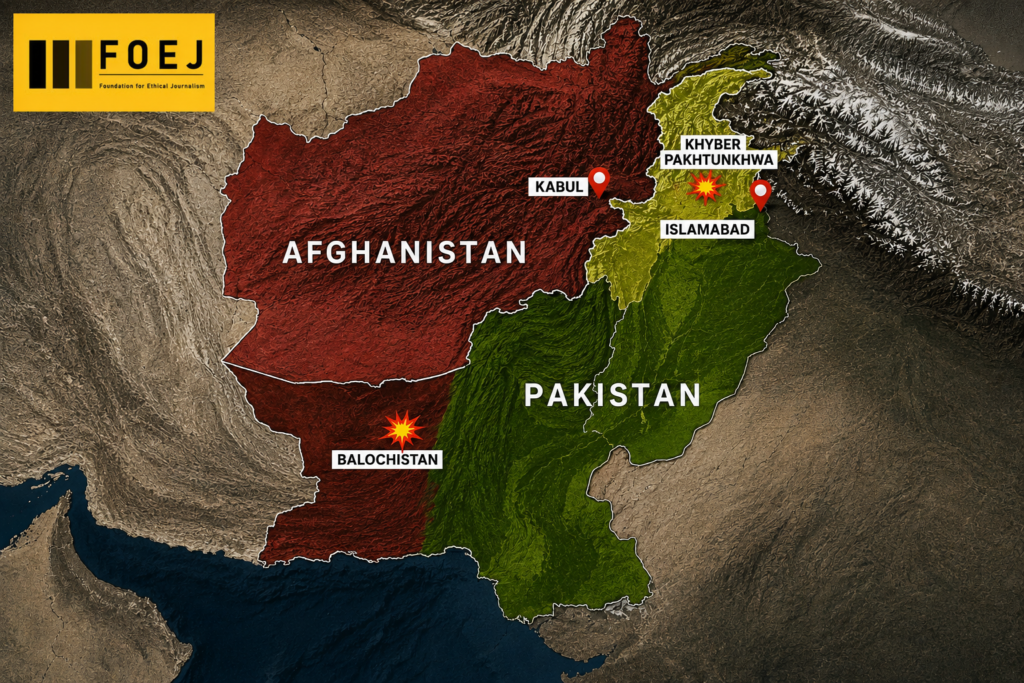
On the night of February 21, 2026, the Pakistan Air Force (PAF) initiated large-scale air raids into Afghanistan’s eastern provinces of Nangarhar, Paktika, and Khost under a new campaign, Operation Ghazab-lil-Haq (Wrath for the Truth). Kabul retaliated sharply on February 26, 2026, launching a cross-border offensive with heavy artillery and drones targeting Pakistani military installations.
Within 24 hours, on February 27, 2026, the threshold of proxy warfare was permanently crossed. Islamabad officially declared “open war” and escalated significantly, sending fighter jets to strike major urban centers inside Afghanistan, including Kandahar, Bagram Airfield, and the capital city of Kabul. Satellite imagery later confirmed the destruction of military infrastructure at Bagram, signaling to the world that a conventional war had officially begun.
Latest Developments: The July 1 Escalation
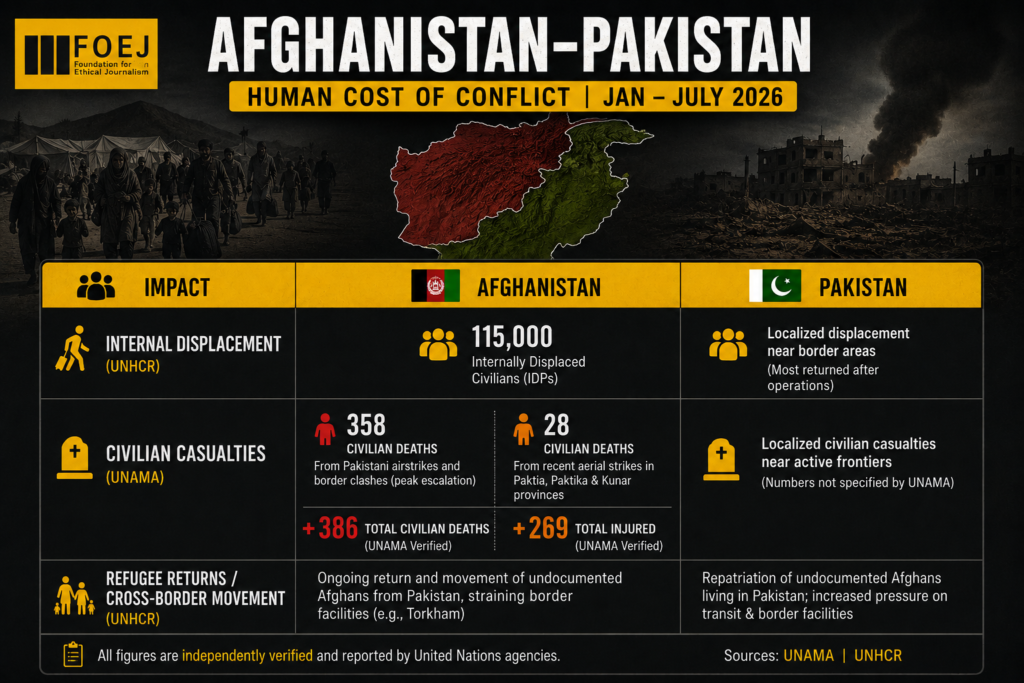
Following a bloody weekend assault by armed militants on a Pakistan Rangers base in Karachi on June 27, Pakistan carried out severe retaliatory strikes in Paktia,and Kunar provinces on June 28, claiming it neutralized 29 fighters. Afghan officials fiercely countered on June 29, noting that the bombs tore apart residential neighborhoods, killing 36 civilians and wounding 163 others.
This devastating cycle triggered an unprecedented cross-border military escalation on July 1, 2026. In an extraordinary move, Afghanistan’s Ministry of Defense announced that the Afghan Air Force had conducted bold, overnight aerial operations deep inside Pakistani territory. Kabul claimed its strikes hit active ISIS-linked centers in the Saranan town of Balochistan’s Pishin district, as well as several locations across Khyber Pakhtunkhwa province, inflicting “heavy casualties and material losses” on the groups.
Islamabad reacted swiftly to the unprecedented airspace violation. On the morning of July 1, 2026 The Inter-Services Public Relations (ISPR) issued a stern statement confirming that Pakistan’s air defense network had detected and shot down four “rudimentary drones” launched by Afghan security forces into Balochistan. While Kabul insisted the precision strikes targeted only militants, localized reports in Pakistan indicated the fallout hit home; a drone was sighted near a government school in Saranan, wounding two, while a suspected drone strike in Peshawar claimed the life of a civilian woman.
According to verified data from the United Nations Assistance Mission in Afghanistan (UNAMA), the broader 2026 conflict has already claimed the lives of hundreds of civilians. The single deadliest event occurred on March 16, 2026, when a strike hit the Omid rehabilitation center near Kabul, leaving over 140 people dead. Concurrently, the UN Refugee Agency (UNHCR) estimates that more than 115,000 Afghan civilians have been forcibly displaced along the frontier, creating an acute humanitarian disaster.
Despite desperate, fitful diplomatic offers from regional heavyweights like China, Russia, and Türkiye, a viable path to de-escalation remains entirely out of sight. Following the July 1 drone incursions, Pakistan issued a severe warning that continued provocations from the Afghan Taliban would draw a “befitting response which would cost them heavily.”
With Pakistan’s disciplined military machine vastly out-sizing the Taliban’s asymmetric forces, a prolonged war of attrition threatens not only to tear apart the borderlands but to permanently destabilize the broader regional architecture of South Asia.