



War is more than military confrontation. It is fought not only with destructive weapons such as fighter jets, missiles, and drones, but also through narrative. Weapons alone do not win wars but narrative also plays a crucial role in legitimising and de-legitimising military action. Defence officials and diplomats use strategic vocabulary to strengthen their narrative warfare because the word itself is a weapon through which, with specific use of expression, is defined the victim and the aggressor: who deserves sympathy and who receives punishment. The narrative is inseparable from media power because it controls discourse that often shapes public opinion. Powerful states which possess significant power, use powerful institutions to spread the persuasive narrative globally through diplomacy, international media, and political alliances.
The war in the Middle East involving Israel, Palestine, the United States, and Iran demonstrates how language functions. The US and Israel constantly frame their military campaigns through a narrative of security and self-defence. Iran and Palestine, on the other hand, employ the vocabulary of occupation and resistance. Neither discourse is politically neutral; both seek to attract sympathy and mobilise global support to shape world opinion in their favours.
Many thinkers, including Antonio Gramsci, argue that a dominant political actor, along with military strength, exercise ideological leadership to secure public consent through media houses, academic institutions, and diplomatic platforms. These institutions reproduce the perspectives of powerful governments through the repeated use of certain terms, thus, making them normal in global discourse. Because narrative warfare is an extension of political power rather than simply a battle over facts.
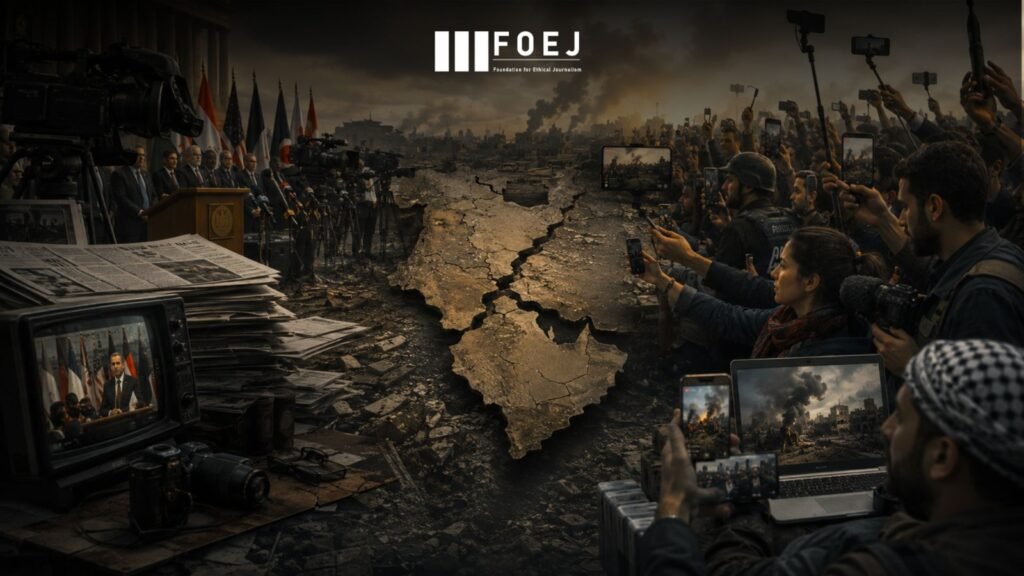
Edward Said’s Orientalism is a foundational work on understanding Western thought for the Middle East. Western thinkers historically presented the East as irrational, inferior, and “others”. By demonstrating themselves superior and capable of governing, the West legitimised their intervention and military campaigns against the East.
Colonialism systematically enslaved indigenous people physically and mentally. It treated them inhumanely when colonised people demanded their rights, sought freedom, and struggled for independence. By enforcing law, it prevented any kind of resistance, by calling their struggle unlawful while continuing colonial violence in the guise of law and order.
The United States and Israel constantly frame their narrative around national security and self-defence. “Israel has the right to defend itself” is a recurring response when they are questioned about human rights violations and the violation of the international law in deliberate killing of Palestinians and attacks beyond their borders. Across Western media, the repetition of the “existential threat” and “self-defence” constructs their military operations, thereby justifying them as a defensive response rather than aggressive initiatives.
They have significantly advanced their discourse through terms such as “counter-terrorism”, “targeted strikes”, “precision attacks”, “eliminating terrorist infrastructure”, “degrading military capabilities”, and “thwarting possible attacks” on its land. This, in turn, demonstrates that their military action was necessary, proportionate, and strategically justified under international law.
The United States and Israel characterised Iran as the sponsor of proxy groups popularly known as the “Axis of Resistance” involving Hamas in Palestine, Hezbollah in Lebanon, and the Houthi in Yemen to destabilise regional peace. Within this linguistic shield, Israel receives sympathy and global support, constructing its violence as lawful whereas violence by opponents is framed as unlawful.
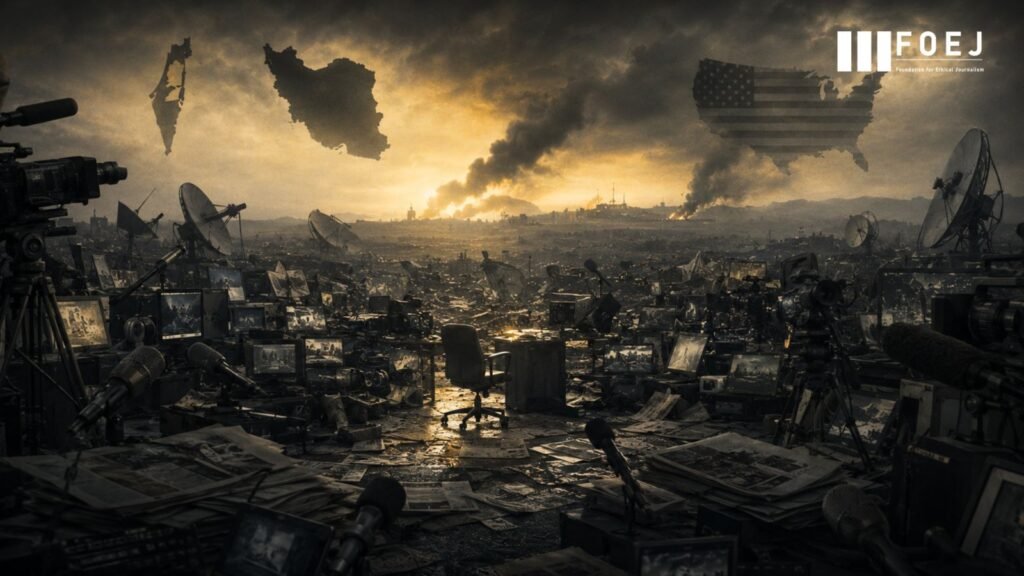
Postcolonial scholars argue that such framing often omits and obscures the structural condition and historical reality of prolonged occupation by Israel, illegal settlements and annexation, dispossession and displacement of the indigenous population, and asymmetrical military power.
Bureaucratic language such as “collateral damage”, “precision strike”, and “security operations” often blurs the ground realities of civilian casualties, distancing global attention from human suffering.
Critical and in-depth reports, therefore, analyse not only what is claimed by a government but also the realities that remain untold on the ground.
Iranian and Palestinian narratives are based on anti-colonial and anti-imperial discourses. They employ alternative vocabulary in the counter-narrative to their opponents: America and Israel. To counter the US-Israel’s narrative, they employ specifically historical terms such as colonialism, imperialism, genocide, ethnic cleansing, occupation, and settlers. To defend and legitimise their action against them, they advance anti-colonial terminology such as resistance, liberation, decolonisation, self-determination, and anti-imperial struggle. Israel, to them, is a settler-colonial state backed by the United States and European states.
Their political narratives constantly employ the terms occupied territories to refer to Gaza and West Bank, in accordance with the International legal framework. “Free Palestine” and “Free Gaza” have become a form of global resistance, demanding self-determination, freedom, and sovereignty of the state. Within this framework, they are fighting for their rights, freedom, and call their operations a resistance movement. Similarly, these linguistic choices, too, provide justification to the globe.
Both sides have established competing narratives of warfare and legitimacy. One frames its military campaign as self-defence, while the other frames its armed struggle as resistance to colonial power.
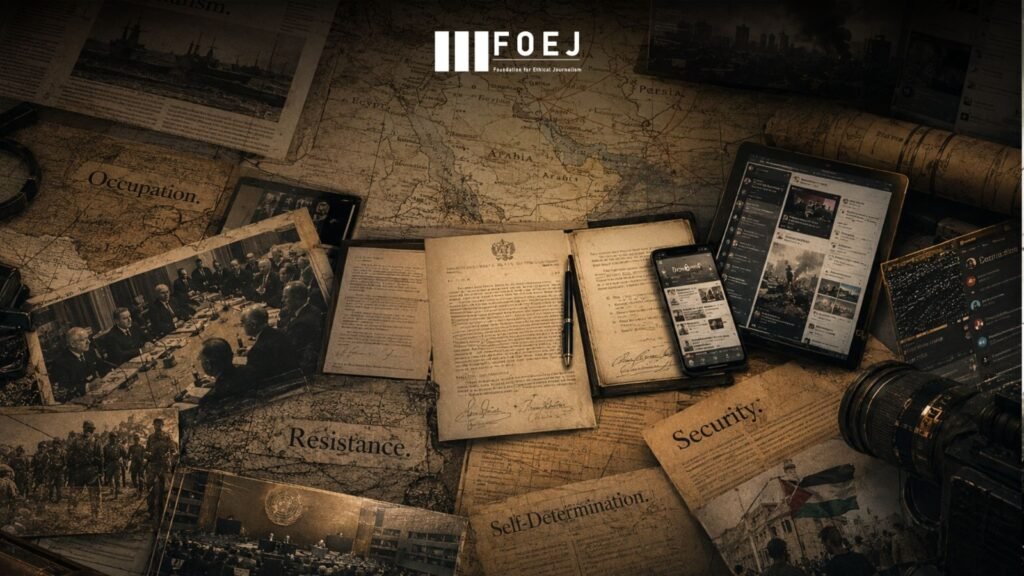
The US and Western powers have considerable advantage over Iran and Palestine in globally established media houses, technological advancement, and diplomatic relations. However, with the advancement of social media, their centredness has significantly fallen. Independent media and alternative voices are increasingly taking centre stage. They have more latest development and eye witness accounts to disseminate the incidents to the global public without relying upon the traditional gatekeepers. This proves that power is dynamic rather than absolute.
Today, war extended beyond military power and battlefields and entered into narrative and media organisations through which both sides legitimise their military actions. Therefore, a rigorous scholarly approach is essential to distinguish between empirical evidence and political rhetoric because narrative warfare remains a central dimension in contemporary conflicts.