



Nearly 500 people were treated at Delhi hospitals for firecracker and other Diwali injuries between November 7 and 9, 2026, from minor burns to eye wounds that needed emergency surgery. A Hindustan Times compilation across five hospitals puts the toll at 499; roughly one in three of those cases was an eye injury.
At a glance
- 499 Diwali-related injury cases across GTB, AIIMS, Safdarjung, RML and Aakash Healthcare (Hindustan Times compilation).
- About 110 eye-injury patients at AIIMS’s Dr Rajendra Prasad Centre on Diwali night alone; 18 needed emergency surgery for corneal perforations or lacerations, and 20 more were scheduled for surgery.
- 11 major burn cases at AIIMS, 4 in intensive care; an 8-year-old with burns over 45% of the body was critical.
- 35 children under 12 among Safdarjung’s 135 minor-burn patients.
- No deaths were reported at GTB, the busiest hospital with 172 cases.
- Delhi Fire Services logged 214 fire-related calls on Diwali, fewer than last year, while the city’s air stayed “very poor” with an AQI of 366 the next morning.
Eye injuries: a third of AIIMS patients needed surgery
The Dr Rajendra Prasad Centre for Ophthalmic Sciences at AIIMS saw nearly 110 eye-injury patients on Diwali night (November 8) and in the early hours of November 9, most hurt by firecrackers. Children and young adults made up the majority.
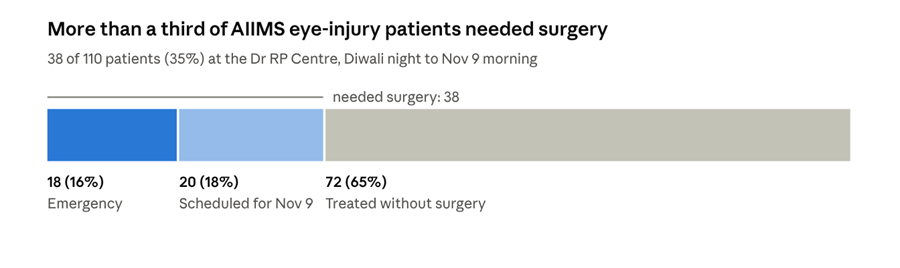
The 18 emergency cases had corneal perforations or lacerations, wounds that break through the clear front of the eye and can cost sight if not closed quickly. The 72 others had injuries that did not threaten vision and were managed with medicines and observation.
AIIMS was not alone. GTB Hospital treated 34 eye injuries among its 172 Diwali cases, and Aakash Healthcare in Dwarka saw 11. Across the three, that is about 155 eye injuries, close to a third of the city’s 499 cases.
At Aakash, 9 of the 11 eye patients had foreign particles lodged in the eye, reportedly from “shot” crackers. Dr Prashaant Chaudhry, who heads ophthalmology there, said such embedded particles can damage the eye’s surface and in some cases lead to permanent vision loss.
Burns and injuries, hospital by hospital
GTB, AIIMS and Safdarjung together treated 466 of the 499 cases. Most were burns to the hands and face; firecrackers caused the large majority, with diyas (oil lamps) and potash behind a handful.
- GTB Hospital (east Delhi) recorded 172 Diwali cases on November 8–9: 34 eye injuries and mostly skin burns otherwise. Every patient was discharged after treatment; the hospital reported no deaths and no admissions.
- AIIMS burns department logged 42 cases by 11 am on November 9. Firecrackers caused 37 and potash 2. Eleven were major burns, four of them in the ICU; five patients had surgery and eight were still admitted.
- Safdarjung, home to India’s largest burns unit, saw 135 minor-burn patients in its outpatient department on November 7–8, 129 from firecrackers and 6 from diyas. It admitted another 7 with major burns, 5 from crackers and 2 from diyas.
- RML Hospital treated 41 burn patients over the Diwali period, 18 of them from firecrackers. Eight were admitted; the rest were sent home with outpatient follow-up.
- Aakash Healthcare, a private hospital in Dwarka, treated 15 firecracker injuries: 11 to the eyes and 4 burns elsewhere on the body.
Who was hurt: children bore much of the toll
Children and young adults were the most affected group at nearly every hospital that broke down its patients by age.
- At AIIMS, the most serious burn patient was an 8-year-old with burns over 45% of the body, still critical on November 9. The youngest burn patient was 5, and a 13-year-old was among the two potash-burn cases.
- At Safdarjung, 35 of 135 minor-burn patients (about 26%) were under 12.
- GTB’s 172 patients included 25 children and 56 women, a reminder that diyas and kitchen-adjacent celebrations injure people who never light a cracker.
- AIIMS’s eye centre said children and young adults made up most of its 110 patients.
Eye injuries in children are especially costly: an injury that leaves scarring on the cornea at a young age can cause lasting poor vision in that eye.
How this Diwali compares
Safdarjung’s 142 burn patients are its highest Diwali count since 2015, and the fourth straight rise among years with published figures. Its caseload is the best year-on-year gauge available, because it is the one hospital whose Diwali numbers have been reported almost every year.
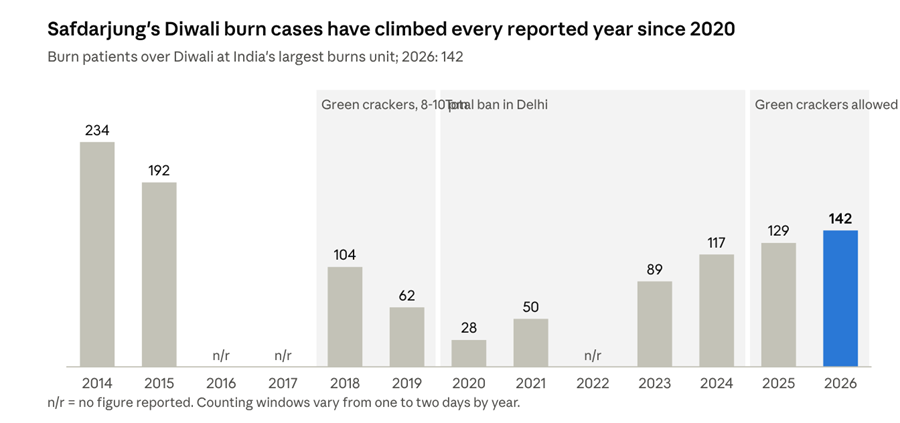
The low point came in 2020, when Delhi banned all firecrackers and Covid-19 kept crowds small: Safdarjung saw just 28 burn patients. Cases crept back while the ban stood on paper but was widely flouted, then kept rising once the Supreme Court began permitting green crackers in 2025.


