



There was a time when a Bollywood movie was India’s ultimate culture calling card. For decades, Hindi cinema expanded a vibrant, beautifully messy, and deeply inclusive vision of the country, a place where different faiths, complex identities, and messy histories somehow found a way to coexist with each other on screen.
But step into a movie theater today, and that cinematic landscape is almost unrecognizable. Over the last few years, the world’s most prolific film industry has largely shifted gears, transforming from an independent storytelling powerhouse into a highly lucrative vehicle for political polarization and historic revisionism.
This wasn’t an accidental shift, it is the survival tactic of an industry trapped in a perfect strom of aggressive state incentive, predatory social media algorithms, and raw economic panic.
How cinema learnt to Weaponize Identity
To understand the mechanics of the transformation, one has to look beyond modern digital algorithms and examine historic blueprints. The weaponisation of cinema to alienate a minority population and manufacture a majoritarian consensus is not a new invention. It’s a structural echoes of the past.
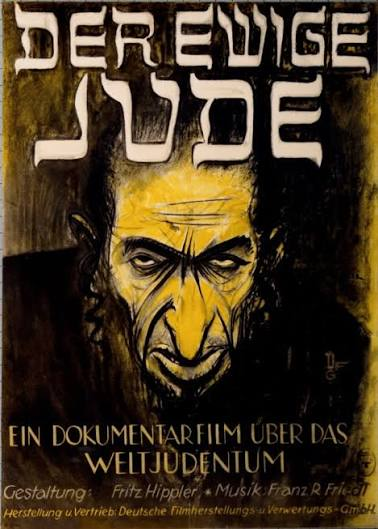
During the Weimar Republic and the subsequent rise of the Third Reich, Germany’s UFA studios were systematically re-engineered by Joseph Goebbels’ Ministry of Public Engagement and propaganda, The strategy relied heavily on two distinct cinematic tracks that closely mirror the current trends in Hindi Cinema: the hyper stylized celebration of the dominant state and clinical, documentary-style demonization of an internal “other.”
Films like Der ewige Jude (The eternal Jew, 1940) were especially marketed not as fiction, but as objective, educational ‘documentaries.’ They utilized handpicked statistics, out-of-context historical flashpoints, and deeply backward tropes to paint an entire community as an existential, parasitic security threat to the nation.
The goal was to replace organic social empathy and to create everyday suspicion. When compared to the modern wave of India “docudramas,” the psychological playbook remains startlingly identical: strip away historical context, maximize visceral discomfort, and present an absolute binary of “us versus them.”
The “files” formula and Manufacturing Anxieties
Instead of holding onto artistic grays, a highly successful wave of contemporary Indian films has struck gold by mining real, painful historical trauma, deploying tactics that look deeply familiar to students of media history.
The Kashmir Files (2022) The commercial proof-of-concept for this profitable new genre came with The Kashmir Files. The brutal reality of the forced exodus of Kashmiri Pandits in the 1990s remains a profound, bleeding wound in modern Indian history. Yet, instead of exploring the multi-layered institutional failures of local administration and the complex geopolitics of the era, the film flattened the catastrophe.
It focused on local civil society, secular public institutions and universities, transforming a complex humanitarian crisis into a simple narrative of internal treachery, a storytelling device that has historically been used to condition audiences to see domestic dissent not as a democratic right but as treason.
The Kerala Story (2023) This method of generating mass anxiety grew exponentially with The Kerala Story. Relying on vastly exaggerated, statistically disproved figures about radicalization, the film painted an entire multi-faith state as a covert security hazard.
The Bengal Files (2025) The trajectory peaked in recent releases like The Bengal Files. Here, painful historical flashpoints, specifically the communal horrors surrounding the 1946 Direct Action Day, are extracted and visually maximized. By condensing decades of complex socio-economic tensions and colonial manipulation into an unchangeable civilizational war, the film feeds contemporary electoral anxieties, projecting modern political polarization onto a historical canvas.
Why the industry flipped
Look behind the ideological shift, and you will find cold, harsh cash. In a digital ecosystem where a single coordinated social media boycott can sink a 200-crore project overnight, production houses are absolutely terrified. Hyper-nationalist themes have simply become the safest financial bet on the board.
Just as the Nazi state used financial control to subtly steer filmmakers without needing to nationalize every studio, the modern state has actively titled the playing field. Politically aligned films are routinely rewarded with lucrative tax-free statuses, state-backed bulk ticket purchases, and high-profile public endorsements from top politicians.However, independent ventures or scripts that challenge power face constant bureaucratic obstacles, financial intimidation, and strong central board censorship.
The Absence of Gray Areas and Institutional Hypocrisy
The real tragedy of this shift lies in the stark double standards of institutional gatekeeping. While divisive films are heavily promoted, nuanced historical critiques are actively suppressed.
The reality of modern censorship becomes clear when a filmmaker targets actual state accountability rather than manufactured enemies. Look at the fate of Satluj (originally Punjab ’95), starring Diljit Dosanjh. The film tracks Jaswant Singh Khalra, the activist who exposed thousands of extra judicial killings by the Punjab Police in the 1990s before being murdered by police personnel himself. To allow a theatrical release, the censor board demanded a staggering 127 cuts, even wanting Khalra’s name removed.
To bypass this, the creators quietly released the uncut version on ZEE5. Within 48 hours, the government invoked emergency IT Rules to force it offline. This rapid blackout exposes the system: movies inventing internal threats get tax breaks and official praise, while a project documenting court-proven institutional atrocities is aggressively erased under the guise of national security.
And consider what happened to the critically acclaimed Sardar Udham. Despite its artistic brilliance, the Indian jury famously rejected it as the official entry for the Oscars. The official explanation that its realistic depiction of the Jallianwala Bagh massacre “projected hatred towards the British” reveals a startling duplicity. The system voluntarily polices and suppresses a well-researched anti-colonial movie to save diplomatic face, yet actively promotes and turns a blind eye to internal propaganda that stirs hatred against India’s own people.
By replacing universal humanism with majoritarian rhetoric, Bollywood is consciously destroying its international appeal. To represent a truly robust democracy, cinema needs to be brave enough to recognize grey areas. And this is the very quality that is being sacrificed today for spectacular indignation and state-approved consensus.