



“We will not run away, we will be buried in this very land. There is no superpower except Allah, and we fear none but Allah.”
Sayyed Ali Khamenei
Introduction
Sayyed Ali Khamenei, who stood at the heart of the Islamic Republic from the 1979 Revolution until his martyrdom in 2026, represented far more than a political leader to millions across Iran and beyond. His life is viewed as the embodiment of steadfast resistance against oppression, unwavering adherence to Islamic principles, and an enduring commitment to preserving the unity of the Muslim Ummah. This article explores the milestones of his life, examining how his scholarship, revolutionary struggle, and leadership contributed to this dual legacy. Khamenai was a charismatic and unifying figure who successfully steered the Islamic Revolution through decades of external pressure and internal challenges.
Early Life and Educational Formation
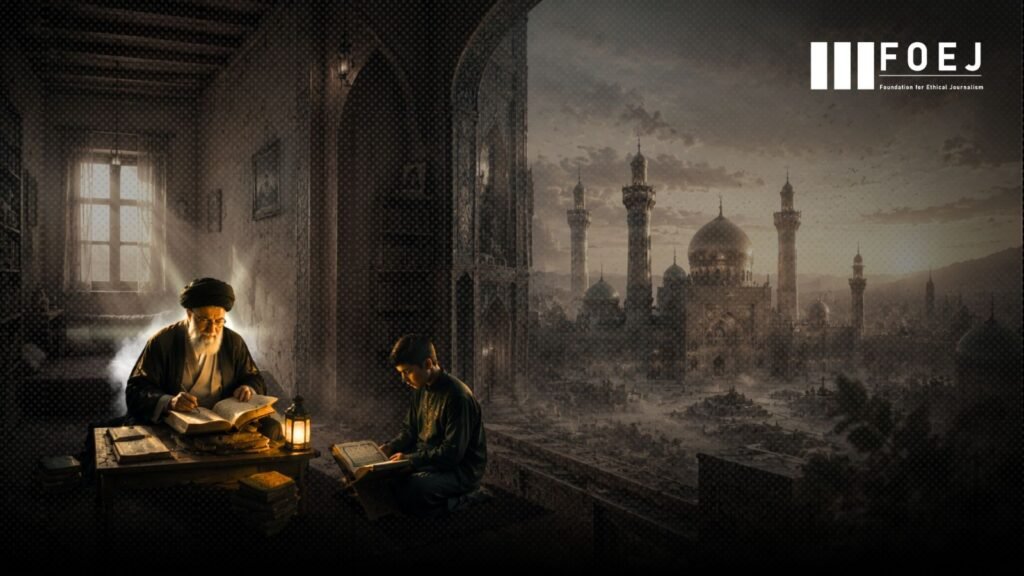
Born on 19 April 1939 in the holy city of Mashhad, Sayyed Ali Khamenei emerged from a humble family whose deep commitment to Islamic scholarship, faith, and simplicity profoundly shaped his character. His father, Sayyed Javad Khamenei, was a respected religious scholar who lived an austere life and instilled in his children the values of piety, humility, and service. Reflecting on his childhood, Ayatollah Khamenei recalled the family’s modest circumstances, describing a small home where material comforts were scarce but spiritual and moral values were abundant. These formative experiences cultivated in him resilience, discipline, and an unwavering sense of purpose.
From an early age, he displayed a remarkable dedication to learning. After studying the Holy Qur’an and basic Islamic sciences in traditional maktabs, he continued his education at the theological seminaries of Mashhad before pursuing advanced studies in the renowned centers of Najaf and Qum. There, he benefited from the teachings of some of the twentieth century’s most distinguished Islamic scholars, including Imam Khomeini, Grand Ayatollah Borujerdi, Allamah Tabatabai, and other eminent jurists and philosophers. His scholarly training equipped him with a profound understanding of Islamic jurisprudence, philosophy, and theology, laying the intellectual foundations for his future leadership.
The Struggle Against the Pahlavi Regime
Alongside his academic pursuits, Sayyed Ali Khamenei became increasingly engaged in the struggle against the Pahlavi regime. Inspired by Islamic ideals and a vision of justice, he devoted himself to educating society through lectures and religious instruction while openly criticizing authoritarian rule and foreign influence in Iran. His activities made him a target of the Shah’s security apparatus, SAVAK, leading to repeated arrests, prolonged imprisonment, solitary confinement, torture, and years of exile.
From 1963, he was actively involved in protests against the monarchy. Yet these hardships only strengthened his resolve, transforming him into one of the prominent figures of the Islamic revolutionary movement. His perseverance during years of persecution earned him widespread respect among scholars, students, and revolutionary activists alike. He remained closely associated with the exiled Imam Khomeini during this time, laying the groundwork for the eventual overthrow of the monarchy.
Role in the Islamic Revolution
“The great Islamic nation cannot be indifferent and remain silent on the injustice done to you. The Islamic nation is required to assist you in any way it can.”
Sayyed Ali Khamenei
Following the victory of the Islamic Revolution in 1979, Sayyed Ali Khamenei assumed a series of significant national responsibilities. Immediately after Imam Khomeini’s return, he was appointed to the Revolutionary Council. After its dissolution, he became Deputy Minister of Defence and Imam Khomeini’s personal representative on the Supreme Defence Council. For a brief period, he commanded the Islamic Revolutionary Guard Corps (IRGC), and he was a key negotiator in the Iran hostage crisis.
Khamenei was immersed in the new republic’s politics from the start. A fiery orator in support of Khomeini and an ardent advocate of the concept of velayat-e faqih, he was among the founding members of the loyalist Islamic Republican Party (IRP). He was injured in 1981 in one of a series of terrorist bombings that devastated the IRP’s upper echelon, demonstrating the sacrifices he made for the nascent system. He was elected president in October 1981 and reelected in 1985, helping to stabilize the country during the challenging years of the Iran-Iraq war.
Leadership of the Islamic Republic
“The Islamic Republic still has a long way to go to achieve the social justice mandated by Islam. We still have not reached that stage and have a long way to go to get there.”
Sayyed Ali Khamenai
In 1989, following the passing of Imam Khomeini, Sayyed Ali Khamenei was appointed as the next Rahbar, of the Islamic Republic. Despite the immense responsibilities, he continued to shape Iran’s political, religious, and strategic direction for over three decades. He favored a strongly centralized government to safeguard the Revolution’s ideals and forestall foreign influence. Throughout his leadership, he was central to promoting a “resistance economy” to counter international sanctions and build national self-sufficiency. He supported the country’s nuclear energy program, emphasizing Iran’s right to peaceful nuclear technology. In 2015, he endorsed the Joint Comprehensive Plan of Action (JCPOA) to ease international tensions, although he remained skeptical of encroachments on Iran’s sovereignty. When the United States withdrew from the agreement, he rejected renegotiation and supported the gradual process of non-compliance to safeguard Iran’s national interests.
The Legacy of Resistance
“It doesn’t matter If we die. Iran Is Not important, ISLAM is important”
Sayyed Ali Khamenai
Ayatollah Khamenei’s legacy is defined by his steadfast resistance against global arrogance and oppression. He stood firm against decades of sanctions and military threats. He was the architect of Iran’s strategy to become a regional powerhouse, building what came to be known as the “Axis of Resistance” to support oppressed nations, including the Lebanese Hezbollah, Hamas in Palestine , and Yemen’s Houthis.
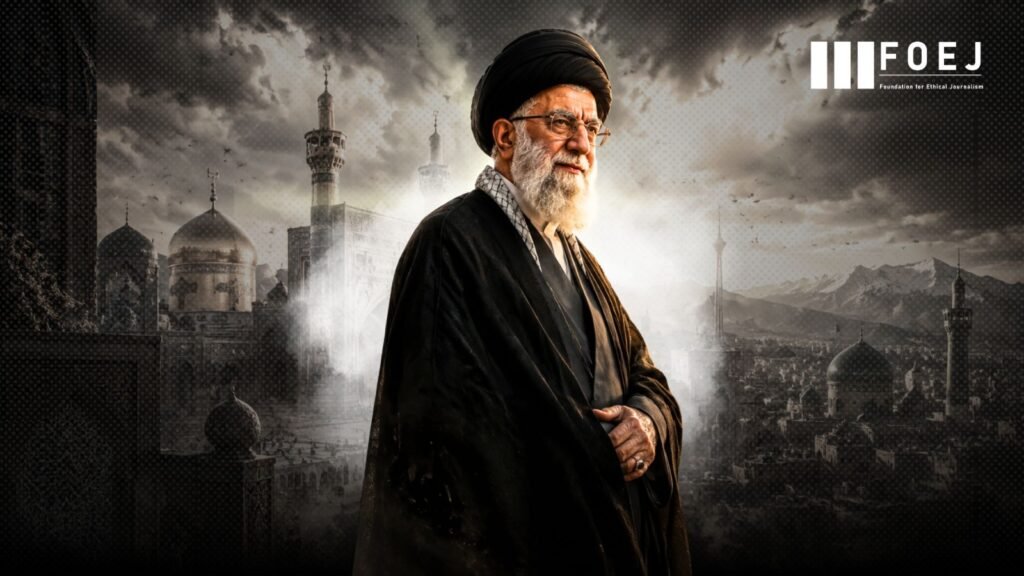
He shaped the IRGC into a formidable bastion of national defense and an instrument of regional influence. He made Iran’s nuclear capabilities central to national security and deterrence strategy. Although this assertive stance provoked conflicts, it was deemed essential for shielding Iran’s sovereignty from foreign aggression. When Iran faced internal protests and external aggression, his life was seen as a symbol of defiance in the face of powerful adversaries a legacy that moved millions of mourners upon his martyrdom in the 2026 war.
Ayatollah Syed Ali Khamenei held a strong and clear position on the issue of Palestine. Although he led a Shia majority country, he gave consistent political, financial, and military support to Palestine and its resistance groups, even though most Palestinians are Sunni Muslims. Throughout his leadership, Iran under Ayatollah Khamenei, supported Palestinian resistance groups and emphasized that the struggle for Palestine is above sectarian differences.
In contrast, many Sunni-majority Arab governments have maintained close relations with the United States and have remained criminally silent on the issue of Palestine. This contrast is seen as evidence that Ayatollah Khamenei’s position on Palestine was based on principles rather than sectarian identity.
Ayatollah Khamenei’s lifelong commitment to the Palestinian cause, his constant support for the liberation of Masjid al-Aqsa, and the sacrifices associated with his leadership reflect his deep love, sincerity, and dedication to the oppressed people of Palestine and to the cause of Masjid al-Aqsa.
The Legacy of Unity
“Today, the Muslim world is injured and corrupt. People who are the enemies of all Muslims are trying to cause disunity in the Islamic world by intensifying ethnic difference and separating people under names such as Shia and Sunni, Arabs and non-Arabs.”
Sayyed Ali Khamenei
Beyond resistance, Ayatollah Khamenei is also revered for his profound legacy of Islamic unity. Through significant fatwas, he consistently worked to bridge the divide between Shia and Sunni Muslims. Recognizing the danger of sectarianism, he issued a historic ban on insulting Sunni sanctities including the revered wife of the Prophet Muhammad (peace be upon him), Hazrat Aisha (RA). He permitted Shia Muslims to pray behind Sunni imams to foster practical unity among all Muslims. Furthermore, he issued a fatwa prohibiting takfır the practice of declaring other Muslims as infidels to discourage sectarianism.
Owing to these fatwas, Muslims worldwide viewed him as a symbol of unity. His emphasis on brotherhood resonated deeply across the Muslim world. Following his martyrdom, this legacy was vividly demonstrated when Muslims globally, including students at India’s Aligarh Muslim University took to the streets in his support, chanting slogans against Israel and America. Funeral prayers for Ayatollah Sayed Ali Khamenei were held twice on the Aligarh Muslim University campus. Demonstrations in his favor occurred worldwide, including in Tehran, Delhi, Lucknow, Islamabad, Karachi, Baghdad, Beirut, Dhaka, Sanaa, Istanbul, Srinagar and Ladakh, offering clear testament to his popularity.
A Life of Simplicity and Devotion
Perhaps the most profound testament to Khamenei’s sincerity and devotion was the remarkable simplicity he maintained throughout nearly five decades in power. Iranian authorities confirmed after his passing that Ayatollah Khamenei left behind no palaces, no personal bank accounts, and no private fortune, a striking contrast to the vast wealth accumulated by so many rulers of his era. An official inventory of his personal belongings reportedly included only modest possessions, with a small pickup truck highlighted among them.
This was not a posture adopted for public consumption, but a continuation of the humble lifestyle he had known since childhood in Mashhad. This simplicity is a practical embodiment of the Islamic principles he preached: that leadership is a sacred trust, not a means of privilege, and that true authority lies in service to the people and to God. While he guided Iran through sanctions, wars, and geopolitical crises, he never enriched himself or his family at the expense of national wealth. His personal humility bolstered his moral authority, making his calls for sacrifice and resilience more trustworthy to a nation that saw its leader sharing in their hardships rather than distancing himself from them.
Conclusion
Sayyed Ali Khamenei’s journey from a modest home in Mashhad to the leadership of the Islamic Revolution embodies a life dedicated to faith, scholarship, and struggle. His legacy to his followers is a dual one: the unwavering resistance against oppression that defined his political and military strategies, and the profound commitment to Islamic unity that sought to protect the Muslim Ummah from internal division. These pillars are complemented by a personal life of rare austerity a simplicity that proved, in the eyes of millions, that he was a leader who asked nothing for himself and gave everything for his nation and his faith. Despite the trials of sanctions, war, and political upheaval, his life remains a testament to the principles of perseverance, solidarity, and selflessness. His martyrdom on February 28, 2026, far from ending his influence, solidified his image in the hearts of the people as a leader who lived humbly, served tirelessly, and ultimately gave his life in the service of his beliefs.
The poignant words of Ayatollah Sayyed Ali Khamenei before his Shahadat;
“My life has little value. I have a disabled body. I have a bit of dignity, which you all have given me. I put all of this on life, ready to sacrifice everything.
May all this be sacrificed for you”