



On 20 July 2026, in INDIA, the world’s largest democracy, the promises of the Constitution stood at a crossroads when thousands of students and young aspirants from across the nation gathered in New Delhi under the banner of the Cockroach Janta Party (CJP) for the “Sansad Chalo” march. They came carrying placards, hope, and one simple demand: ‘Accountability.’ The protest was triggered by growing anger over alleged irregularities in national competitive examinations, particularly the NEET. Students demanded an independent investigation into the examination process and called for the resignation of Union Education Minister Dharmendra Pradhan, arguing that political accountability must accompany administrative failure.
The motto was simple: EDUCATION. For many, this was never about just one examination. It was about trust. Trust in public institutions. Trust in a system that promises equal opportunity. Trust that years of sleepless nights, sacrifices, and dreams would not be overshadowed by systemic failure. But instead of answers, they were met with barricades and lathis.
Instead of dialogue, they encountered force. As protesters attempted to march towards Parliament, security restrictions intensified and multiple barricades blocked their path. The situation eventually escalated into clashes, and it became a license to punish an entire crowd. A democratic government is expected to respond with restraint, proportionality, and accountability & not with collective force. What unfolded that day left many across the country asking whether the constitutional promise of peaceful dissent had been forgotten.
Videos and reports documented lathi charges, baton assaults, tear gas, smoke shells, water cannons, and mass detentions. Young students were seen running through clouds of gas, helping injured friends, and desperately searching for safety. Whether one supported the protest or not, the images were deeply disturbing. The controversy did not end on the streets. It continued in the battle over the narrative. Delhi Police publicly had the guts to deny several viral incidents, including claims and other social media posts that they described as misleading or false. Certainly, misinformation must be corrected wherever it exists. But when citizens allege police brutality, the answer cannot stop at denial.
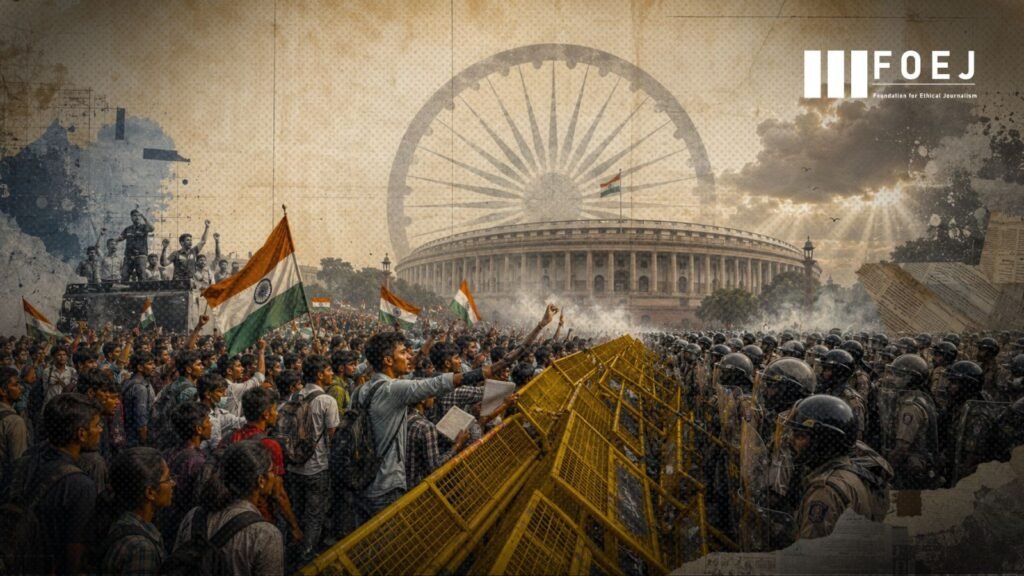
The real question is not whether a few social media posts were inaccurate. The real question is whether every action taken by the state met the constitutional standards of legality, necessity, and proportionality. Democracy demands investigation. It demands transparency. It demands accountability for the brutality. Why does state brutality keep happening? Because when there are no consequences, abuse of power becomes easier. When people in power know that there will be no real consequences, they stop fearing the law they are supposed to uphold.
If an officer believes that no matter how many people are beaten, dragged, or wrongfully detained, the complaints will fade, inquiries will stall, footage will be ignored, and institutions will shield rather than scrutinize them, restraint becomes the exception instead of the rule. This is what makes unchecked power so dangerous. Violence is not just about one baton or one lathi. It is about that confidence from a belief that there will be no accountability. That is why allegations of plainclothes personnel detaining protesters, officers without visible nameplates, and the use of excessive force are so alarming. If those using force cannot even be identified, then who will answer when the law is broken? How does a victim seek justice when they do not even know who assaulted them? The baton becomes more dangerous when the hand holding it believes it will never be questioned.
The uniform becomes more intimidating when it is worn without accountability. The greatest threat is not merely that excessive force may be used once. It is that the absence of consequences makes its repetition more likely. The Constitution did not create the police to rule over citizens. It empowered them to protect citizens while remaining answerable to the law. If protesters are expected to answer for every stone thrown, then those exercising state power must also answer for every unnecessary blow, every unlawful detention, and every violation of constitutional rights. When the state demands accountability from its citizens but refuses to accept it for itself, democracy begins to lose its meaning. The police are not above the Constitution.
They are bound by it. The real danger is not that brutality happened once. The real danger is when it happens again and again because those responsible know they are unlikely to face consequences. That silence is what keeps the cycle alive. The tragedy of 20 July is not that it was unprecedented. It is that it felt painfully familiar brutality. From the midnight crackdown at Ramlila Maidan in 2011, criticized by the Supreme Court for the excessive use of force where thousands of peaceful protesters led by Baba Ramdev were dispersed in a midnight police operation using force and tear gas, to the police action at Jamia Millia Islamia and Aligarh Muslim University in 2019 during the anti-CAA protests, when police entered university campuses, used tear gas and batons, and many students were injured.
The incidents sparked nationwide criticism and demands for accountability. The Shaheen Bagh and Anti-CAA Protests 2019-20 also followed at the same time. While many demonstrations remained peaceful, several protests were dispersed by police. Questions were raised about restrictions on assemblies, arrests, and the balance. From the use of water cannons and tear gas against farmers at Delhi’s borders in 2021 to the fatal police firing in Thoothukudi, Tamil Nadu, in 2018, India’s recent history repeatedly reminds us of the same uncomfortable truth: when citizens take to the streets to demand accountability, the state too often responds with force before dialogue. After so many incidents, have we really seen accountability? Did anyone openly admit that mistakes were made? Did anyone apologize to those who were hurt? Did we see those responsible being held accountable where wrongdoing was found? In many cases, what people remember most are the denials, the silence, and the absence of clear answers.
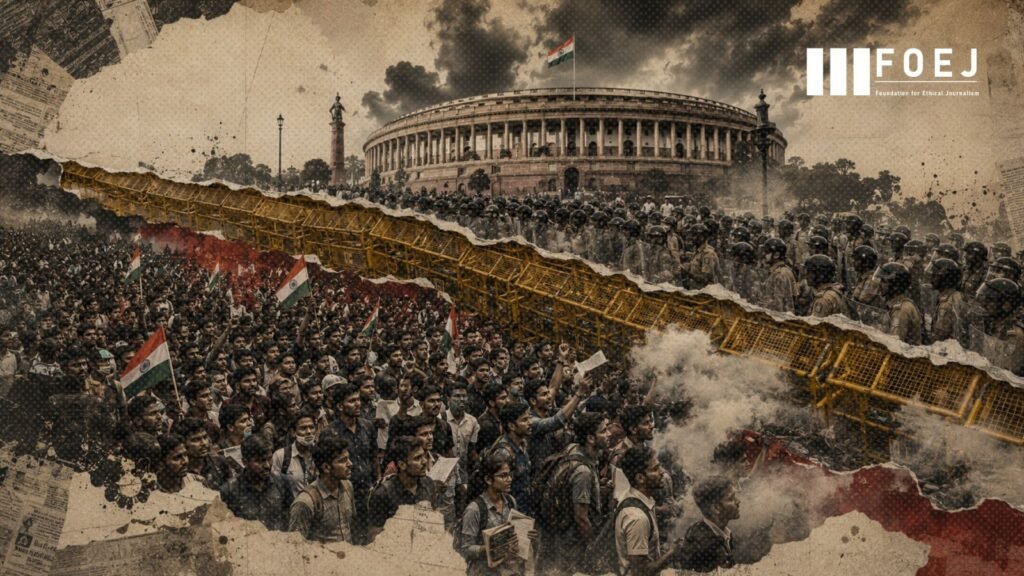
That is what makes 20 July so worrying. If every allegation of excessive force is met only with denial, and if there is no fair and independent investigation, what message does that send? It tells people that those in power may never have to answer for their actions. And that is how the cycle continues. Today it is one protest. Tomorrow it could be another. The issue may change, the faces may change, but if there are no consequences, the response may remain the same. Different protests, similar response. The question remains: Is the state protecting public order at the cost of constitutional rights? The day the State begins to believe that no one can question its actions is the day democracy begins to weaken. Because in a true democracy, the government is accountable to the people.
The Constitution of India does not treat dissent as a crime. Article 19(1)(a)1 guarantees every citizen the freedom of speech and expression. Article 19(1)(b)2 guarantees the right to assemble peacefully. These rights are not favors granted by the government. They are constitutional promises made to every citizen. The Supreme Court has repeatedly defended these freedoms. In Himat Lal K. Shah v. Commissioner of Police (1973),³ the Court held that while assemblies may be regulated, the State cannot extinguish the right itself.
In Mazdoor Kisan Shakti Sangathan v. Union of India (2018),⁴ the Court recognized peaceful protest as an essential feature of democratic life. Most importantly, in Ramlila Maidan Incident v. Home Secretary (2012),⁵ the Supreme Court condemned excessive police force and reminded authorities that force must always be the least intrusive measure available. Article 216 protects every person’s life and personal liberty. In Maneka Gandhi v. Union of India (1978), the Supreme Court declared that any action affecting liberty must be just, fair, and reasonable. These are not empty words written on aging pages. They are the moral foundation of our Republic. Every unnecessary baton weakens Article 19. Every arbitrary detention chips away at Article 21. Every unidentified officer exercising force raises questions about accountability.
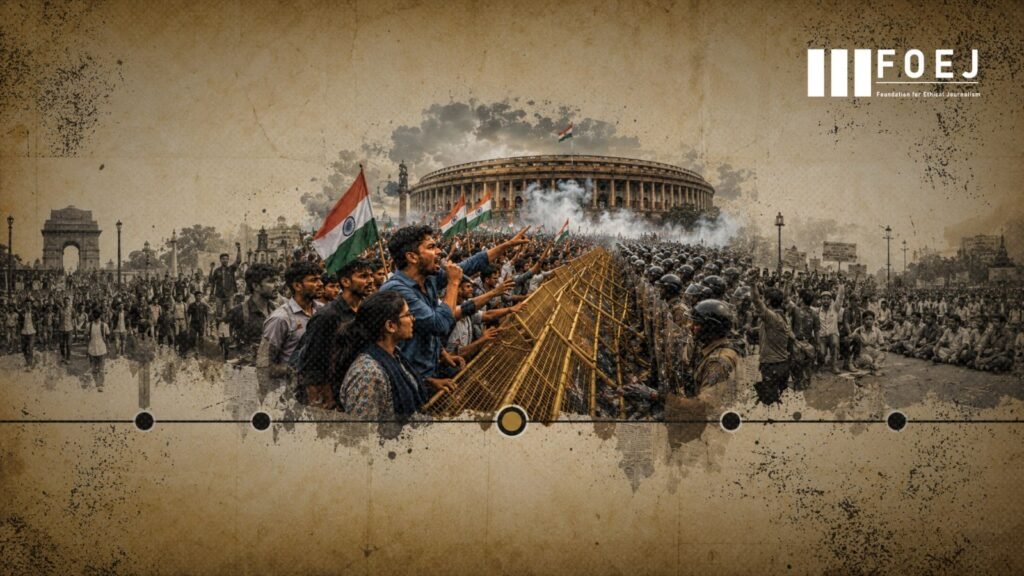
A democracy should never resemble a battlefield when confronted by its own youth. These were not foreign enemies crossing a border. These were students. Young people who had spent years preparing for examinations. Young people who believed that their government would hear them. Young people who chose to ask questions rather than remain silent. 1 INDIA CONST. art. 19(1)(a). 2 INDIA CONST. art. 19(1)(b). 3 Himat Lal K. Shah v. Commissioner of Police, Ahmedabad, (1973) 1 SCC 227. 4 M azdoor Kisan Shakti Sangathan v. Union of India, (2018) 17 SCC 324. 5 Ramlila Maidan Incident v. Home Secretary, Union of India, (2012) 5 SCC 1. 6 INDIA CONST. art. 21. 7 Maneka Gandhi v. Union of India, (1978) 1 SCC 248. When students begin fearing the consequences of peaceful participation in democracy, the damage extends far beyond broken bones or bruised skin.
This is not an argument against law enforcement. Police officers have an extraordinarily difficult duty and deserve protection when confronted with genuine violence. But precisely because they exercise the immense power of the state, they must also remain answerable to the Constitution. That is what the rule of law means. The events of 20 July are about more than one protest. They ask a question that every democracy must answer: When students demand accountability, will the State respond with dialogue or with force? 20 July 2026, In a nation where the Constitution promises every citizen justice, liberty, equality, and the freedom to dissent, the streets told a different story.
History will not remember how many barricades were erected or how many streets were sealed. History will remember whether a democratic nation chose conversation over coercion. Whether it chose constitutional morality over institutional arrogance. Whether it remembered that the greatest threat to democracy is not dissent but the fear of dissent. Because the day a government begins fearing questions from its own youth is the day democracy begins fearing its own reflection.
“Sarfaroshi ki tamanna ab hamare dil mein hai; dekhna hai zor kitna baazu-e-qatil mein hai.” – Ram Prasad Bismil