



The forceful detention of Sonam Wangchuk has generated outrage across the country. For many, it came as a shock. For many, it did not.
Not because it was unprecedented, but because it follows a pattern that has become increasingly difficult to ignore: when dissent challenges those in power, the state’s instinct appears to be “control before conversation.”
The fact that Wangchuk was taken to Safdarjung Hospital adds another layer to the controversy. If the authorities considered medical supervision necessary, that decision could have been justified on health grounds. However, the manner in which the police reportedly escorted him there—captured in widely circulated videos—has drawn criticism and raised uncomfortable questions about how peaceful dissent is being handled.
Governments in a democracy are not expected to agree with every protest. They are, however, expected to tolerate peaceful disagreement. That is the constitutional bargain.
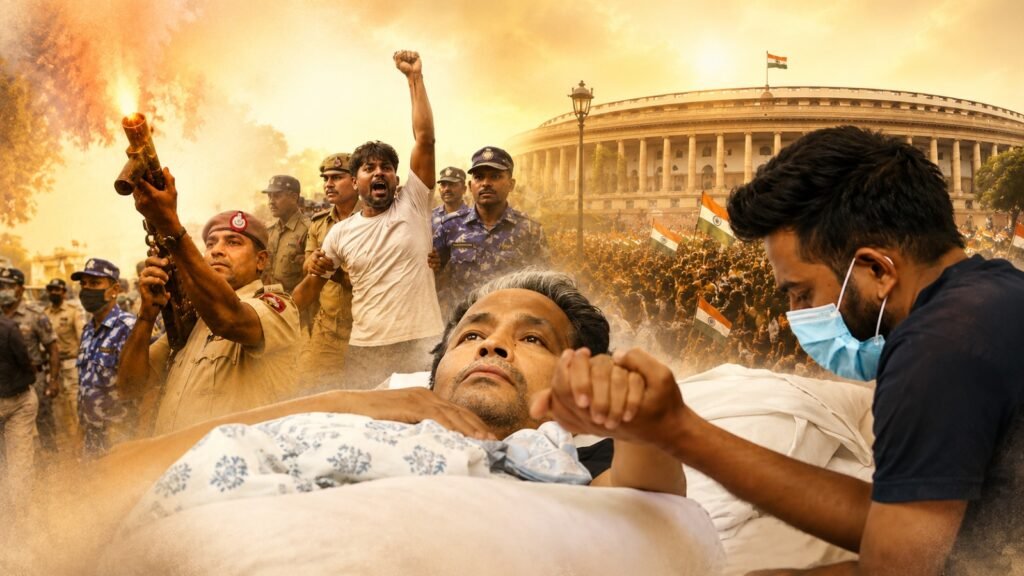
For many Indian Muslims, the events surrounding Wangchuk’s detention evoke memories that never really faded.
The anti-CAA and NRC protests were not merely political demonstrations. They became defining moments in the relationship between the state and a minority section of its citizens. Police action at institutions such as Aligarh Muslim University and Jamia Millia Islamia, including the use of force and entry into university campuses, remains etched into public memory. Those images continue to shape how many young Muslims perceive the cost of political participation.
That memory is reinforced by the continued incarceration of activists such as Umar Khalid and Sharjeel Imam, whose cases have become central to the national debate on civil liberties, due process, and the pace of justice. Whatever one’s opinion of the allegations against them, the length of their incarceration before the conclusion of trial has become a point of serious public concern and legal debate.
This is precisely why Wangchuk’s detention feels familiar. It is not simply about one activist or one protest. It reflects a broader trend in which protest is increasingly treated as a law-and-order problem rather than a democratic exercise.
The issue at hand—whether one agrees with Wangchuk’s position or not—is secondary. His protest is centred on paper leaks and demands for political accountability. In a democracy, sucenterednds should be met with transparency and public engagement, not the detention of those raising them.
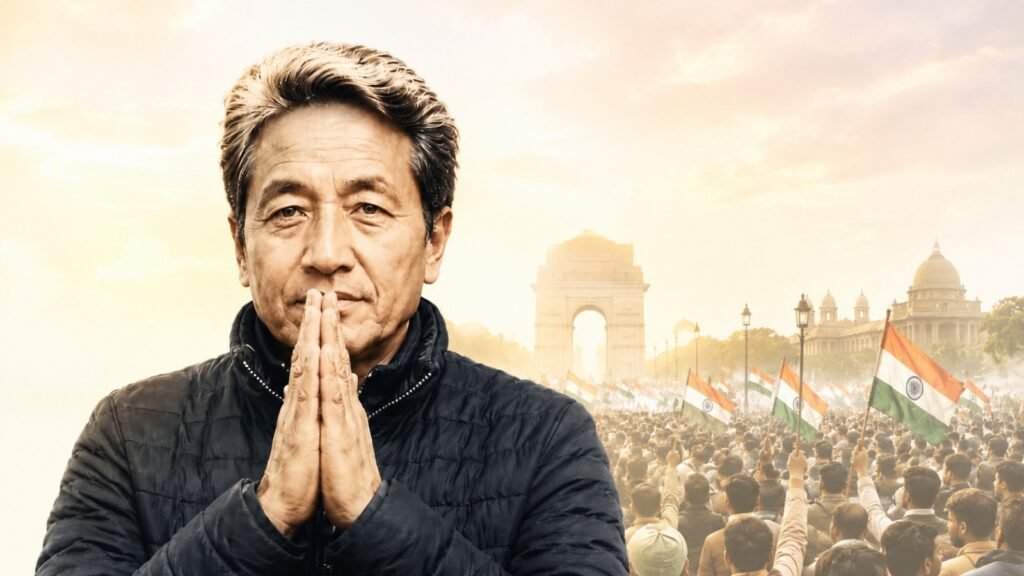
One need not subscribe to Wangchuk’s politics or agree with every slogan raised at the CJP protest to defend his right to dissent. Democracies are strengthened when governments answer criticism with facts, accountability, and policy—not with coercive action.
History offers a consistent lesson: states rarely become less democratic overnight. Democratic erosion is gradual. It is visible in the normalization of exceptional measures, in the shrinking tolerance for criticism, and in the growing expectation that citizens should applaud rather than question authority.
That is why Wangchuk’s detention has resonated far beyond this particular protest. It speaks to a larger anxiety shared by students, journalists, activists, and ordinary citizens across ideological lines: if peaceful dissent increasingly invites coercive state action, what remains of the constitutional promise of liberty?
The real question, therefore, is not whether Sonam Wangchuk should have been detained. It is whether India is becoming comfortable with the detention of those who dissent.
A democracy should fear silence far more than it fears protest.
(The views expressed in this article are solely those of the author and do not necessarily represent the views, policies, or editorial position of the platform)