



The protest at Jantar Mantar was more than just a student mobilisation. It was a defining moment that revealed that the digitally native generation is unwilling to adopt silence over recurring examination paper leaks. Organised by the Cockroach Janta Party, popularly known as CJP, and led primarily by Generation Z students, this agitation transcended study campuses and entered the wider public place to demonstrate the collective participation of various colleges and universities in New Delhi. Constructing their political agency, the protest is participated in by many social groups, including marginalised ones, particularly Muslim youth.
Gen Z, unlike previous generations, was born and grown up in a world dominated by information, technology, and social media, where digital technologies are inseparable from everyday life. Their political consciousness is shaped less through traditional political parties and more by algorithmic feeds, reels, and grassroots digital campaigns.
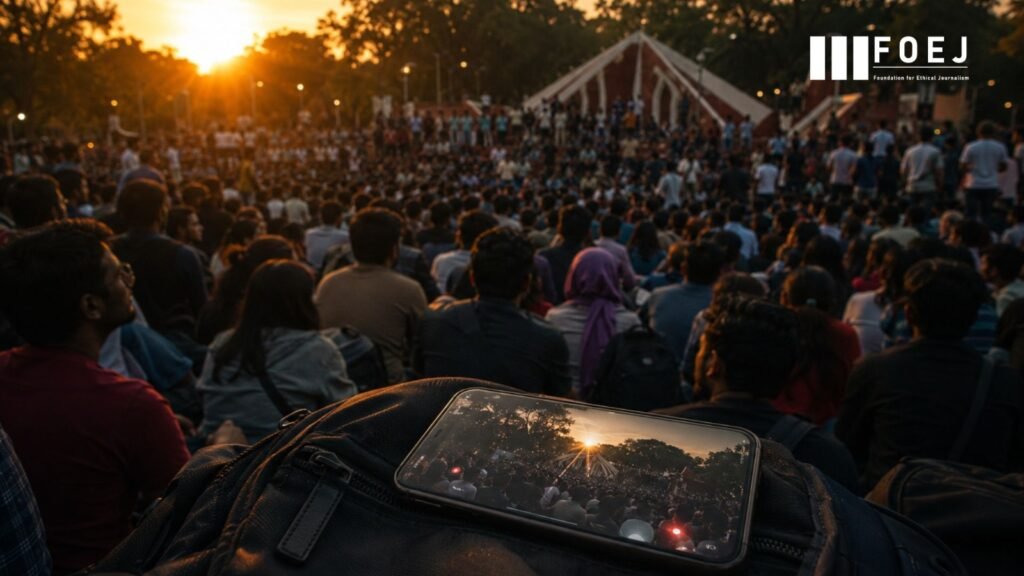
Today, social media has reduced the influence of mainstream media in the public sphere and has become the platform where competing interpretations of democracy, constitution, and political issues are negotiated in real time. The protesters at Jantar Mantar took full advantage of this opportunity. The protest gained momentum through messaging applications such as WhatsApp, Instagram, Facebook, X, and Gen Z-led digital collectives. The movement demonstrated networked mobilisation—horizontal, decentralised, and adaptive. The Gen Z mindset increasingly emphasised self-representation and did not wait for any political party’s approval, yet they were energised by opposition parties and public support across the nations.
Now, the physical gatherings have been dispersed, but the movement continues online, circulating support for and criticism of the movement, legal updates, and police investigations into alleged unlawful activities. This reflects the continuity of the protest and survival of digital memory in the age of algorithms.
One of the most striking dimensions of the protest was the active participation of young Muslims, particularly Muslim girls. Traditionally, the marginalised communities have struggled for representation within dominant public spheres such as mainstream media and political avenues. Social media significantly altered the narrative and provided visibility to Muslim perspectives, reducing gatekeeping practices of established media organisations.
The marginalised young activists, journalists, and student content creators increasingly employ digital platforms to narrate their own opinions rather than asking someone to define them. This is what scholars have conceptualised as subaltern agency in digital spaces. Once excluded from the major structure of communication, the subaltern now possesses opportunities for self-representation and self-narration through smartphones, the Internet, and social media. Digital media has democratised access to self-expression and self-representation. This, nevertheless, does not wholly eliminate inequalities but substantially redistributes communicative power.
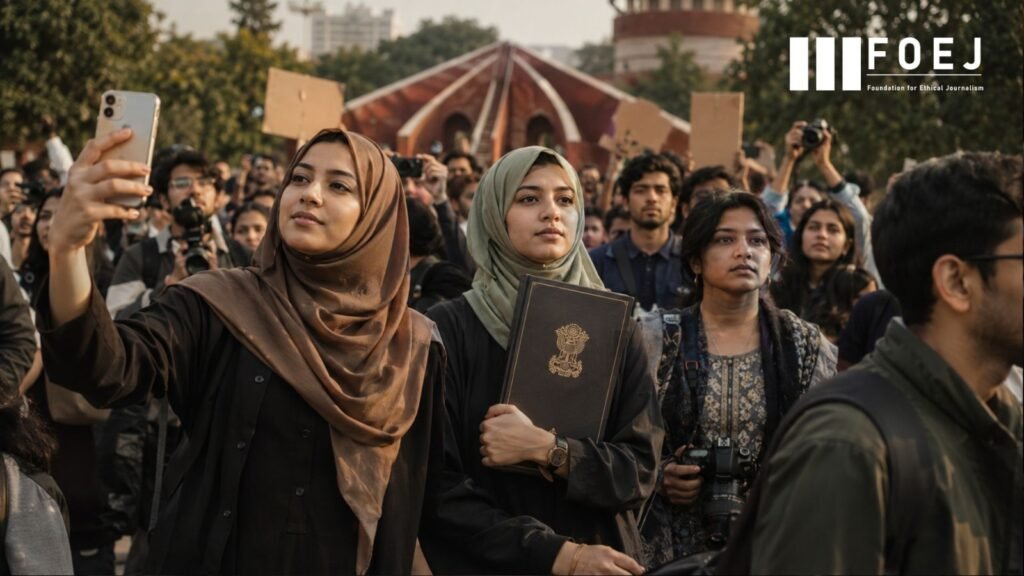
Practising Muslim girls, often portrayed as passive recipients of social change and confined to domestic chores, emerged as political actors and broke the hierarchical norms of the society. They witnessed the protest, documented it, and strengthened the global Gen Z culture through multidimensional digital content blending faith, education, and constitutional rights.
Social media, as a democratic infrastructure, paved the way for decentralisation of information, fact-checking and live broadcasting, which reduced the dominance of traditional media that once determined newsworthiness and narrative authenticity. Citizen journalism and independent social media influencers were integral to the demonstration. Reels shared by student social media influencers frequently shaped national conversations and debates. Livestream reduced informational asymmetry. Fact-checking challenged misinformation. Crowdfunding sustained the demonstration.
Indian Gen Z are part of a wider global generation, learn from one another through digital networks. Ideas and political strategies are shared Internationally, faster than in previous eras. Reels, slogan design, and constitutional awareness reach across nations within moments. Indian Gen Z protesters, participating in campaigns for educational reform, constitute part of a global democratic conversation. Their politics and activism, though, differ fundamentally from prior generations, yet the future of Indian democracy will increasingly be shaped by them.
Every democratic government faces difficulties in balancing public order within constitutional freedoms. Peaceful dissent remains indispensable to democracy. On the other hand, police are responsible for maintaining law and order by taking effective steps to prevent unrest and detain those engaged in unlawful activities. The long-term strength of India’s democracy will depend not upon the absence of protest but upon its capacity to accommodate disagreement without delegitimising dissent.
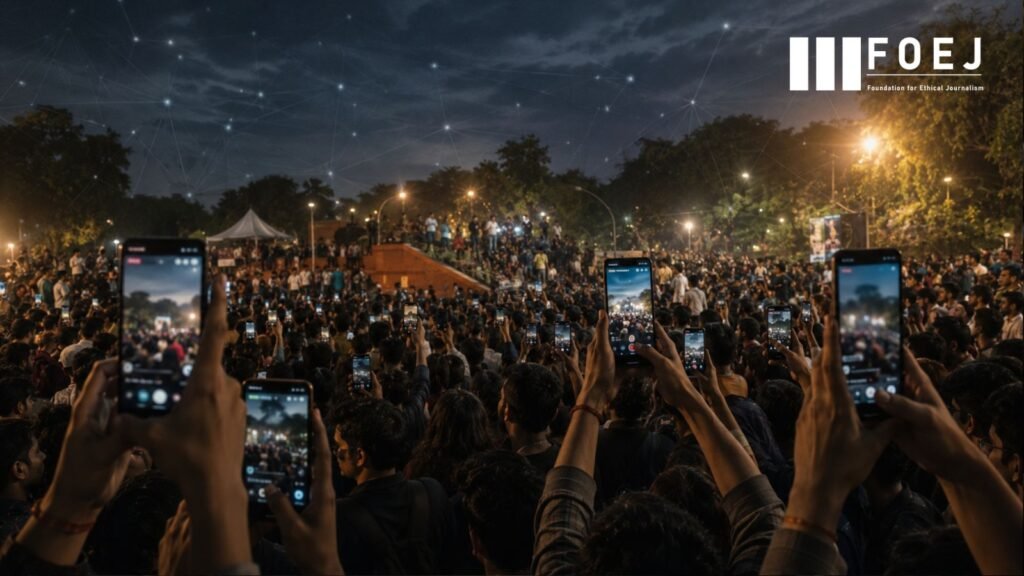
The protest at Jantar Mantar was about more than slogans and crowds. It marked the emergence of Gen Z, which view power dynamics differently. They are born in the period of rapid progressing era. They are aware and sharp, unwilling to accept hierarchy, invisibility, and irrational societal norms. They dissent and have the right to express their disagreement within democratic governance. In the Republic of India, they chose social media because they are citizens of a digital republic.