



The air of the Zakhira area near the Daya Basti railway station smells of the anguish of the people as a bulldozer roared high on the 11h of July, flattening at least 50 houses. The sound of the hammer breaking the bricks echoes through the whimpers of the survivors. While the barefoot children with books cuddled in their arms frolic around the wreckage of the houses. Beside them stands a woman in an orange suit, yelling about her loss: “Everything is over, everything has been destroyed; there is not even water or electricity here.”
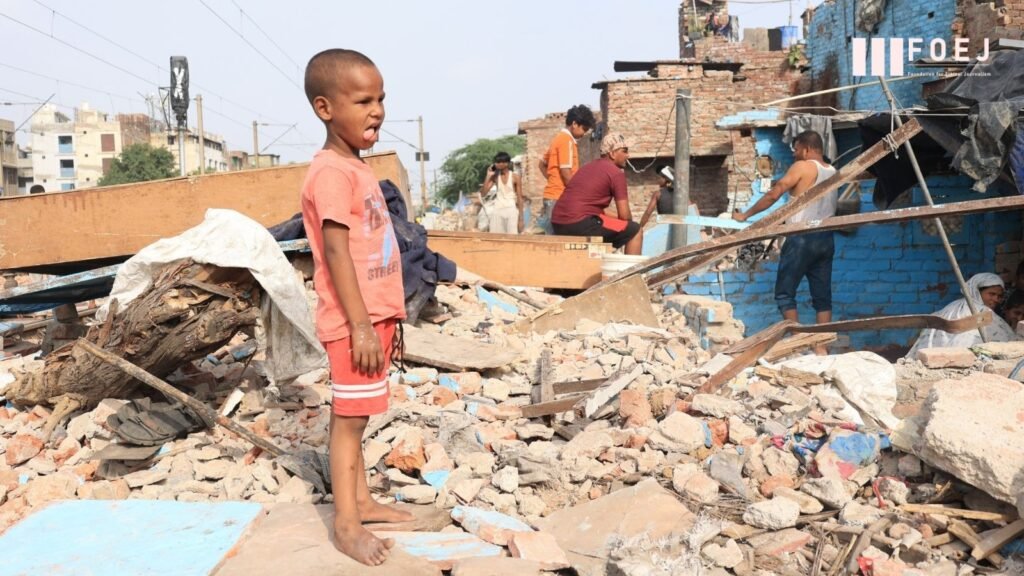
“The government says ‘Save the daughter, educate the daughter,’ but now there is no home left. “How will we save or educate our daughters?” she cries, as she has faced the burn of the demolition, an anti-encroachment drive.
The drive was carried out near Delhi’s Zakhira area, Daya Basti railway station to clear an alleged illegal structure along the crucial railway transit corridors. The action was executed under tight security with deployment of heavy machinery, including bulldozers.
Days after the demolition, the victims find themselves without a place to seek refuge, with the only option as described by the victims being to tuck a tarpaulin sheet across the debris and save themselves from the heat and rain.
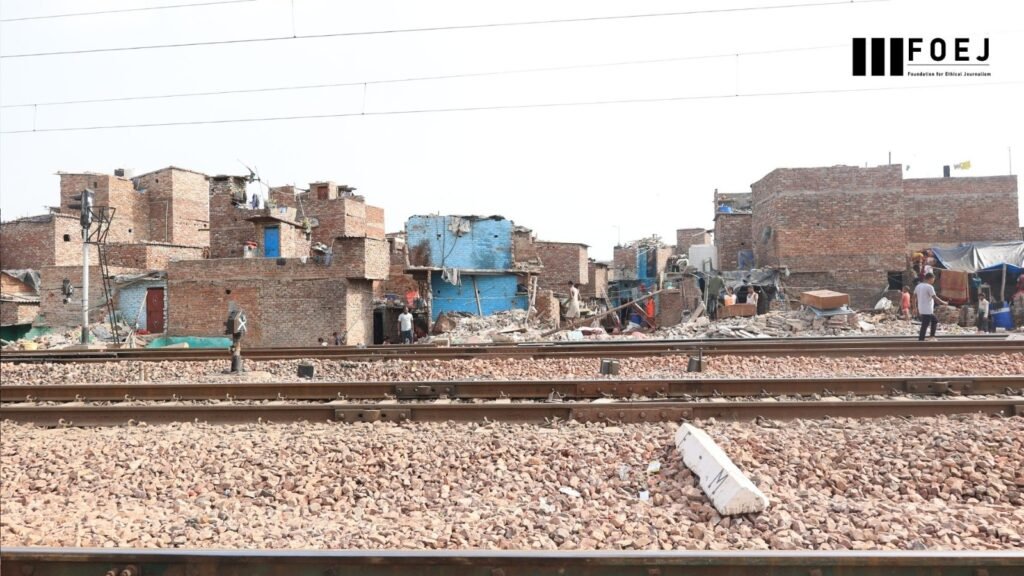
“It is extremely hot here, there is no electricity, and all our belongings are gone; the TV, washing machine, everything has been lost. Nothing is left, not even clothes to wear,” a woman says. She claims that the authorities did not permit her adequate time to take out her belongings from her house.
Another woman standing on the debris of her house says, “The poor are always the ones who suffer from all sides; whether they do good or bad, they still bear the brunt.”
“They say the land belongs to the government, but the government also belongs to the people. So do they really care for the people?” she says
“The BJP government had promised, ‘Where there are slums, there will be houses,’ but now everyone is suffering… the government has no compassion in its heart,” a man adds, with eyes moving towards the demolished house.
“We are all hungry and thirsty; nothing is left for us,” he says.
“Before demolishing our homes, the government should think about where we will go,” another man says,
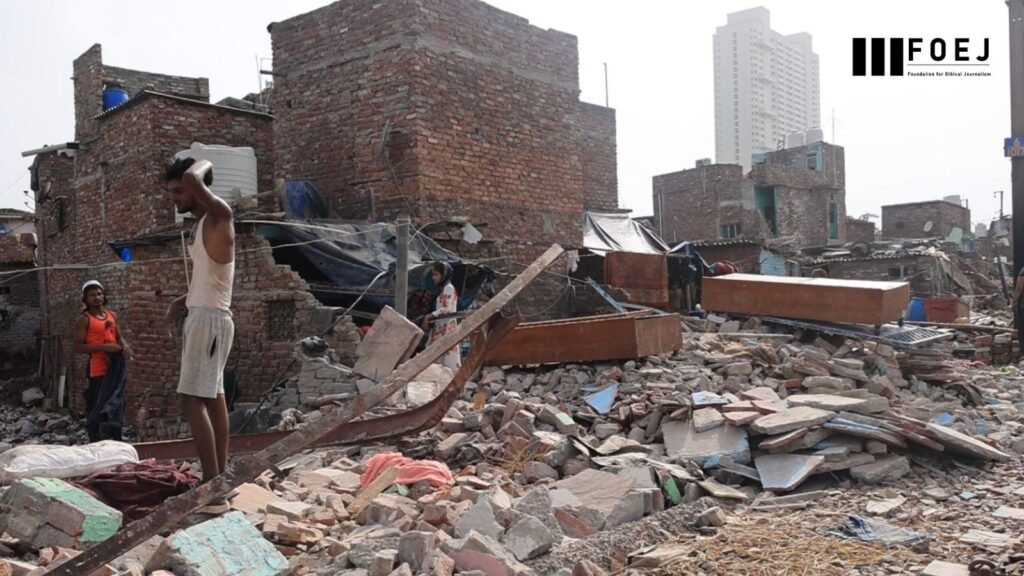
“When they need votes, all the politicians come; they even walk through the gutters to reach us,” he says, pointing towards the massive stretch of debris that lies behind his back.
A few steps away from him sits a bunch of young girls, fanning each other to help bear the scorching heat. Sweat travels through their cheeks near their eyes, squeezed by heat. They wear a weary smile when asked about the demolition drive, refusing to lament their loss in front of anyone, or maybe their loss is too colossal to articulate in words.
While the other victims of the share the doleful moment and say “If we move somewhere else, we’ll have to pay rent. They’re asking for ₹6,000–7,000 a month. Where will we get that kind of money?”