Demonstrations over living costs, housing, wages and government policy spread across six countries, with clashes in Paris, Rome, Barcelona, Tirana and Brussels
PARIS | Protests swept across Europe for a second consecutive weekend on Saturday, October 24, as anger over the rising cost of living, unaffordable housing, stagnant wages, education funding and government policy brought tens of thousands of people onto the streets. Clashes with police, looting and damage to public property prompted authorities in several cities to tighten security.
France reported nearly 1,000 arrests, while Italy sent additional soldiers to Milan to prevent a repeat of the previous weekend’s violence. Demonstrations were also held in Spain, Portugal, Albania and Belgium.
France: hundreds of thousands march, clashes after dark
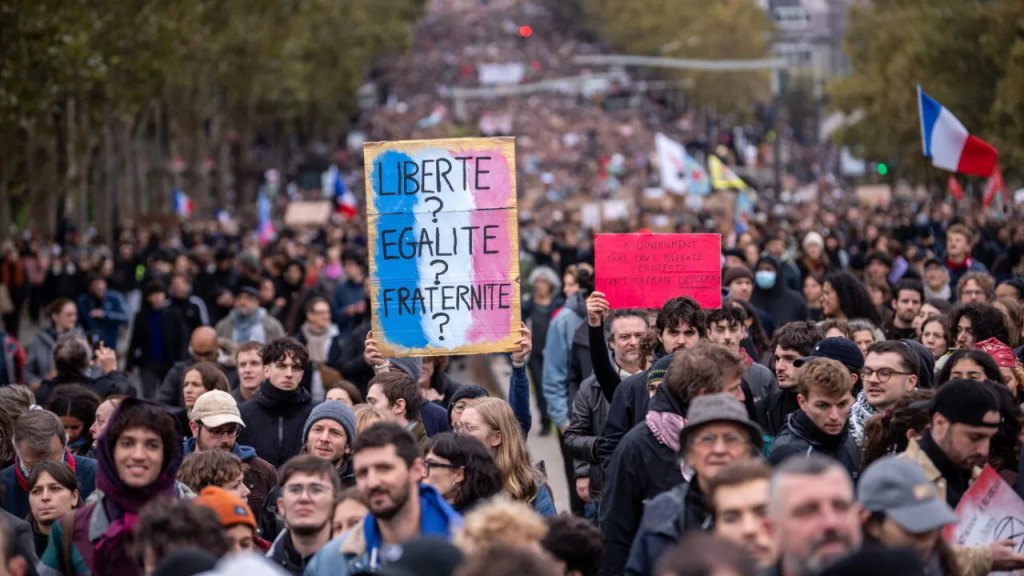
France remained the epicentre of the unrest. The Interior Ministry estimated that around 410,000 people took part in demonstrations nationwide on Saturday, while trade unions put turnout at roughly 800,000.
About 70,000 police officers were deployed in an effort to prevent a recurrence of last weekend’s widespread disorder.
Most marches passed off peacefully during the day, but confrontations erupted in Paris and other cities in the evening. In the capital, some demonstrators built makeshift barricades, hurled objects at police and damaged property. Officers responded with tear gas, water cannon and baton charges. Clashes were also reported in Marseille, Bordeaux and Lyon, where police moved to disperse crowds.
Interior Minister Laurent Nuñez said nearly 1,000 people had been arrested and that the figure was expected to rise as further information was compiled.
The unrest has added to the pressure on President Emmanuel Macron’s government amid public concern over the cost of living, inequality and the state of public services.
Italy: 500 more soldiers for Milan
In Italy, Prime Minister Giorgia Meloni announced the deployment of an additional 500 soldiers to Milan, following clashes and looting in the city the previous weekend. The troops join personnel already stationed there.
Luxury retailers and other businesses boarded up their windows ahead of Saturday’s march, and police deployed surveillance measures and rapid-response teams.
The Milan demonstration remained largely peaceful. Protesters criticised the government over soaring energy bills, low wages and public spending, and some burned an oversized mock electricity bill to highlight the strain on household budgets.
Elsewhere, demonstrations in Rome and Turin turned confrontational. Police used tear gas and water cannon after some protesters threw bottles, stones and fireworks. In Rome, students and others also protested against the war in Gaza and the Italian government’s stance on it, with some briefly occupying the area around the Colosseum.
Spain: fires and looting in Barcelona
In Barcelona, looting, fires and vandalism broke out around Plaça de Catalunya. Regional authorities reported more than 30 fires and 14 shops vandalised or looted. Around 100 people were arrested, roughly a quarter of them minors.
In Madrid, a separate and reportedly peaceful demonstration drew more than 25,000 people calling for reform of the pension system.
Portugal, Albania and Belgium
In Portugal, thousands marched in several cities demanding affordable housing as rents and property prices continue to climb. Demonstrators in Lisbon accused the government of weakening tenant protections.
In the Albanian capital, Tirana, students called for lower tuition fees, greater investment in education and the resignation of Prime Minister Edi Rama. More than 2,500 police officers were deployed, and water cannon were used to disperse crowds after some demonstrators threw stones and set fires.
In Brussels, police used tear gas and water cannon to break up barricades and disperse protesters. Several arrests were reported.
Shared grievances, no single movement
The protests do not form a single, coordinated movement, but their spread across multiple countries points to common concerns: rising living costs, housing insecurity, low wages and dissatisfaction with public services. Each country’s demonstrations also carry local grievances, from education funding and pension reform to opposition to government positions on international conflicts.
Governments have responded with larger police deployments, military personnel and restrictions on demonstrations. But the continuing unrest highlights the dilemma facing European leaders: keeping public order while addressing the economic and political frustrations driving people onto the streets.
Whether tougher security measures will prevent further violence remains uncertain, as the grievances behind the demonstrations show little sign of easing.